

In an era where artificial intelligence (AI) is rapidly evolving, the demand for efficient large language model (LLM) inference engines has never been higher. The LightSeek Foundation recently launched TokenSpeed, an open-source LLM inference engine designed to address the performance bottlenecks faced by current systems. As coding agents become integral to software development, the need for faster and more responsive inference engines is crucial. TokenSpeed aims to fill this gap by optimizing performance metrics that are essential for real-time applications.
The core idea behind TokenSpeed is its ability to maximize both per-GPU tokens per minute (TPM) and per-user tokens per second (TPS). This dual focus is significant because it directly impacts user experience and system scalability. According to AI Daily Post, TokenSpeed outperforms existing solutions like TensorRT-LLM, achieving up to 11% higher throughput at critical TPS levels. This advancement positions TokenSpeed as a potential game-changer in the AI landscape.
Architecture of TokenSpeed
TokenSpeed’s architecture is built on five key design pillars that enhance its functionality: a compiler-backed modeling mechanism for parallelism, a high-performance scheduler, a safe KV resource reuse restriction, a pluggable layered kernel system, and SMG integration for low-overhead CPU-side request entrypoints. This combination allows developers to optimize their coding agents without extensive manual adjustments.
The compiler-backed modeling mechanism enables efficient parallel execution, crucial for handling the extensive contexts that modern coding agents require. Traditional models often struggle with long sequences, leading to degraded performance. TokenSpeed addresses this by allowing developers to specify input/output placements, significantly reducing the cognitive load on developers.
Moreover, the system’s integration with heterogeneous accelerators ensures that it is not limited to specific hardware, enhancing its accessibility and versatility. As noted on GitHub, the flexibility of TokenSpeed allows it to adapt to various computational environments, which is essential for developers working across different platforms.
As noted on GitHub, the flexibility of TokenSpeed allows it to adapt to various computational environments, which is essential for developers working across different platforms.
Performance Metrics
TokenSpeed has demonstrated remarkable capabilities in benchmark tests. Evaluations against TensorRT-LLM on NVIDIA B200 hardware show that TokenSpeed can achieve nearly 9% faster minimum latency and 11% higher throughput when operating at 100 TPS per user. These metrics are critical for applications requiring real-time responses, such as coding assistants and interactive AI tools.
 AI & Technology
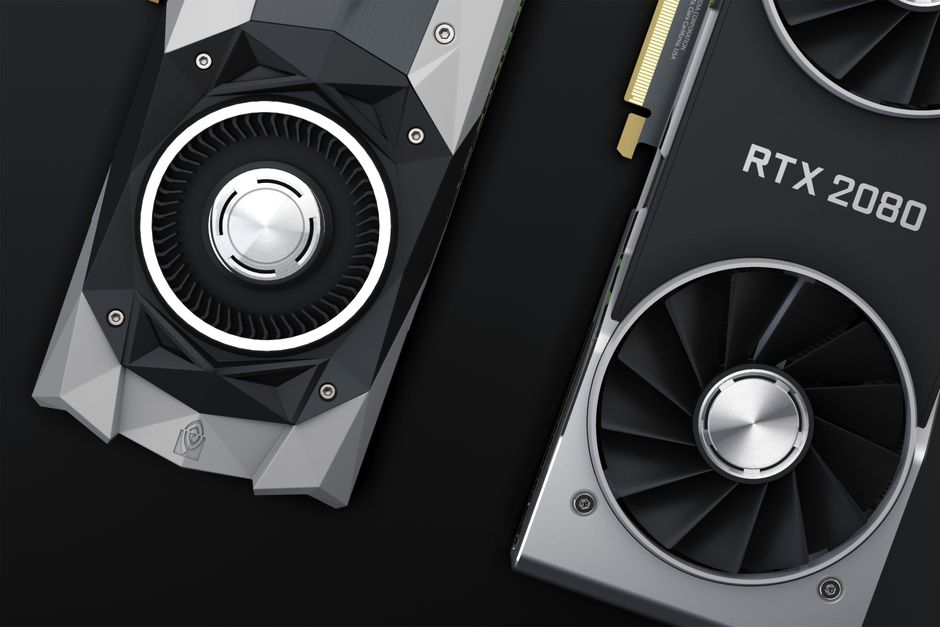
Microsoft Unveils AI-Optimized PCs with Nvidia Technology
Microsoft has unveiled new PCs powered by Nvidia's RTX Spark chip and an updated Windows 11, enhancing AI capabilities for developers and researchers. This shift…
Read More →One standout feature is its multi-head latent attention (MLA) kernel, optimized to reduce latency significantly. This means that coding agents using TokenSpeed can handle more simultaneous requests without sacrificing speed or responsiveness, particularly beneficial for environments where multiple users interact with AI simultaneously.
Broader Implications for AI
The introduction of TokenSpeed has broader implications for the AI landscape. As an open-source tool, it democratizes access to advanced LLM inference capabilities, enabling smaller companies and independent developers to harness powerful AI technologies without the prohibitive costs associated with proprietary systems. This shift could accelerate innovation across the industry.

Furthermore, the emphasis on performance and efficiency aligns with the growing demand for sustainable AI solutions. As organizations seek to reduce their carbon footprints, optimizing computational resources becomes paramount. TokenSpeed’s architecture maximizes GPU utilization and minimizes wasted processing power, positioning it as a leader in this aspect of AI development.
Challenges and Considerations
Despite the promising features of TokenSpeed, there are ongoing debates about the implications of relying on open-source tools in critical applications. Some experts argue that while open-source solutions can foster innovation, they may also lead to security vulnerabilities if not properly managed. The community-driven model can result in slower response times to emerging threats compared to proprietary systems that have dedicated security teams.
TokenSpeed’s architecture maximizes GPU utilization and minimizes wasted processing power, positioning it as a leader in this aspect of AI development.
Additionally, there is a concern about the fragmentation of the AI ecosystem. As more developers adopt different open-source tools, the risk of compatibility issues increases, potentially hindering collaboration and seamless integration of various AI systems. Stakeholders in the industry must address these challenges to ensure that the benefits of open-source tools do not come at the cost of stability and security.

Risks, Trade-Offs, and What Comes Next
The future of TokenSpeed appears promising, particularly as AI continues to evolve and integrate into various sectors. As more developers adopt this technology, we can expect to see significant advancements in how LLMs are utilized across industries. The ability to customize and optimize AI tools will likely lead to innovative applications that were previously unimaginable.
 AI & Technology
Nous Research Reaches $1.5B Valuation, Unveils AI Agents
Nous Research has confirmed its valuation at $1.5 billion following the launch of its AI agents designed for business users, which have already seen significant…
Read More →As organizations increasingly recognize the importance of AI in their operations, the demand for efficient and scalable LLM solutions will grow. TokenSpeed’s architecture is well-positioned to meet this demand, potentially leading to widespread adoption in both commercial and academic settings.
Written by Career Ahead AI. AI can make mistakes, so verify key facts. Report errors to support@careeraheadonline.com.





