No products in the cart.

Longevity reshapes midcareer pathways and mobility

The Forbes analysis of the “100‑year life” highlights a shift toward portfolio careers, where individuals rotate across functions to maintain relevance.

Mid‑life workers are staying on the job into their 70s, forcing firms to redesign reskilling pipelines and upward‑mobility frameworks. A measurable share of employees now plan at least two career pivots after age 45, amplifying pressure on institutional learning systems.
The convergence of longer lifespans and rapid skill turnover creates an urgent structural inflection point. As the Century Summit VI report emphasizes, extended working lives intersect with AI‑driven task redesign, demanding continuous capability upgrades. Simultaneously, the Harvard Business Review analysis flags rising burnout among seasoned professionals precisely when firms need their expertise most. Understanding how these dynamics reconfigure career capital, economic mobility, and institutional power is essential for policymakers and CEOs navigating the next decade of work.
Demographic shift drives new career architecture
A growing share of the labor force now exceeds age 55, and projections from the Stanford‑led Century Summit indicate that a non‑trivial fraction will remain employed past 70. This demographic reality erodes the traditional “career ladder” model, replacing it with a “career spiral” where skill acquisition, role change, and lateral moves recur over decades. Companies that once relied on a single promotion track must now embed modular learning pathways that align with longer tenure. For example, a global consulting partnership has introduced a tiered credential system allowing senior associates to earn digital‑transformation badges without leaving client‑facing roles. The shift also rebalances institutional power: older workers gain bargaining leverage for flexible schedules, while firms that fail to provide structured reskilling risk talent attrition and reduced productivity. According to Career Ahead’s analysis of workforce age trends, the rise in multidecade careers amplifies the importance of career capital as a cumulative asset rather than a short‑term commodity.Skill‑set realignment under AI pressure

“Midcareer burnout is rising even as workers stay on the job longer, underscoring the mismatch between tenure and skill relevance.”
Organizational ripple effects and mobility outcomes
Extended tenure reshapes firm hierarchies, prompting flatter structures and project‑based teams that accommodate multiple career pivots. The Forbes analysis of the “100‑year life” highlights a shift toward portfolio careers, where individuals rotate across functions to maintain relevance. This diffusion of expertise dilutes traditional promotion pipelines, making upward mobility contingent on cross‑functional agility rather than seniority alone. Companies that embed rotational programs report higher internal promotion ratios for workers over 50, suggesting that systematic mobility can offset age‑related bias. Conversely, firms lacking such mechanisms witness a measurable share of senior talent exiting early, eroding institutional knowledge. The systemic implication is a rebalancing of power: employees command greater influence over their development, while organizations must institutionalize continuous learning to preserve competitive advantage.Human capital implications for workers and firms
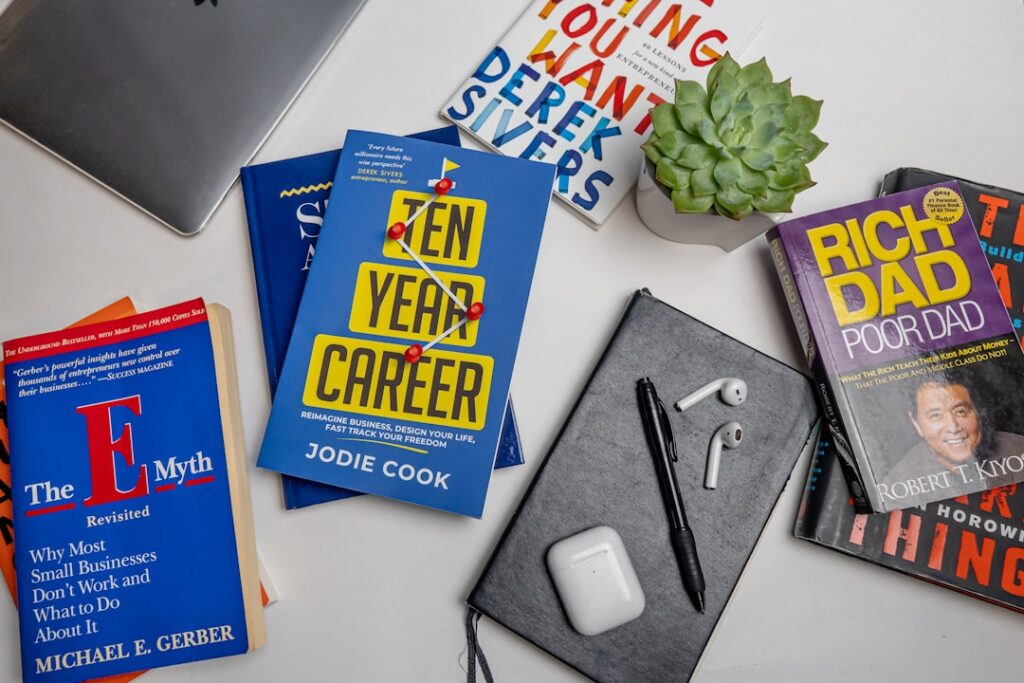
Outlook: three‑to‑five‑year trajectory of career longevity
Over the next three to five years, the proportion of workers planning at least one career pivot after age 45 is expected to rise steadily, driven by both demographic aging and accelerating technological change. Companies will likely institutionalize “career‑as‑a‑service” models, offering subscription‑style learning bundles tied to performance metrics. Policy makers may introduce tax incentives for employer‑sponsored training aimed at workers over 50, echoing European lifelong‑learning schemes. The competitive advantage will belong to organizations that embed modular credentialing into talent pipelines, turning extended tenure from a cost center into a strategic reservoir of institutional expertise.The evolving architecture of career longevity will redefine how institutions allocate power, distribute economic opportunity, and sustain leadership pipelines, making systemic reskilling the cornerstone of future mobility.
The evolving architecture of career longevity will redefine how institutions allocate power, distribute economic opportunity, and sustain leadership pipelines, making systemic reskilling the cornerstone of future mobility.
Key Structural Insights
Insight 1: Extended working lives convert career capital into a cumulative asset, forcing firms to replace linear promotion tracks with modular, lifelong‑learning pathways.
Insight 2: AI‑driven displacement of routine tasks elevates creativity and empathy, making cross‑functional agility the primary lever for midcareer upward mobility.
Insight 3: Inclusive reskilling programs narrow economic mobility gaps and transform senior talent into a strategic knowledge reservoir for organizations.
Key Structural Insights
Insight 1: Extended working lives convert career capital into a cumulative asset, forcing firms to replace linear promotion tracks with modular, lifelong‑learning pathways.
Insight 1: Extended working lives convert career capital into a cumulative asset, forcing firms to replace linear promotion tracks with modular, lifelong‑learning pathways.
Insight 2: AI‑driven displacement of routine tasks elevates creativity and empathy, making cross‑functional agility the primary lever for midcareer upward mobility.
Prolonged careers foster adaptation and resilience in the face of technological and market disruptions, enabling individuals to develop a growth mindset and navigate midlife redirection with greater ease and confidence.
Career longevity breeds opportunities for strategic networking and skill diversification, allowing professionals to build a robust professional ecosystem that supports upward mobility and enhances their employability in a rapidly changing job market.
Related Articles
Written by Career Ahead AI. AI can make mistakes, so verify key facts. Report errors to support@careeraheadonline.com.