No products in the cart.

Luxury Travel Redefines Global Economy

Affluent travel's leap to a $3 trillion market by 2033 is redefining growth, forcing legacy players to redesign value chains and policy frameworks.

Affluent travel’s surge to a $3 trillion market by 2033 is redefining economic engines, forcing legacy players to redesign value chains.
The scale shift: From niche indulgence to macro engine
A decade ago, luxury tourism accounted for a fraction of global travel spend, but the sector now commands a trajectory that rivals entire industries. The market was valued at $1.59 trillion in 2025 and is projected to more than double to $3 trillion by 2033, powered by an 8.5% CAGR. Those figures are not merely a statistical curiosity; they signal a redistribution of economic weight from mass tourism to a high-margin segment that can outpace traditional GDP contributors.
The infusion of discretionary wealth into travel is creating a feedback loop. High-spending guests demand premium services, which in turn attract capital-intensive operators—private jet firms, ultra-luxury yacht charter companies, and boutique resort developers. The resulting investment inflows raise local tax bases, stimulate ancillary sectors (e.g., high-end retail, bespoke culinary ventures), and generate employment opportunities that are less vulnerable to price-sensitive downturns.
Our view is that the macro-economic relevance of affluent travel will soon be a staple metric for national growth forecasts, much as manufacturing once was for post-war economies. Ignoring this shift would leave policymakers and investors blind to a decisive source of future prosperity.
“Luxury travel is no longer about amenities; it’s about curated moments that drive economic spillovers.” — Kate Ferrara, Vice chair and US transportation, hospitality, and services sector leader, Deloitte & Touche LLP
Experience over comfort: The new value driver
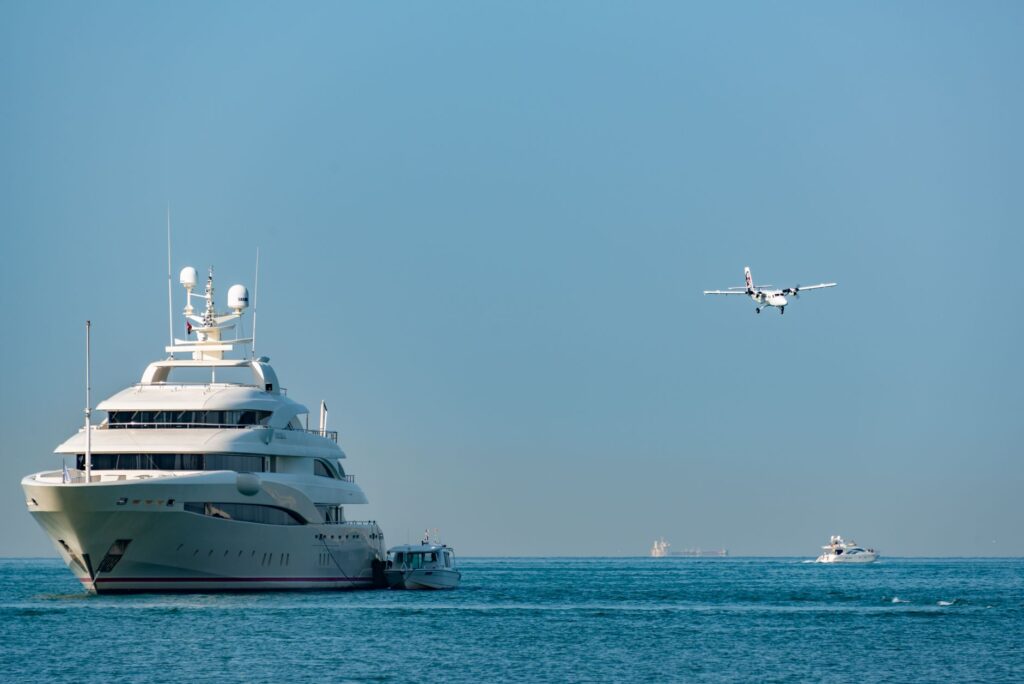
The classic five-star hotel package—spacious rooms, fine dining, and concierge service—has lost its luster among the ultra-wealthy. Travelers now prioritize authenticity, cultural immersion, and sustainability, demanding experiences that feel effortless from start to finish. This pivot is evident in the growth of bespoke Mediterranean itineraries, with destinations like Spain repositioning themselves to cater to this demand.
This pivot is evident in the growth of bespoke Mediterranean itineraries, with destinations like Spain repositioning themselves to cater to this demand.
The shift also redefines “luxury” as a service architecture rather than a static product. Companies that can orchestrate seamless, personalized journeys—integrating private aviation, curated local guides, and low-impact accommodations—command premium pricing. The result is a reallocation of profit margins from traditional hospitality operators to agile, experience-focused platforms.
For the affluent traveler, the calculus is simple: a higher price is justified when the itinerary delivers a narrative that aligns with personal identity and social capital. This consumer-driven redefinition forces legacy firms to either innovate or cede market share to newcomers adept at weaving technology, data, and local partnerships into a cohesive story.
The Luxury Travel Disruption Index: Mapping structural realignments
To make sense of the turbulence, we propose the Luxury Travel Disruption Index (LTDI), a composite measure that tracks three interlocking forces:
- Capital Reallocation – the proportion of investment flowing into private aviation, yacht charters, and boutique resorts relative to traditional hotel chains.
- Experience Differentiation – the share of bookings that include curated, sustainability-linked activities versus standard amenity packages.
- Economic Spillover Ratio – the multiplier effect of high-end spend on local economies, measured by tax revenue per dollar of luxury travel expenditure.
An LTDI score above 70 indicates a sector in which disruption is not a peripheral trend but a core operating reality. Early 2026 data places the global luxury travel ecosystem at an LTDI of 78, driven largely by a 25% luxury sales increase in 2024 and a 2.4% rise in UK consumer travel spend in 2025.
The index reveals that disruption is uneven. Regions that have embraced regulatory flexibility for private aviation, such as the Caribbean and certain European micro-states, score higher on Capital Reallocation, while destinations that have invested in sustainable tourism infrastructure excel in Experience Differentiation. The Economic Spillover Ratio, however, remains the most volatile component, sensitive to geopolitical shocks and currency fluctuations.
Capital Reallocation – the proportion of investment flowing into private aviation, yacht charters, and boutique resorts relative to traditional hotel chains.
By monitoring the LTDI, investors can pinpoint where the next wave of high-margin opportunities will surface, and policymakers can calibrate incentives to capture a larger share of the spillover benefits.
Resilience and regional spillovers

Affluent travel’s growth trajectory appears insulated from many of the shocks that have rattled mass tourism. Even as geopolitical tensions and inflationary pressures have dampened airline load factors elsewhere, luxury bookings have continued to rise. The sector’s resilience stems from two factors: the inelasticity of high-net-worth consumer demand and the ability of luxury providers to absorb cost shocks through dynamic pricing and value-added services.
Local economies that successfully attract affluent visitors are witnessing a transformation of their labor markets. In coastal Spain, the surge in high-end flight bookings has spurred a demand for multilingual concierge staff, marine engineers for yacht maintenance, and boutique food artisans. These roles command wages well above regional averages, fostering upward mobility for residents who acquire specialized skills.
Moreover, the spillover effect extends beyond direct employment. Luxury travelers often spend on ancillary services—private art tours, exclusive wine tastings, and high-end retail—creating a multiplier that can exceed traditional tourism’s impact. When a single affluent visitor books a week-long itinerary that includes a private jet, a chartered yacht, and a curated cultural program, the cumulative economic contribution can rival that of dozens of mass-market tourists.
Policymakers seeking to harness this potential must balance openness with safeguards. Streamlined visa processes, targeted tax incentives for sustainable luxury operators, and investment in high-skill training programs can amplify the benefits while mitigating the risk of over-dependence on a narrow visitor segment.
Streamlined visa processes, targeted tax incentives for sustainable luxury operators, and investment in high-skill training programs can amplify the benefits while mitigating the risk of over-dependence on a narrow visitor segment.
Affluent travel is no longer a peripheral luxury; it is a catalyst reshaping economic growth patterns and compelling entire industries to reinvent themselves.
—
The luxury travel surge demonstrates that wealth-driven demand can rewrite the rules of economic development, and the Luxury Travel Disruption Index offers a practical lens to navigate this evolving landscape.
Written by Career Ahead AI. AI can make mistakes, so verify key facts. Report errors to support@careeraheadonline.com.