No products in the cart.

Mars‑Made: How 3D Printing Is Turning Red Dust Into Home
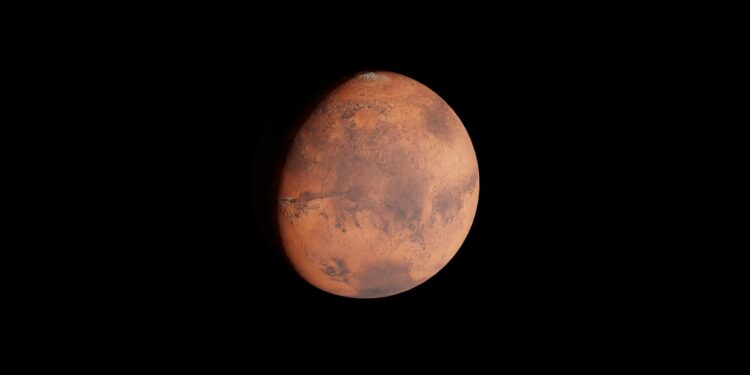
NASA’s 3D‑printed habitat prototype survived a simulated Martian night, showing that on‑site construction can replace costly cargo launches and pave the way for self‑sustaining settlements.

NASA’s new 3D‑printed habitat, built with BIG and ICON, survived a full‑scale Martian‑night test in Utah, proving that on‑site construction can replace costly cargo launches.
The Martian Habitat Conundrum
Sending a crew to Mars is a daunting task. Every kilogram of hardware costs thousands of dollars to launch, and traditional habitat modules are heavy, bulky, and fragile. Astronauts also need reliable life‑support loops, which currently rely on Earth‑supplied oxygen tanks and water packs. If a supply ship is delayed, the crew’s health is at risk.
Mars’ regolith, a fine, iron‑rich dust, offers little structural strength on its own. These constraints make a permanent settlement seem like a pipe‑dream. The challenge is to create habitats that are light enough to launch, strong enough to protect, and self‑sustaining once the rockets leave Earth’s orbit.
NASA’s 3D Printing Initiative
Two years ago, NASA partnered with Bjarke Ingels Group (BIG) and construction startup ICON to explore additive manufacturing. They printed a 12‑meter‑wide dome using a mix of Martian‑simulated regolith and a polymer binder. The structure endured a year‑long “Mars‑night” test in Utah’s desert, where temperatures and UV exposure mimic the Red Planet’s extremes.
The university team says the printer can operate on a 30‑kilowatt solar array, a realistic power budget for a future Martian base.
Florida A&M University also unveiled a laser‑sintering printer that can fuse regolith particles into airtight bricks in under an hour. The university team says the printer can operate on a 30‑kilowatt solar array, a realistic power budget for a future Martian base.
The Future of Martian Exploration
If 3D printing works on Mars, mission planners can envision crews staying for months, not just weeks. Longer stays mean more scientific return, from drilling deeper into the crust to testing in‑situ fuel production. It also lowers the price tag for private investors eyeing the “Mars tourism” market.
However, critics point out that printed habitats may be vulnerable to micrometeoroid impacts and dust storms. The technology is still unproven in the real Martian environment.
Bioregenerative Life Support and Microbial Solutions
NASA’s answer is to couple printed structures with living systems that recycle air, water, and waste. The agency is funding a pilot plant that grows cyanobacteria inside the walls of a 3D‑printed module. The microbes photosynthesize, turning CO₂ into oxygen while producing edible biomass.
Researchers at FAMU are testing a hybrid printer that embeds spores of Deinococcus radiodurans, Earth’s toughest radiation‑resistant bacterium, into the regolith bricks. ICON’s latest prototype includes a built‑in water‑reclamation channel.
You may also like
 AI & Technology
Apple to Tighten Mac Data Controls in Guard Against AI Agents
Apple is tightening data controls for its macOS platform to enhance user data security against potential AI threats. This change will require developers to adhere…
Read More →The technology is still unproven in the real Martian environment.
A New Era in Space Exploration
The next step is a full‑scale demonstration on the Martian surface. NASA plans to launch the “Habitat‑One” module with a crew of four in 2028, using a combination of BIG/ICON printed walls and FAMU’s microbial bricks. If the module maintains pressure for 30 sols (Mars days) while supporting a closed‑loop life‑support test, the proof will be undeniable.
Success would rewrite the economics of deep‑space travel. Launch costs could drop, private investors could fund habitats instead of waiting for government contracts, and the line between Earth‑based construction and space‑based manufacturing would blur.