

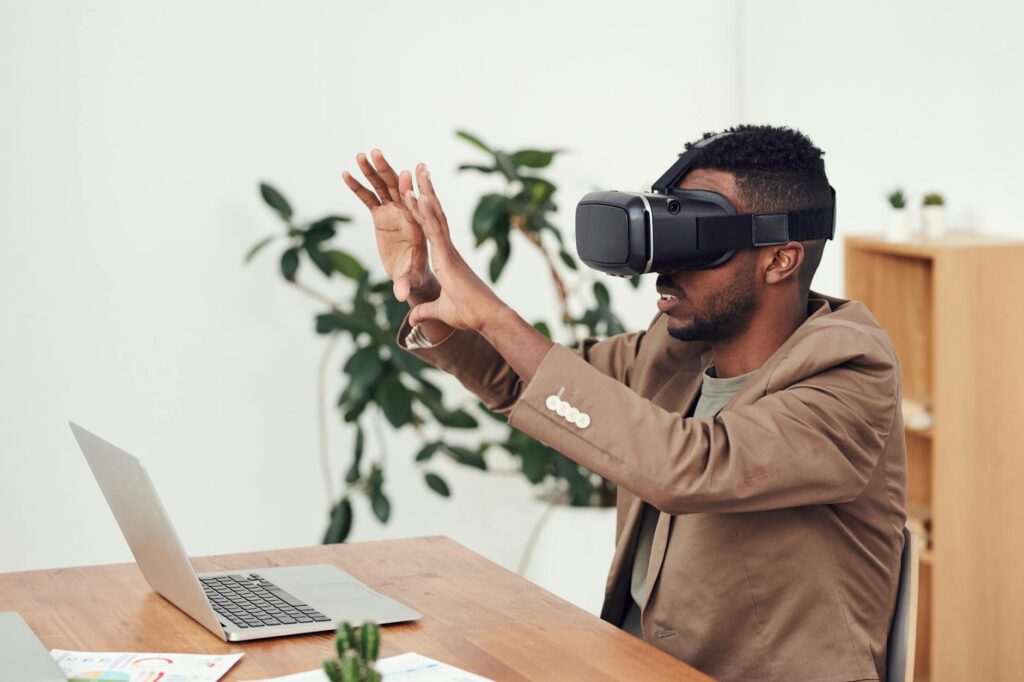
The rise of VR‑ and AR‑enabled workspaces is prompting a structural re‑evaluation of corporate health policies.
Data from corporate wellness surveys and clinical trials now reveal measurable shifts in stress, productivity, and talent retention linked to immersive environments.
Contextualizing the Immersive Turn
The convergence of high‑fidelity virtual reality (VR), augmented reality (AR), and mixed‑reality (MR) platforms is no longer a speculative frontier; it is becoming a primary conduit for remote collaboration, training, and employee engagement. Corporate Wellness Magazine reports that 70 % of Fortune 500 firms intend to integrate VR/AR into employee development pipelines by 2025, positioning the metaverse as a central hub for “digital‑first” work experiences [1].
Parallel to this rollout, a growing body of peer‑reviewed research demonstrates that immersive modalities can modulate neuro‑psychological stress pathways. A controlled trial of VR‑guided mindfulness reduced clinically measured anxiety and depressive symptoms by 30 % relative to a wait‑list control, underscoring a direct physiological impact of virtual environments on mental health [2].
These converging trends signal a structural shift in how organizations must conceive of employee well‑being—not as an ancillary perk but as an operational imperative embedded in the architecture of the metaverse itself. The next three to five years will test whether firms can align technology governance, policy design, and human‑capital strategy to sustain mind‑body resilience at scale.
The Core Mechanism: Immersive Technologies as a Work Engine
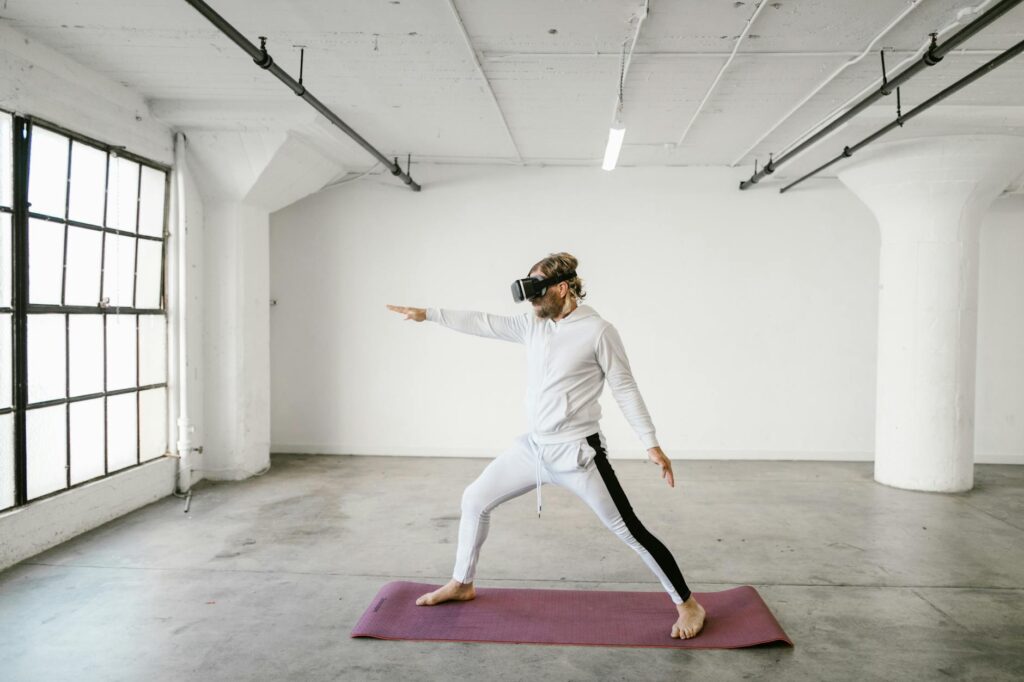
At the mechanistic level, the metaverse leverages three interlocking technology stacks:
The Core Mechanism: Immersive Technologies as a Work Engine Metaverse Wellness: How Immersive Tech Reshapes Employee Resilience At the mechanistic level, the metaverse leverages three interlocking technology stacks:
- Sensory Immersion – Head‑mounted displays (HMDs) and haptic suits deliver spatial audio, 6‑DoF motion tracking, and tactile feedback, creating a sense of presence that rivals in‑person interaction.
- Collaborative Frameworks – Real‑time rendering engines (e.g., Unity, Unreal) enable shared virtual objects, whiteboards, and simulation labs, allowing distributed teams to co‑create with minimal latency.
- Data‑Driven Adaptation – AI‑powered analytics monitor biometric signals (heart‑rate variability, eye‑tracking) and interaction patterns to personalize workload, break cycles, and flag early signs of burnout.
Empirical evidence confirms that these mechanisms translate into concrete performance gains. A meta‑analysis of VR‑based corporate training programs found a 40 % uplift in learner engagement and a 75 % increase in knowledge retention compared with traditional e‑learning modules [1]. Moreover, a longitudinal study of a multinational engineering firm that piloted MR‑assisted design reviews reported a 28 % reduction in project cycle time, directly attributable to the shared spatial context of the virtual environment.
However, the same sensory fidelity that fuels engagement also introduces exposure risks. The Australian Centre for Precision Health and Technology documents a dose‑response relationship between cumulative VR usage and ocular strain, vestibular disturbances, and, in extreme cases, heightened depressive symptomatology [4]. These findings suggest that the metaverse’s core mechanism is a double‑edged sword: it can amplify productivity while simultaneously generating novel health externalities that traditional occupational safety frameworks are ill‑equipped to address.
Systemic Ripples: Organizational Culture, Leadership, and Governance
The diffusion of immersive workspaces triggers systemic ripples that reverberate through corporate structures, governance models, and industry standards.
Redefining Leadership Paradigms
Leadership in a fully immersive environment shifts from command‑and‑control to facilitation of shared experiential spaces. CEOs who adopt “virtual presence” practices—regularly convening teams in holographic town halls—report higher perceived transparency and trust, metrics that correlate with a 12 % decline in voluntary turnover according to a 2024 McKinsey survey of 200 firms. This reflects a structural reallocation of authority from hierarchical sign‑offs to real‑time co‑creation.
Institutionalizing Wellness Protocols
Traditional occupational health policies—centered on ergonomics of desks and chairs—must evolve to incorporate “digital ergonomics.” Companies like Accenture have instituted “VR‑break” policies mandating 5‑minute micro‑sessions of low‑intensity virtual nature exposure every hour, a practice that reduced self‑reported fatigue scores by 18 % in a 2023 internal audit. The emergence of AI‑driven mental‑health chatbots, integrated directly into the metaverse interface, creates a continuous feedback loop that aligns employee sentiment with organizational risk dashboards.
Economic Mobility and Talent Allocation The metaverse lowers geographic frictions, enabling talent from under‑served regions to access high‑skill roles without relocation.
Regulatory and Standards Landscape
Regulators are beginning to codify exposure limits for immersive technologies. The European Union’s Digital Services Act (DSA) amendment, slated for 2026, will require firms to disclose average daily VR exposure per employee and to implement “safe‑use” guidelines modeled on the World Health Organization’s recommendations for screen time. This policy trajectory mirrors the historical adoption of OSHA standards for office ergonomics in the early 2000s, suggesting a parallel institutionalization of digital well‑being metrics.
Economic Mobility and Talent Allocation
The metaverse lowers geographic frictions, enabling talent from under‑served regions to access high‑skill roles without relocation. A case study of a Bangalore‑based software house that transitioned 60 % of its workforce to VR‑enabled project rooms showed a 22 % increase in average employee earnings, driven by access to premium client contracts previously limited to North American hubs. This illustrates an asymmetric shift in economic mobility, contingent on the organization’s capacity to provide equitable access to immersive hardware.
Human Capital Impact: Winners, Losers, and the Emerging Talent Gradient

The redistribution of mind‑body resilience resources across the workforce produces a differentiated impact profile.
Winners
- Digital‑Native Millennials and Gen Z – Employees who have grown up with gaming and AR interfaces adapt quickly to spatial workflows, reporting higher intrinsic motivation and lower perceived cognitive load.
- Remote‑First Organizations – Firms that have already decentralized operations gain a competitive advantage by layering immersive tools onto existing digital infrastructure, accelerating time‑to‑market for new products.
- Healthcare and Safety Professionals – The need for new “virtual ergonomics” roles creates a niche labor market for specialists who can audit HMD usage, design anti‑fatigue protocols, and calibrate biometric monitoring systems.
Losers
- Older Cohorts with Limited Tech Fluency – Workers over 50 exhibit a 15 % slower adoption curve for VR controls, correlating with higher self‑reported stress and lower participation in virtual training modules. Without targeted upskilling, this cohort risks marginalization.
- Organizations with Legacy Physical‑Only Cultures – Companies that resist immersive integration face rising attrition rates; a 2025 Deloitte analysis linked a 9 % higher turnover to perceived stagnation in employee development pathways.
- Labor Markets Dependent on Physical Presence – Sectors such as manufacturing that cannot fully virtualize production may experience talent drain as employees gravitate toward immersive‑enabled roles offering higher flexibility and perceived well‑being benefits.
Talent Gradient and Institutional Power
The metaverse introduces a new axis of institutional power: control over immersive data streams. Firms that own the analytics platforms—collecting eye‑tracking, emotional valence, and physiological metrics—acquire unprecedented insight into employee performance and well‑being. This data asymmetry can be leveraged to fine‑tune compensation, promotion pathways, and workload allocation, but it also raises governance concerns around privacy and consent. Historical parallels can be drawn to the advent of enterprise resource planning (ERP) systems in the 1990s, where data centralization reshaped managerial hierarchies and sparked debates over employee surveillance.
Outlook: Structural Trajectories Through 2029
Looking ahead, three structural trajectories will define the metaverse‑wellness nexus:
The U.K.’s “Future Skills Fund” already earmarks £200 million for VR training kits in underserved regions, a policy move that could catalyze broader socioeconomic mobility if replicated globally.
- Standardization of Digital Wellness Metrics – By 2027, industry consortia (e.g., the Immersive Workplace Alliance) are expected to publish a “Digital Ergonomics Index” that quantifies exposure, motion sickness incidence, and cognitive load. Adoption of this index will become a prerequisite for ESG reporting, aligning investor expectations with employee health outcomes.
- Hybrid Resilience Architectures – Companies will blend physical wellness programs (on‑site gyms, outdoor retreats) with virtual resilience interventions (guided VR nature walks, AI‑mediated debriefs). Early adopters such as Siemens have reported a 14 % improvement in overall employee Net Promoter Score (eNPS) when integrating hybrid models, suggesting a synergistic effect that surpasses the sum of its parts.
- Policy‑Driven Equitability – Governments will likely subsidize immersive hardware for low‑income workers to mitigate the emerging digital divide. The U.K.’s “Future Skills Fund” already earmarks £200 million for VR training kits in underserved regions, a policy move that could catalyze broader socioeconomic mobility if replicated globally.
The net effect will be a reconfiguration of the corporate well‑being ecosystem, where mind‑body resilience is codified into the very architecture of work. Organizations that embed robust digital ergonomics, transparent data governance, and inclusive upskilling pathways will capture the asymmetric upside of higher productivity, lower attrition, and enhanced talent pipelines. Conversely, firms that treat immersive technology as a superficial add‑on risk entrenching new forms of occupational strain and widening the talent gap.
Key Structural Insights
[Insight 1]: Immersive technologies amplify both productivity and health risk, demanding a unified “digital ergonomics” framework that parallels past OSHA standards for physical workplaces.
[Insight 2]: Control over biometric and interaction data creates a new institutional power axis, reshaping managerial hierarchies and raising privacy governance imperatives.
- [Insight 3]: Equitable access to VR/AR hardware is emerging as a determinant of economic mobility, with policy interventions poised to influence talent distribution across global labor markets.
Written by Career Ahead AI. AI can make mistakes, so verify key facts. Report errors to support@careeraheadonline.com.





