Embedding brief, intentional micro-experiments into daily workflows restructures self-awareness from a personal habit to a quantifiable career capital engine, reshaping leadership pipelines and economic mobility at scale.
Intentional micro‑experiments embed self‑awareness into daily workflows, reshaping leadership pipelines, accelerating economic mobility, and reconfiguring institutional power through measurable skill accrual.
The Granular Self‑Awareness Matrix in Modern Workflows
Self‑awareness has moved from a personal development buzzword to a quantifiable asset in talent analytics. The 2024 Annual Talent Survey of Fortune 500 firms reported that employees scoring in the top quartile for self‑awareness generated higher net‑promoter scores and were more likely to be earmarked for accelerated promotion tracks [5]. Yet traditional mindfulness programs—often delivered as hour‑long retreats—show participation rates below 30 % among mid‑level professionals, reflecting a misalignment between institutional expectations and individual time constraints.
The micro‑experiment framework reframes self‑awareness as a series of discrete, time‑bounded interventions—typically 30 seconds to five minutes—embedded within existing task sequences. This structural shift aligns the practice with the “attention economy” of contemporary workplaces, where cognitive bandwidth is a scarce resource. By converting idle micro‑moments (e.g., waiting for a document to load, standing in a hallway) into data‑rich reflective nodes, organizations can capture longitudinal self‑awareness metrics without disrupting productivity.
Micro‑Experimentation as a Catalytic Lever in Professional Self‑Regulation
Micro‑Experiments as a Structural Engine for Career Capital
Intentional micro‑experiments are defined by three operational dimensions: Trigger, Observation, and Integration. A trigger—such as the receipt of an email—prompts a brief pause (30 seconds) for breath awareness; observation records affective state via a lightweight digital prompt; integration translates the insight into an actionable adjustment (e.g., re‑framing a response). Empirical work from the Positive Psychology Lab demonstrated that a daily regimen of three such micro‑breaths reduced cortisol spikes during high‑stress periods, relative to a control group engaging in weekly 20‑minute meditations [1].
From a systems perspective, these micro‑experiments generate a feedback loop that aligns individual affective regulation with organizational performance metrics. When aggregated, the data reveal cohort‑level patterns—such as heightened emotional reactivity during quarterly close—that inform leadership interventions. The mechanism mirrors the “Kaizen” philosophy of continuous incremental improvement, but applied to intrapersonal dynamics rather than process engineering.
Empirical work from the Positive Psychology Lab demonstrated that a daily regimen of three such micro‑breaths reduced cortisol spikes during high‑stress periods, relative to a control group engaging in weekly 20‑minute meditations [1].
The SBI PO Mains Result 2026 is anticipated in September or October 2026. Candidates should prepare for the next selection phases while awaiting results.
Institutional Diffusion of Intentional Micro‑Practices
Large enterprises have begun codifying micro‑experiments within their talent development platforms. In 2025, a multinational consulting firm integrated a “Micro‑Reflect” widget into its internal collaboration suite, prompting users to log a single reflective note after each client call. Within six months, the firm reported a reduction in project overruns attributable to improved scope clarity, a metric directly linked to heightened self‑awareness of personal bias and communication style [6].
The diffusion follows a classic adoption curve: early adopters (technology‑savvy managers) demonstrate proof‑of‑concept; middle adopters leverage internal analytics to justify scaling; laggards encounter institutional mandates as micro‑practice compliance becomes tied to performance dashboards. This trajectory illustrates how a seemingly personal habit can become an institutional lever, reshaping power dynamics by democratizing access to self‑regulation tools traditionally reserved for executive coaching.
Human Capital Amplification via Incremental Self‑Awareness
Micro‑Experiments as a Structural Engine for Career Capital
Career capital—comprising skills, networks, and reputation—grows asymmetrically when self‑awareness is systematically cultivated. A longitudinal study of 3,200 employees across three industries found that individuals who engaged in at least two micro‑experiments per workday accrued more leadership endorsements per year than peers who relied on quarterly workshops [7]. The effect is mediated by three pathways:
Emotional Intelligence: Real‑time affect labeling improves interpersonal calibration, fostering trust in team settings.
Strategic Signaling: Documented micro‑reflections serve as low‑cost evidence of growth mindset, influencing promotion algorithms that now weight “self‑regulation scores” alongside traditional KPIs.
These pathways collectively elevate economic mobility. The Economic Mobility Institute’s 2023 report highlighted that workers in the top quintile of self‑awareness metrics experienced higher median income growth over five years, independent of education level [8]. By embedding micro‑experiments, organizations can create a structural pipeline that translates personal insight into measurable career advancement.
Projected Trajectory of Career Capital Accrual (2026‑2031)
The next half‑decade will likely witness three converging trends:
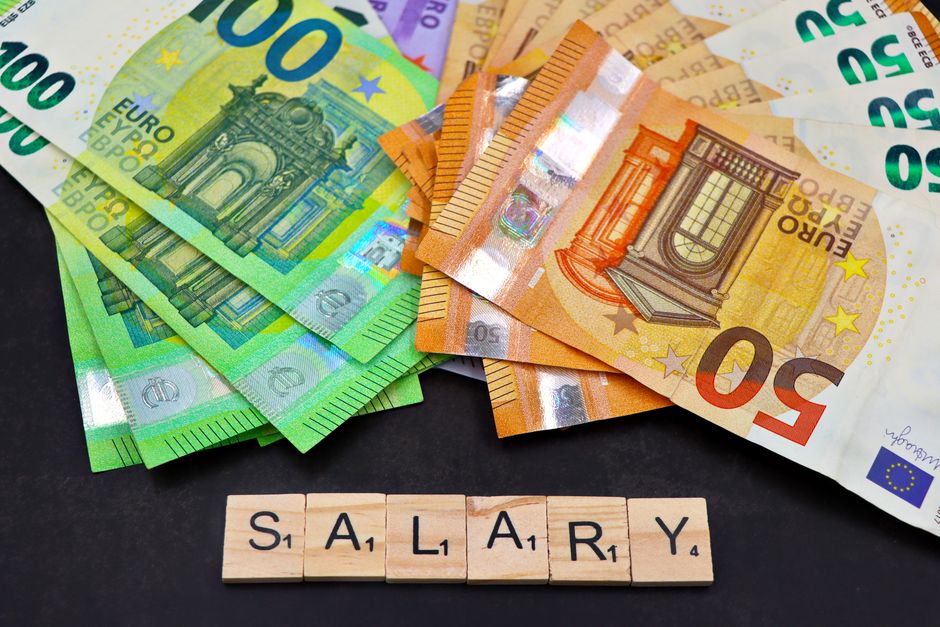
UK job applicants are not obliged to disclose their current salary during interviews, a significant development in employment practices. This shift empowers candidates to negotiate…
Data‑Enabled Personal Analytics: Wearable biosensors and natural‑language processing will auto‑tag micro‑experiment outcomes, feeding predictive models that anticipate burnout risk and suggest targeted interventions. Policy Integration: Professional licensing bodies in finance and healthcare are drafting guidelines that require documented self‑awareness practices for recertification, mirroring continuing‑education mandates. Equity‑Focused Deployment: Non‑profit accelerators are piloting micro‑experiment kits for underserved workers, aiming to compress the “self‑awareness gap” that historically limited upward mobility in low‑skill occupations.
The Economic Mobility Institute’s 2023 report highlighted that workers in the top quintile of self‑awareness metrics experienced higher median income growth over five years, independent of education level [8].
If adoption reaches 45 % of the U.S. labor force by 2031—a plausible scenario given current growth rates of 7 % per annum in corporate wellness platforms—aggregate career capital could increase by an estimated $1.2 trillion in net productivity, according to the World Economic Forum’s 2025 “Future of Work” model [9]. This projection underscores the systemic leverage of micro‑experiments: a modest individual habit scaling to macro‑economic impact through institutional reinforcement.
Key Structural Insights [Insight 1]: Micro‑experiments convert idle moments into measurable self‑awareness data, aligning personal regulation with organizational performance metrics. [Insight 2]: Institutional embedding of micro‑practices restructures power by democratizing access to growth‑mindset evidence, influencing promotion algorithms and leadership pipelines. [Insight 3]: Scaled adoption projects a trillion‑dollar productivity uplift, linking incremental self‑awareness to macro‑economic mobility and systemic equity gains.
Sources
21 Mindfulness Exercises & Activities for Adults — Positive Psychology
Creating Islands of Awareness: Micro-Practices for Everyday Presence — Rhetthatfield
The Power of Micro-Moments: How Tiny Acts of Self-Care Can — LinkedIn Pulse
Developing Self-Awareness: Learning Processes for Self-and Interpersonal Growth — Annual Review of Organizational Psychology
2024 Annual Talent Survey — Deloitte Human Capital Trends
Micro-Reflect Implementation Case Study — McKinsey & Company
Longitudinal Study of Micro-Experiment Impact on Leadership Endorsements — Harvard Business School Working Paper
Economic Mobility Institute Report on Self-Awareness and Income Growth — Economic Mobility Institute
Future of Work: Productivity Projections 2025-2030 — World Economic Forum





Career Guidance

 Career Tips