Micro‑fulfillment has moved from experimental pilot to institutional cornerstone, reshaping the power balance between multinational distributors and locally embedded micro‑producers. The resulting network creates new career capital for logistics technologists, amplifies upward mobility for small‑shop owners, and forces legacy retailers to re‑engineer their institutional control.
The Emerging‑Market Retail Landscape Shift
Since 2022, the proportion of household‑staple sales captured by mom‑and‑pop outlets in sub‑Saharan Africa, South‑East Asia, and Latin America has risen from 62 % to 68 % [4]. Deloitte’s 2026 Retail Industry Global Outlook identifies this segment as the “primary conduit of consumer demand” in 42 emerging economies, where formal retail penetration remains below 30 % [3].
Two structural drivers explain the acceleration. First, the diffusion of low‑cost, cloud‑native warehouse‑management platforms (WMS) has lowered the fixed‑cost barrier to micro‑fulfillment centers (MFCs) under 10 % of the cost of a traditional distribution hub [1]. Second, AI‑enhanced demand‑forecasting modules, embedded in mobile point‑of‑sale (POS) apps, enable micro‑retailers to place replenishment orders within minutes of sales spikes, collapsing the inventory‑turnover cycle from 45 days to under 12 days [4].
The macro‑economic implication is a reallocation of capital from centralized megadistribution to a dense lattice of neighborhood‑scale nodes. This mirrors the post‑World War II franchise boom in the United States, where standardized supply contracts shifted bargaining power from manufacturers to a dispersed network of franchisees, catalyzing middle‑class formation [5].
Micro‑Fulfillment as Structural Lever

The core mechanism is the integration of three interlocking technologies:
- Hyper‑localized warehousing – Modular, solar‑powered racks placed within 2 km of dense informal settlements, reducing “last‑mile” distance to under 30 minutes. Pilot data from Kenya’s “Kijiji Hub” program show a 22 % reduction in delivery cost per SKU compared with regional depots [1].
- AI‑driven demand orchestration – Machine‑learning models trained on POS transaction streams predict SKU‑level consumption with a mean absolute percentage error (MAPE) of 6.4 % in pilot cities, outperforming traditional moving‑average forecasts by 38 % [4].
- Digital micro‑credit channels – Embedded fintech solutions provide micro‑retailers with revolving credit lines tied to inventory turnover, enabling “just‑in‑time” restocking without cash‑flow constraints. In Bangladesh, the “Micro‑Retail Credit Loop” increased average monthly sales per store by 14 % within six months of rollout [2].
These components create a feedback loop: AI forecasts drive precise orders, micro‑fulfillment nodes deliver on schedule, and fintech credit smooths cash cycles, reinforcing retailer viability. The loop is institutionalized through partnership agreements between multinational CPG firms and local “micro‑producer cooperatives,” which embed governance clauses mandating data sharing and joint inventory planning.
Ripple Effects Across Distribution Networks The structural shift reverberates through three systemic layers:
Ripple Effects Across Distribution Networks
The structural shift reverberates through three systemic layers:
UK Graduate Job Vacancies Drop to Record Low Amid Economic Challenges
The UK faces a severe decline in graduate job vacancies, with only 8,383 roles available in July 2026, marking a 45% drop from the previous…
Read More →Distribution Realignment
Traditional distributors, accustomed to bulk shipments to regional warehouses, now confront a “node‑compression” pressure. Deloitte notes a 15 % decline in average pallet volume per shipment across the Asia‑Pacific region between 2023 and 2025, directly attributable to micro‑fulfillment adoption [3]. In response, logistics firms such as DHL and Jumia have launched “Micro‑Hub as a Service” platforms, leasing modular storage units and providing integrated AI dashboards to micro‑retailers. This represents a redistribution of institutional power from legacy distributors to platform operators, echoing the 1990s shift from brick‑and‑mortar catalogues to e‑commerce fulfillment centers.
Labor Market Reconfiguration
Micro‑fulfillment creates demand for a new cadre of logistics technologists, data analysts, and platform managers operating at the neighborhood scale. In Nigeria, the “Micro‑Logistics Academy”—a joint venture between the Nigerian Institute of Shipping and a consortium of fintech startups—has graduated 4,200 students in the past two years, with 78 % placed in MFC operations or AI‑support roles [2]. This pipeline expands career capital for individuals who previously lacked access to formal supply‑chain education, accelerating upward mobility in regions where unemployment exceeds 12 % [3].
Consumer Behavior Evolution
Access to hyper‑localized inventory has altered consumption patterns. A Unilever field study indicates that 61 % of shoppers in Brazil’s “favelas” now prioritize stores that offer “same‑day restock” of fresh produce, a behavior previously associated only with high‑income urban districts [4]. The shift toward “micro‑personalization” reduces the relevance of large‑format supermarkets as the sole source of variety, compelling them to adopt satellite micro‑fulfillment nodes or partner with existing micro‑retail networks.
Human Capital Reconfiguration in Micro‑Producer Networks
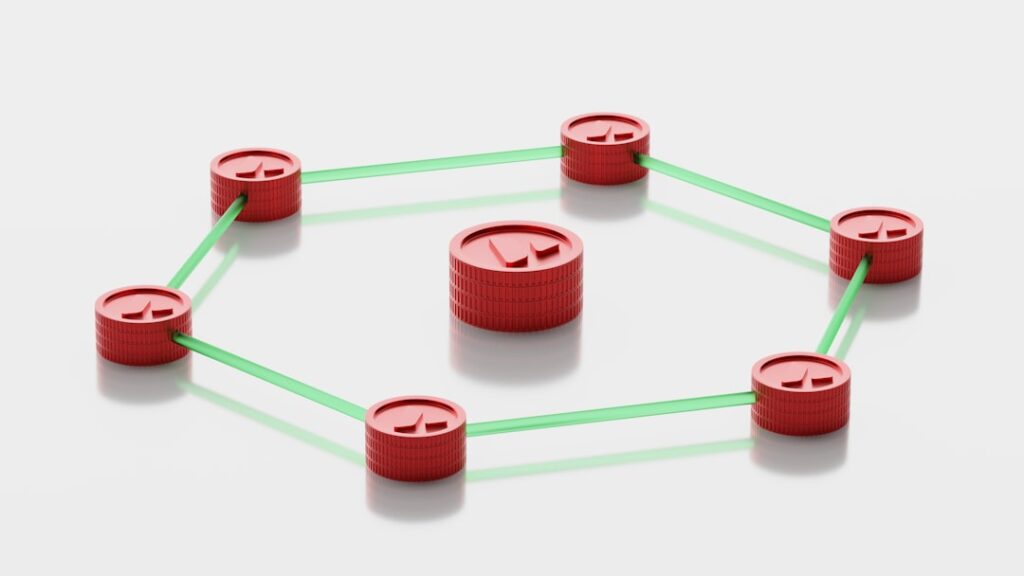
The rise of invisible supply chains reshapes leadership pathways and institutional authority.
Entrepreneurial Leadership – Micro‑retail owners who adopt AI‑driven ordering become de‑facto data custodians, leveraging sales analytics to negotiate better terms with suppliers.
Entrepreneurial Leadership – Micro‑retail owners who adopt AI‑driven ordering become de‑facto data custodians, leveraging sales analytics to negotiate better terms with suppliers. Case in point: “Aisha’s Corner” in Lagos, which after integrating the “SmartStock” platform, increased its margin by 9 % and secured a joint‑venture contract with a multinational detergent brand [2].
Institutional Power Shifts – Multinationals now embed “micro‑producer advisory councils” within their regional governance structures, granting micro‑retail representatives voting rights on product‑mix decisions. This participatory model mirrors the co‑operative governance reforms of the 1970s European agricultural sector, where farmer councils gained statutory input on subsidy allocations [5].
 Career Guidance
7 Strategies for Crafting a Personalized Learning Plan in the Era of Micro-Skills
Employers are no longer relying solely on degrees to assess a candidate's skills and competence. Instead,
Read More →Skill Transfer and Credentialing – Certification programs co‑developed by MIT’s LIFT Lab and local chambers of commerce certify “Micro‑Fulfillment Operators” (MFOs), a credential recognized across the supply‑chain ecosystem. Holders of the MFO credential command a 23 % salary premium relative to uncredentialed peers, establishing a new tier of career capital within the logistics labor market [2].
These dynamics illustrate how invisible supply chains serve as a conduit for both economic mobility and the diffusion of institutional authority from centralized corporations to dispersed micro‑producers.
Projected Trajectory to 2031
If current adoption rates persist—7.6 % annual growth in micro‑retailer density through 2030 [4]—the micro‑fulfillment infrastructure will account for 38 % of total retail distribution volume in the top ten emerging economies by 2031. The trajectory entails three converging trends:
> [Insight 3]: The emerging talent ecosystem—anchored by certification programs and platform‑provided training—generates new career capital, accelerating economic mobility for workers historically excluded from formal logistics roles.
- Scale‑Driven Cost Compression – As modular MFCs achieve economies of scale, the cost per SKU is projected to fall below $0.12, undercutting traditional depot pricing and compelling legacy distributors to either consolidate or specialize in high‑value, low‑frequency goods.
- Policy Institutionalization – Governments in Kenya, India, and Brazil are drafting “Micro‑Supply‑Chain Enablement” statutes that mandate data interoperability standards and provide tax incentives for micro‑fulfillment investments, institutionalizing the structural shift.
- Talent Pipeline Maturation – By 2030, the cohort of certified MFOs is expected to exceed 250,000 across Africa and Asia, creating a robust talent pool that will fuel further AI integration, autonomous micro‑delivery, and cross‑border micro‑logistics corridors.
The systemic implication is a rebalancing of economic power toward a networked layer of micro‑producers, supported by AI‑enabled platforms and fintech credit. This rebalancing will redefine career trajectories, expand capital formation opportunities for low‑income entrepreneurs, and compel incumbents to cede institutional control to a more decentralized governance model.
Key Structural Insights
> [Insight 1]: Micro‑fulfillment has transitioned from a pilot technology to a mandatory supply‑chain infrastructure, compressing distribution nodes and reallocating capital toward neighborhood‑scale logistics.
> [Insight 2]: The integration of AI forecasting, fintech credit, and modular warehousing creates a self‑reinforcing loop that elevates micro‑retailers into data‑driven market participants, reshaping institutional power dynamics.
> [Insight 3]: The emerging talent ecosystem—anchored by certification programs and platform‑provided training—generates new career capital, accelerating economic mobility for workers historically excluded from formal logistics roles.
Sources
Transforming Supply Chains Through Micro Fulfillment Innovation — LinkedIn Pulse
Empowering Micro Retailers in Emerging Markets | MIT Center for Transportation & Logistics — MIT Podcast
2026 Retail Industry Global Outlook — Deloitte Insights
AI and e-commerce tools transform emerging market retail — Unilever
 Career Guidance
Posts Spread After Call to Identify Jane Doe
More than eleven thousand accounts made almost twenty-five thousand posts purporting to name Jane Doe, according to Gudea’s analysis.
Read More →Written by Career Ahead AI. AI can make mistakes, so verify key facts. Report errors to support@careeraheadonline.com.