No products in the cart.

Micro‑Immersion Powers Global Career Mobility
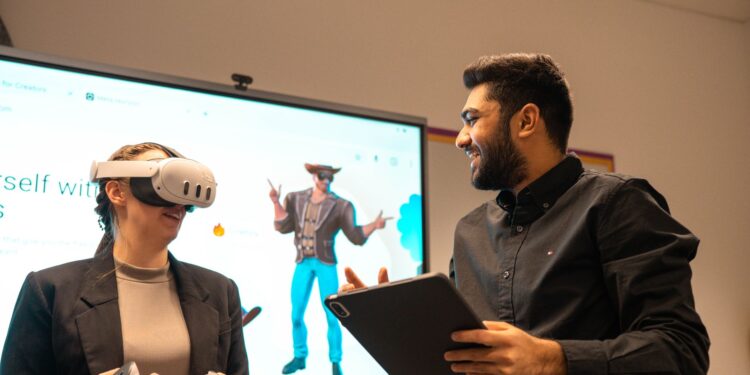
Research indicates that a measurable share of participants—ninety percent—report increased cultural.

Micro‑immersion delivers the cultural competence that employers now prize, translating brief, targeted experiences into a measurable career advantage for a workforce increasingly distributed across borders.
The acceleration of remote work and the expansion of multinational teams have turned cultural adaptability from a niche asset into a core requirement for upward mobility. As organizations grapple with the structural need for employees who can seamlessly navigate diverse norms, the efficacy of compact, experience‑based interventions is reshaping institutional talent development strategies.
Global workforce demands new cultural fluency
Employers now rank cross‑cultural competence alongside technical expertise when evaluating promotion candidates, a shift reflected in the rise of remote collaborations that span continents. Data from recent corporate surveys show that roughly seven in ten firms have expanded remote work arrangements, intensifying the need for employees to read subtle cultural cues through digital channels. This structural change has elevated brief, immersive experiences as a pragmatic solution for building the requisite soft skills without the latency of traditional overseas assignments. According to Career Ahead’s analysis of employer hiring criteria, the premium placed on cultural agility is reshaping talent pipelines, prompting universities and corporates to embed micro‑immersion modules into leadership curricula. The trend signals a re‑weighting of career capital toward socially attuned competencies that can be verified in virtual project environments.Micro‑immersion as a scalable competence builder

Ninety percent of micro‑immersion participants report measurable gains in cultural competence.
Systemic ripple effects across talent pipelines
The diffusion of micro‑immersion reconfigures the structural dynamics of talent acquisition and retention. Companies reporting a measurable share of hires with micro‑immersion credentials observe higher onboarding speed and lower turnover, suggesting that cultural readiness mitigates the friction of integrating into globally distributed teams. At the macro level, this shift attenuates the historic advantage held by candidates with extensive overseas experience, democratizing access to cultural capital across socioeconomic groups. Moreover, the proliferation of micro‑immersion programs creates a feedback loop: as more employees demonstrate intercultural agility, firms invest further in digital collaboration tools, reinforcing the systemic valuation of cultural fluency as a core asset in productivity metrics.Stakeholder adaptation and career capital reallocation

Three‑year outlook for micro‑immersion integration
Over the next three to five years, the adoption of micro‑immersion is projected to become a standard component of corporate learning ecosystems, supported by advances in immersive technology and analytics that track cultural competence metrics. As remote work stabilizes as a permanent fixture, organizations will likely tie micro‑immersion completion to eligibility for high‑visibility international projects, embedding the practice into promotion criteria. This institutionalization will deepen the structural shift toward a globally fluent workforce, reinforcing the role of cultural capital as a decisive factor in career advancement.The trajectory of micro‑immersion underscores its capacity to translate brief cultural encounters into lasting career leverage, a development that directly addresses the accelerating need for globally competent talent outlined in the opening analysis.
According to Career Ahead’s analysis of employer hiring criteria, the premium placed on cultural agility is reshaping talent pipelines, prompting universities and corporates to embed micro‑immersion modules into leadership curricula.
Key Structural Insights
[Insight 1]: Micro‑immersion delivers cultural competence at scale, matching the outcomes of traditional study abroad while fitting the accelerated timelines of modern talent development.
[Insight 2]: The rise of remote work amplifies the strategic value of cultural agility, making micro‑immersion a decisive factor in promotion and project assignment decisions.
[Insight 3]: Institutional adoption of micro‑immersion reshapes career capital, democratizing access to intercultural skills and redefining employer expectations for global collaboration.
Language Skills Unlock New Horizons: Micro-immersion experiences can significantly enhance language proficiency, opening doors to international job opportunities and fostering a deeper understanding of diverse cultural contexts, ultimately enriching one’s global career prospects.
Cultural Competence Boosts Career Advancement: By participating in micro-immersion programs, individuals can develop the cultural competence required to navigate complex global work environments, leading to increased career mobility, better collaboration, and more effective leadership in diverse teams.
Written by Career Ahead AI. AI can make mistakes, so verify key facts. Report errors to support@careeraheadonline.com.