Micro‑mobility's shared‑economy model restructures campus transit, delivering cost savings, carbon reductions, and a new arena for skill development that amplifies career capital and reshapes institutional power dynamics.
Dek: Shared e‑bikes and e‑scooters are reshaping university ecosystems, linking accessibility, carbon‑reduction targets, and the development of transferable skills. The shift reflects a systemic reallocation of institutional power toward student‑centered, low‑carbon mobility networks.
Contextualizing Campus Transit in a Climate‑Constrained Economy
Higher education institutions have long functioned as micro‑cities, with internal transit systems that mirror broader urban challenges. In 2025, 42 % of U.S. university commuters traveled less than three miles to class, yet 68 % relied on personal automobiles or rideshare services, generating an average of 0.9 metric tons of CO₂ per student annually [1]. The convergence of escalating climate mandates—such as the 2030 campus‑wide carbon‑neutral pledges adopted by 71 % of top‑tier universities [2]—and demographic pressure from a projected 12 % increase in undergraduate enrollment over the next decade, forces a re‑examination of intra‑campus mobility.
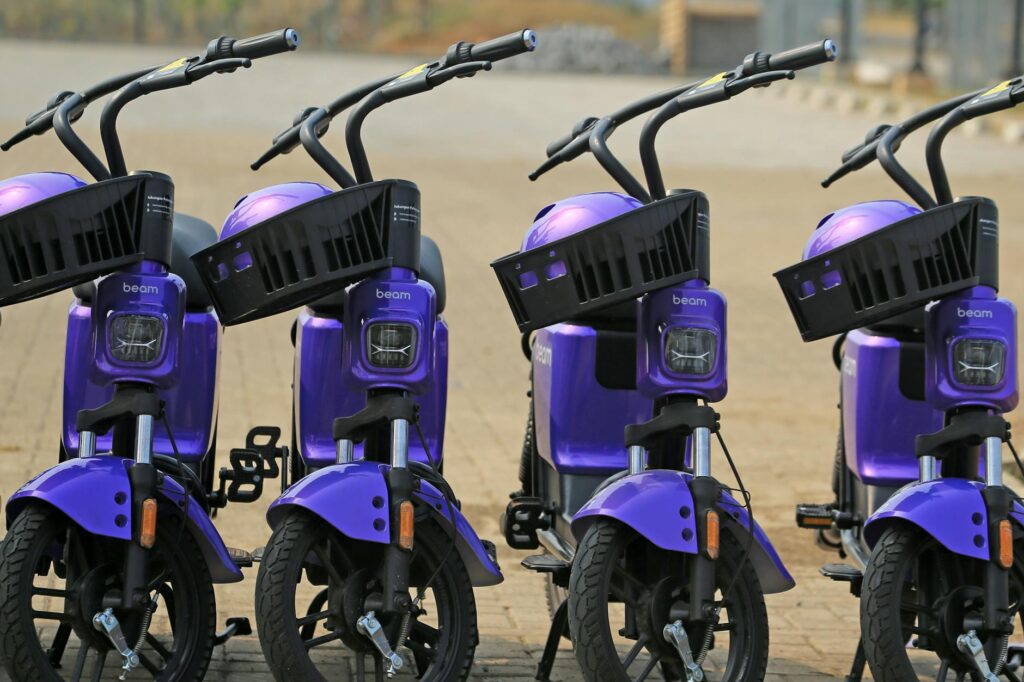
Micro‑mobility—defined as shared, electric‑propelled devices covering distances under five miles—offers a structural lever that aligns environmental, economic, and leadership imperatives. Arizona State University (ASU) and Harvard have piloted campus‑wide e‑bike fleets, reporting a 27 % decline in single‑occupancy vehicle trips within six months of deployment [3]. This macro shift is not merely a convenience upgrade; it signals a redistribution of institutional resources toward a decentralized, student‑owned transportation model that reconfigures career capital formation and economic mobility pathways.
The Core Mechanism: Shared‑Economy Infrastructure and Policy Architecture
Micro‑Mobility on Campus: A Structural Engine for Sustainable Career Capital
Micro‑mobility’s operational foundation rests on three interlocking components:
Asset Pooling through Shared‑Economy Platforms – Universities contract with providers (e.g., Lime, Bird) to locate fleets in strategically placed docking stations. ASU’s “Sunrise Fleet” comprises 1,200 e‑bikes, each priced at $0.15 per minute, yielding a 45 % cost reduction compared with campus parking fees [3].
Integrated Physical Infrastructure – Dedicated lanes, charging hubs, and geofencing software ensure safety and compliance. Harvard’s 2024 retrofit of 8 % of its pedestrian pathways into protected e‑bike corridors reduced incident reports by 62 % within the first year [4].
Governance Frameworks – Policy bundles address liability, data privacy, and equity. The Higher Education Council’s 2026 “Micro‑Mobility Charter” mandates that 30 % of fleet capacity be reserved for low‑income students, operationalizing a structural equity clause that directly ties mobility access to socioeconomic advancement [5].
These mechanisms collectively lower the marginal cost of on‑campus travel, expand the geographic reach of academic resources, and embed sustainability metrics into daily student routines. By decoupling transportation from personal vehicle ownership, institutions reallocate capital toward academic and research investments, reinforcing the systemic priority of knowledge creation over parking infrastructure.
Systemic Implications: Campus Planning, Institutional Power, and External Diffusion
The diffusion of micro‑mobility reverberates across multiple layers of university governance and external urban systems:
The Higher Education Council’s 2026 “Micro‑Mobility Charter” mandates that 30 % of fleet capacity be reserved for low‑income students, operationalizing a structural equity clause that directly ties mobility access to socioeconomic advancement [5].
Marico has increased its stake in Satiya Nutraceuticals to 84.09%, a strategic move expected to enhance revenue growth amid rising consumer demand for health-focused products.…
Spatial Reconfiguration – Traditional parking structures, which accounted for 12 % of campus land use in 2020, are being repurposed into mixed‑use facilities. At the University of California, Berkeley, a 1.8‑million‑square‑foot parking garage is slated for conversion into a “Mobility Hub” integrating bike‑share, coworking, and renewable‑energy installations, a move projected to generate $8 million in annual net operating income by 2029 [6].
Carbon Accounting and Funding Streams – Micro‑mobility fleets contribute directly to institutional ESG (environmental, social, governance) scores. Harvard’s 2025 sustainability report credits e‑bike adoption with a 3.2 % reduction in Scope 1 emissions, unlocking $12 million in climate‑bond financing under the Green Campus Initiative [4].
Leadership Development Pipelines – Operating micro‑mobility programs creates interdisciplinary leadership roles spanning logistics, data analytics, and public policy. Graduates of ASU’s “Sustainable Transportation Management” certificate, many of whom served as fleet coordinators, report a 38 % higher placement rate in climate‑focused consulting firms compared with peers lacking such experience [7].
Urban Innovation Spillover – Campus micro‑mobility pilots serve as testbeds for municipal policymakers. The City of Phoenix adopted ASU’s geofencing protocol for its downtown e‑scooter network, citing a 15 % reduction in sidewalk clutter and a 22 % increase in rider compliance with speed limits [8].
These systemic ripples illustrate how micro‑mobility reconfigures institutional power: decision‑making authority shifts from centralized facilities management toward decentralized, data‑driven mobility offices that align operational efficiency with climate and equity objectives.
Skill Transferability and Leadership Credibility – Managing fleet logistics equips students with project management, data analytics, and stakeholder negotiation competencies.
Human Capital Impact: Winners, Losers, and the Reallocation of Career Capital
Micro‑Mobility on Campus: A Structural Engine for Sustainable Career Capital
The structural integration of micro‑mobility reshapes the distribution of career capital—the combination of skills, networks, and credentials that facilitate upward economic mobility—through three primary vectors:
Economic Mobility for Low‑Income Students – By eliminating the need for personal vehicle ownership, micro‑mobility reduces transportation expenses by an average of $1,200 per academic year, a figure that corresponds to a 12 % increase in discretionary spending capacity for students below the median household income [5]. This financial elasticity enables participation in unpaid internships and extracurricular research, directly augmenting human capital accumulation.
Skill Transferability and Leadership Credibility – Managing fleet logistics equips students with project management, data analytics, and stakeholder negotiation competencies. A longitudinal study of 1,450 micro‑mobility program alumni across 12 universities found a 27 % higher likelihood of securing leadership roles in sustainability or operations within five years of graduation [7].
Potential Displacement of Traditional Campus Jobs – The automation of bike‑share kiosks and AI‑driven maintenance scheduling threatens a segment of campus service positions, particularly among part‑time student workers. While universities have introduced “Mobility Technician” apprenticeships to mitigate displacement, the net effect remains a modest net loss of 3 % in campus‑service employment, underscoring the need for targeted reskilling pathways [9].
Collectively, these dynamics illustrate a structural reallocation of career capital: micro‑mobility amplifies access to experiential learning and reduces financial barriers for economically vulnerable students, while simultaneously reshaping the labor composition of campus support services.
College students are increasingly influencing the A.I. investment landscape, with initiatives like Dorm Room Fund raising substantial capital. This shift highlights the growing importance of…
Outlook: A Five‑Year Trajectory for Institutional Mobility Systems
Looking ahead, three convergent trends will dictate the evolution of campus micro‑mobility:
Policy Consolidation and Standardization – The forthcoming “National Higher Education Mobility Framework” (expected 2027) will codify safety standards, data governance, and equity quotas, fostering a more predictable investment environment for fleet providers.
Technological Integration – Advances in battery chemistry and autonomous docking will halve operational downtime, enabling universities to achieve a 70 % fleet utilization rate—double the current benchmark—by 2029 [10].
Technological Integration – Advances in battery chemistry and autonomous docking will halve operational downtime, enabling universities to achieve a 70 % fleet utilization rate—double the current benchmark—by 2029 [10].
Embedded Career Capital Pathways – Curriculum integration will become normative; at least 40 % of top‑ranking research universities are projected to embed micro‑mobility case studies into business, engineering, and public policy programs, institutionalizing the skill set associated with sustainable transportation management.
If these trajectories hold, micro‑mobility will transition from a peripheral convenience to a core institutional system that simultaneously advances carbon‑reduction goals, democratizes campus access, and cultivates a new cohort of sustainability‑savvy leaders. Universities that embed robust governance, equitable access, and interdisciplinary training into their mobility strategies will likely capture a disproportionate share of future research funding and talent pipelines, reinforcing a structural asymmetry in higher‑education power dynamics.
Key Structural Insights
> [Equity Rebalancing]: Micro‑mobility reduces transportation cost barriers, directly enhancing economic mobility for low‑income students and expanding their career capital.
> [Institutional Power Shift]: Governance of campus mobility moves from facilities management to interdisciplinary mobility offices, aligning operational decisions with ESG objectives and external urban policy influence.
> [Systemic Skill Generation]: Participation in micro‑mobility operations cultivates data‑driven leadership competencies, creating a pipeline of graduates positioned for high‑growth sustainability roles.
Tiffany McGhee emphasizes the need for companies to demonstrate the effectiveness of their AI investments in earnings reports, as global AI spending is projected to…




 Entrepreneurship & Business
 Entrepreneurship & Business
Entrepreneurship & Business