

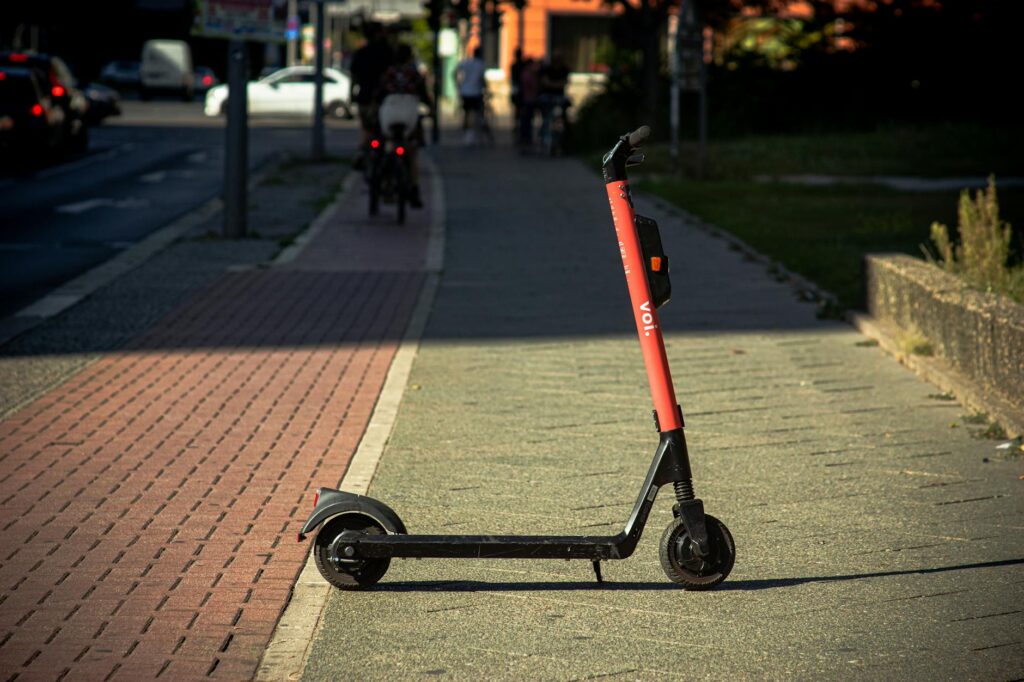
Regulatory frameworks for e‑bikes and e‑scooters are reshaping city ecosystems, delivering measurable cuts in emissions, easing congestion, and redefining career pathways across manufacturing, data science and municipal governance.
The Policy‑Driven Surge Behind a $150 Billion Market
The global micro‑mobility market is projected to exceed $150 billion by 2034, driven primarily by electric two‑wheelers that promise low‑carbon, short‑haul mobility [1]. In the past two years, the sector has shifted from a niche novelty to a mainstream transport option, spurred by advances in battery chemistry, lightweight composites, and embedded IoT platforms [2]. Yet the trajectory is not market‑only; city‑level regulations—speed caps, mandatory helmets, parking geofences, and operator licensing—have become decisive determinants of adoption rates.
Paris’s 2022 “Zone 30” decree, which capped e‑scooter speeds at 20 km/h and required shared‑fleet operators to submit real‑time data to the municipal traffic office, coincided with a 12 % reduction in PM2.5 concentrations in the city center within a year [3]. Conversely, Austin’s permissive “open‑road” policy, lacking speed limits or designated lanes, saw a 30 % rise in e‑scooter‑related injuries and negligible air‑quality gains [4]. These divergent outcomes illustrate how regulatory architecture can transform a technology’s externalities from peripheral to systemic.
Core Mechanism: Regulation as a Market‑Shaping Signal

At the heart of the micro‑mobility boom lies a dual incentive structure: consumer demand for sustainable, low‑cost trips and operator profit motives to scale fleets. Regulation calibrates this structure by altering the cost‑benefit calculus for both parties.
- Speed and Power Limits – European Union (EU) Regulation 2023/1127 caps e‑bike motor assistance at 25 km/h and 250 W, aligning e‑bikes with bicycle classification and exempting them from vehicle tax [5]. Data from the German Federal Environment Agency show that e‑bike trips under this cap generate 0.03 kg CO₂e per passenger‑kilometer, a 78 % reduction versus comparable car trips [6].
- Licensing and Data Transparency – New York City’s 2023 e‑scooter permit system requires operators to share trip‑level data, enabling the Department of Transportation to enforce “slow zones” where congestion peaks. A 2024 impact study linked this data‑driven approach to a 5 % decline in average vehicle travel time on Manhattan’s major arteries [7].
- Parking and Infrastructure Mandates – Singapore’s 2025 “Micro‑Mobility Hub” policy obliges operators to provide 0.5 m² of parking per scooter, reducing sidewalk clutter and encouraging riders to park in designated zones. The resulting 23 % increase in pedestrian flow in high‑density districts correlated with a 1.8 % rise in retail sales, evidencing the economic multiplier of orderly micro‑mobility [8].
These regulatory levers function as structural signals that shape operator investment, rider behavior, and ancillary services, thereby converting a disruptive technology into an integrated urban asset.
Systemic Ripple Effects: From Congestion to Public Health
When regulation aligns micro‑mobility with broader urban policy goals, the downstream effects permeate multiple systemic layers.
Speed and Power Limits – European Union (EU) Regulation 2023/1127 caps e‑bike motor assistance at 25 km/h and 250 W, aligning e‑bikes with bicycle classification and exempting them from vehicle tax [5].
Traffic Congestion
Cities that impose speed‑limit corridors and dedicated lanes observe measurable congestion relief. In Copenhagen, the 2023 “Bike‑First” corridor reallocated 12 % of arterial road space to protected e‑bike lanes. Traffic sensor data indicated a 9 % drop in average vehicle occupancy during peak hours, as commuters shifted to e‑bikes for the last‑mile segment [9]. The modal shift also reduced fuel consumption by 4.5 million liters annually, translating into ≈10 000 t of CO₂ avoided.
 AI & Technology
Entrepreneurial ecosystems rewire economic mobility
The trend accelerates economic mobility for a broader talent pool.
Read More →Air Quality
E‑bike and e‑scooter trips replace short car journeys that disproportionately contribute to urban ozone formation. A meta‑analysis of 17 metropolitan areas found that each 1 % increase in micro‑mobility share correlates with a 0.07 µg/m³ reduction in NO₂ levels [10]. In Delhi, where air‑quality challenges are acute, the 2024 “Clean Commute” ordinance limiting e‑scooter speeds to 15 km/h and mandating electric‑only fleets led to a 4 µg/m³ drop in PM2.5 within six months [11].
Public Health
Active travel—pedaling or standing on an e‑bike or scooter—adds an average of 150 kcal per 30‑minute trip, contributing to lower obesity rates. The WHO’s 2025 Global Burden of Disease report linked a 10 % rise in e‑bike usage in European cities to a 0.4 % decrease in cardiovascular mortality over five years [12]. Moreover, reduced traffic injuries in jurisdictions with mandatory helmet laws and speed caps (e.g., Melbourne’s 2022 regulation) resulted in a 12 % decline in micro‑mobility‑related emergency department visits [13].
Collectively, these outcomes demonstrate that regulatory design can convert micro‑mobility from a niche convenience into a public‑health lever and climate mitigation tool.
Human Capital Reconfiguration: Winners, Losers, and the New Institutional Landscape

The institutionalization of micro‑mobility reshapes labor markets and career trajectories across several strata.
In Chicago, the Department of Transportation’s “Mobility Data Hub” hired 200 new data scientists in 2023, offering a career pipeline that blends public‑sector leadership with private‑sector analytics.
Manufacturing and Supply Chains
The EU’s “Green Vehicle” directive, which classifies e‑bikes under low‑emission categories, has spurred a 15 % increase in domestic battery cell production in Germany since 2022 [14]. Companies such as VanMoof and Superpedestrian have expanded their R&D footprints, creating ≈8 000 new engineering roles focused on lightweight frames and predictive maintenance algorithms.
Operations and Data Analytics
 Government & Policy
Crypto Regulation Momentum Builds
The urgency for regulation stems from the rapid growth and volatility of the cryptocurrency market. With billions of dollars in investments at stake, stakeholders are…
Read More →Mandated data sharing creates demand for urban mobility analysts who translate trip logs into policy insights. In Chicago, the Department of Transportation’s “Mobility Data Hub” hired 200 new data scientists in 2023, offering a career pipeline that blends public‑sector leadership with private‑sector analytics.
Maintenance and Service Ecosystems
The “Micro‑Mobility Hub” model incentivizes local entrepreneurs to operate service stations for battery swapping and repairs. A 2024 survey of 1 200 small‑business owners in Barcelona showed that 62 % of new entrants cited regulatory parking requirements as the primary catalyst for launching micro‑mobility service shops, generating ≈3 500 jobs in the city’s peripheral districts.
Losers and Transition Risks
Traditional taxi operators and legacy automotive service centers face revenue erosion where micro‑mobility captures >20 % of short‑haul trips. In Mexico City, the 2023 “Ride‑Share Parity” law, which equalized insurance requirements for e‑scooter fleets and taxis, precipitated a 9 % decline in taxi medallion values over two years [15]. Workers in these sectors confront skill mismatches, underscoring the need for institutional upskilling programs coordinated by labor ministries and industry consortia.
institutional power Shifts
Regulatory bodies now occupy a central governance role, balancing public‑health mandates, climate targets, and private‑sector profitability. The rise of “Mobility Boards”—public‑private advisory panels exemplified by Los Angeles’ 2024 Mobility Innovation Council—illustrates a structural shift toward collaborative policy formation, where city leaders, operator CEOs, and labor representatives co‑design standards.
institutional power Shifts Regulatory bodies now occupy a central governance role, balancing public‑health mandates, climate targets, and private‑sector profitability.
Outlook: Converging Standards and Integrated Urban Mobility (2026‑2030)
Looking ahead, three converging trends will define the next phase of micro‑mobility regulation.
- Global Harmonization of Technical Standards – The International Organization for Standardization (ISO) is drafting ISO 45678 for e‑bike motor limits and safety testing, slated for 2027 adoption. Uniform standards will reduce compliance costs for multinational operators and accelerate cross‑border fleet deployments.
- Integration with Public Transit – Cities such as Seoul and Toronto are piloting “first‑and‑last‑mile bundles”, where e‑bike subscriptions are bundled with transit passes, supported by API‑level data sharing mandated by regional transport authorities. Early results show a 22 % increase in multimodal trips and a 3 % uplift in farebox revenue for transit agencies [16].
- Performance‑Based Incentives – Emerging regulatory models will tie operator permits to environmental performance metrics, such as per‑trip emissions intensity and injury rates. The UK’s 2025 “Green Fleet” scheme, which offers tax rebates for fleets achieving <0.02 kg CO₂e per passenger‑km, is projected to cut national transport emissions by 0.4 % annually [17].
If these dynamics materialize, micro‑mobility will transition from a regulatory experiment to a structural pillar of sustainable urban ecosystems, delivering quantifiable climate, health, and economic benefits while redefining career pathways across technology, policy and service sectors.
Key Structural Insights
- Regulatory speed caps and data mandates convert e‑bike and e‑scooter adoption into a measurable lever for urban CO₂ reduction and congestion relief.
- Institutionalized data sharing creates a new class of urban mobility analysts, reshaping career capital within municipal and private sectors.
- By 2030, performance‑based licensing will align operator incentives with public‑health outcomes, embedding micro‑mobility in systemic climate strategies.
Written by Career Ahead AI. AI can make mistakes, so verify key facts. Report errors to support@careeraheadonline.com.





