No products in the cart.

Multipolar Shift Redefines Global Governance, Trade Flows, and Career Capital
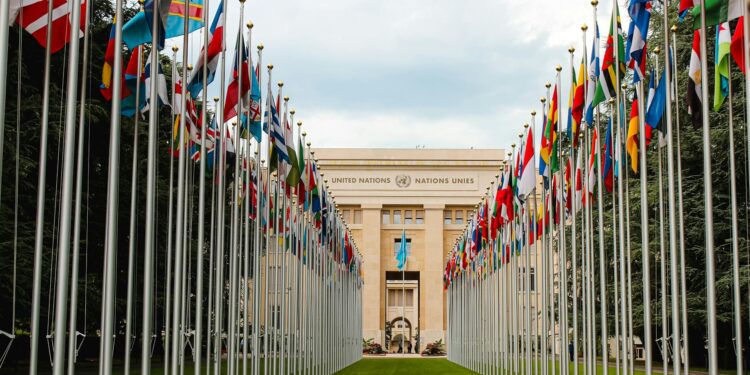
As power, capital, and normative authority disperse across China, India, the EU and regional blocs, institutions and professionals must adapt to a fragmented governance lattice that reshapes career trajectories and economic mobility.

The rise of China, India and regional blocs is restructuring the institutional architecture that underpins economic mobility and leadership pipelines.
Investors, diplomats and senior managers must now calibrate strategies to a system where power, capital and norms are dispersed across competing poles.
Opening: Macro Context and Institutional Stakes
Since the early 2020s, the international system has moved from a U.S.-centric unipolar order toward a structurally multipolar configuration. In 2024 China accounted for 18 % of global nominal GDP, eclipsing the United States’ 15 % and narrowing the gap that defined the post‑Cold‑War era [1]. Simultaneously, Beijing’s defense budget reached $282 billion, a 7 % year‑on‑year increase that positions its military spending ahead of the United Kingdom and France combined [2]. These quantitative shifts are mirrored by qualitative changes: the Shanghai Cooperation Organization (SCO) now encompasses 12 full members and three dialogue partners, while the European Union’s strategic autonomy agenda has accelerated the creation of a “European Security and Defence Union.”
The macro‑level consequence is a more fragmented governance landscape. Traditional institutions— the United Nations Security Council, the International Monetary Fund (IMF), and the World Trade Organization (WTO)—were designed around a limited set of great powers. Their voting formulas and normative frameworks now clash with the aspirations of emerging economies seeking proportional influence. The European Economic and Social Committee’s February 2026 briefing underscored this tension, noting that “the EU must negotiate its role as both a normative champion and a pragmatic actor in a world where multiple centers of authority compete for legitimacy” [2].
For career‑focused professionals, the rebalancing of institutional power reshapes pathways to leadership, the geography of capital flows, and the skill sets required to navigate a more complex, interdependent system.
Layer 1: Redistribution of Power as Core Mechanism
Economic Reallocation
The primary driver of multipolarity is the redistribution of economic weight. Between 2010 and 2024, the combined GDP of the BRICS nations grew from $15 trillion to $28 trillion, representing a 87 % increase that outpaced the OECD average of 38 % over the same period [1]. This growth translates into greater fiscal capacity to fund overseas projects, most visibly through China’s Belt and Road Initiative (BRI). By the end of 2025, BRI‑linked investments surpassed $1.2 trillion across 71 countries, a figure that rivals the total annual disbursements of the World Bank’s development arm [3].
Military Realignment
Parallel to fiscal expansion, defense spending has become a strategic lever. Russia’s 2023 defense budget, though contracted by 3 % due to sanctions, remains the largest in Europe, while India’s 2024 allocation crossed $80 billion, placing it in the top five global spenders. The emergence of the SCO’s “joint rapid reaction force” illustrates a shift from ad‑hoc coalitions to institutionalized security architectures that can operate independently of NATO frameworks.
Layer 1: Redistribution of Power as Core Mechanism Multipolar Shift Redefines Global Governance, Trade Flows, and Career Capital Economic Reallocation The primary driver of multipolarity is the redistribution of economic weight.
Institutional Re‑engineering
You may also like
 Government & Policy
Centre tightens sugar stock limits for dealers amid festive demand
India has imposed new stock limits on sugar dealers effective October 15, 2026, restricting them to holding no more than 1,000 quintals of sugar at…
Read More →These economic and military trends force a re‑engineering of global institutions. The IMF’s quota reforms, approved in 2022, increased the voting share of emerging markets from 15 % to 23 % but left the United States with a 16.5 % veto power, preserving a hybrid power structure that reflects both continuity and adaptation [4]. The United Nations General Assembly has witnessed a 30 % rise in resolutions sponsored by non‑Western blocs since 2019, indicating a procedural shift toward agenda‑setting by new poles.
Historical parallels are instructive. The post‑World‑War I League of Nations attempted to embed collective security but collapsed under the weight of rising nationalist powers. The Bretton Woods system, forged in 1944, succeeded because the United States possessed both the economic clout and the institutional will to shape rules. Today, the United States’ relative decline and the coordinated rise of China and India suggest a transition from a hegemonic to a “structured competition” model, where institutional adaptation is the primary mechanism for conflict mitigation.
Layer 2: Systemic Ripple Effects on Trade, Law, and Security
Trade Architecture Fragmentation
Multipolar dynamics have accelerated the proliferation of parallel trade agreements. The Comprehensive and Progressive Agreement for Trans‑Pacific Partnership (CPTPP) now covers 11 economies, representing $13.5 trillion in GDP, while the Regional Comprehensive Economic Partnership (RCEP) encompasses 15 Asian economies accounting for $26.7 trillion. The coexistence of these blocs creates a “trade lattice” in which firms must navigate divergent standards on digital services, labor rights, and environmental safeguards. A 2025 McKinsey analysis estimated that compliance costs for multinational corporations rose by 12 % as a direct result of overlapping rulebooks.
Normative Divergence in International Law
The diffusion of authority has also fragmented normative consensus. China’s promotion of “common prosperity” as a development model, coupled with its push for “sovereign internet” principles, challenges the liberal democratic norm of open markets and data flows. In the International Court of Justice, the frequency of cases filed by emerging economies has increased from 4 per year in 2010 to 17 per year in 2024, reflecting a strategic use of legal mechanisms to assert alternative interpretations of sovereignty and human rights [5].
Security Calculus and Non‑Proliferation
Security implications are pronounced. The expansion of nuclear capabilities—India’s 2023 operationalization of a sea‑based deterrent, and Russia’s continued modernization of its strategic arsenal—has heightened the probability of miscalculation. The 2024 “New Strategic Stability Dialogue” between the United States, China, and Russia produced only a limited “confidence‑building” framework, lacking verification protocols. Consequently, the risk premium on sovereign debt for countries in contested regions (e.g., the Indo‑Pacific) rose by 150 basis points between 2022 and 2024, underscoring how geopolitical uncertainty translates into higher financing costs for both public and private actors.
The 2024 “New Strategic Stability Dialogue” between the United States, China, and Russia produced only a limited “confidence‑building” framework, lacking verification protocols.
These systemic ripples reverberate through the labor market. Professionals with expertise in cross‑regional regulatory compliance, multilingual negotiation, and geopolitical risk analytics have seen a 28 % salary premium relative to peers focused on single‑market specializations, according to the 2025 Global Talent Survey by the World Economic Forum.
Layer 3: Human Capital and Career Capital Reconfiguration
Diplomatic Corps Evolution
National foreign services are reshaping recruitment and promotion criteria. The U.S. State Department’s 2024 “Multipolar Readiness” program now requires officers to demonstrate proficiency in at least two non‑Western languages and to complete a “regional power dynamics” simulation. Similarly, the Chinese Ministry of Foreign Affairs has institutionalized “Belt and Road” rotations, assigning diplomats to BRI project hubs for three‑year stints to build sector‑specific expertise.
You may also like
 Government & Policy
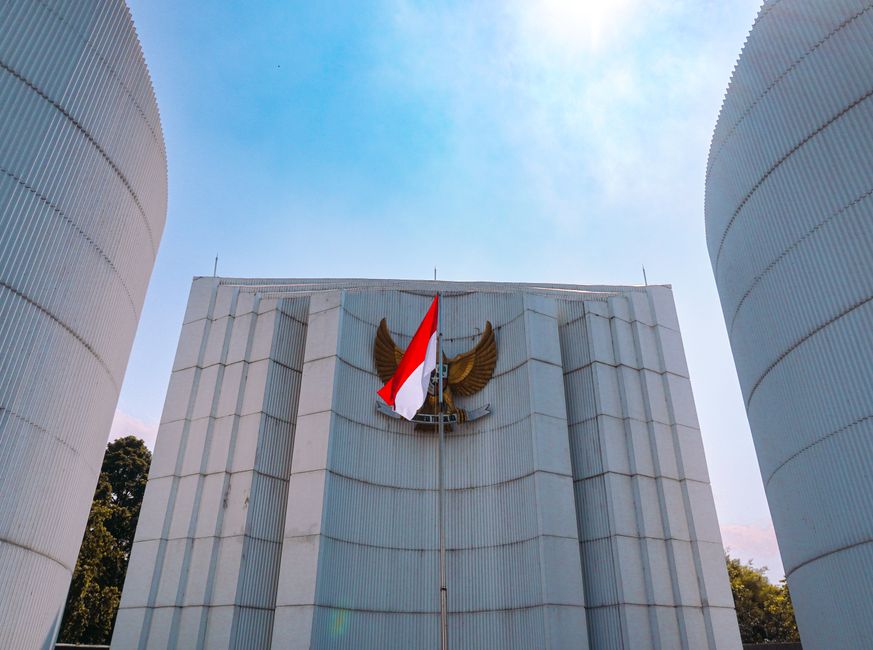
New Indonesia Finance Chief Steers Clear of Prabowo Turf Wars
Indonesia's new finance chief emphasizes collaboration in economic policy, aiming to reshape governance and engage diverse stakeholders in addressing the country's economic challenges.
Read More →corporate leadership Pipelines
In the private sector, board composition is reflecting the new power geometry. A 2023 analysis of S&P 500 firms showed that 42 % of boards now include at least one director with experience in emerging‑market subsidiaries, up from 27 % in 2015. Companies are also establishing “Global Governance Units” tasked with aligning corporate strategy with the divergent regulatory regimes of the CPTPP, RCEP, and BRI frameworks. Executives who can synthesize these competing standards are emerging as the new “global integrators,” a role that commands a 15‑20 % premium in total compensation packages.
Investment and Capital Mobility
Capital allocation patterns have adapted to the multipolar environment. Institutional investors have increased exposure to “strategic sovereign assets” — infrastructure, energy, and digital platforms in BRI and RCEP economies — from 8 % of global assets under management in 2020 to 14 % in 2025. The rise of “political risk funds” that hedge against policy volatility in contested regions reflects a market response to systemic uncertainty. For finance professionals, expertise in sovereign credit analysis, geopolitical scenario modeling, and cross‑border regulatory arbitrage has become a core component of career capital.
Academic and Research Realignment
Universities are reconfiguring curricula to address the multipolar reality. The London School of Economics launched a “Multipolar Governance” master’s program in 2024, enrolling 250 students from 40 countries in its inaugural cohort. Funding for research on “institutional resilience in a fragmented world” grew by 35 % across the European Research Council’s 2023‑2026 funding cycle, signaling an institutional acknowledgment that the scholarly apparatus must evolve alongside the geopolitical substrate.
Closing: Trajectory to 2030
The next five years will likely cement multipolarism as the structural baseline rather than a transitional phase. By 2030, the combined voting power of emerging economies in the IMF is projected to exceed 30 %, while the United Nations Security Council is expected to face renewed reform proposals that could expand permanent membership to include India and Brazil. Trade architecture will become increasingly modular, with firms operating in “networked clusters” that align with the dominant standards of whichever pole dominates a given market segment.
Trade architecture will become increasingly modular, with firms operating in “networked clusters” that align with the dominant standards of whichever pole dominates a given market segment.
For individuals navigating this environment, career capital will be measured by the ability to operate across divergent institutional regimes, translate asymmetrical policy signals into actionable strategy, and cultivate leadership credibility in multiple geopolitical contexts. Organizations that embed systemic foresight—through scenario planning units, cross‑regional talent pools, and adaptive governance structures—will capture the upside of a fragmented yet interdependent world.
In sum, the evolution toward a multipolar order is not a peripheral trend; it is a systemic reconfiguration of power, capital, and normative authority that will dictate the contours of economic mobility, institutional legitimacy, and leadership pathways for the decade ahead.
You may also like
 Entrepreneurship & Business
Nike
Nike's recent sales slump has prompted its CEO to reconsider strategies, significantly impacting marketing and product management roles. Understanding the implications for consumer engagement and…
Read More →Key Structural Insights
- The redistribution of GDP and defense spending among China, India and Russia has reoriented institutional power, compelling global bodies to renegotiate voting formulas and normative agendas.
- Overlapping trade blocs and divergent legal standards generate a lattice of compliance demands, rewarding professionals who can synthesize cross‑regional regulatory regimes.
- By 2030, career trajectories will hinge on the capacity to navigate multiple sovereign risk environments, making geopolitical fluency a core component of executive capital.