No products in the cart.

Nvidia CEO Announces H200 Production Boost for China Market
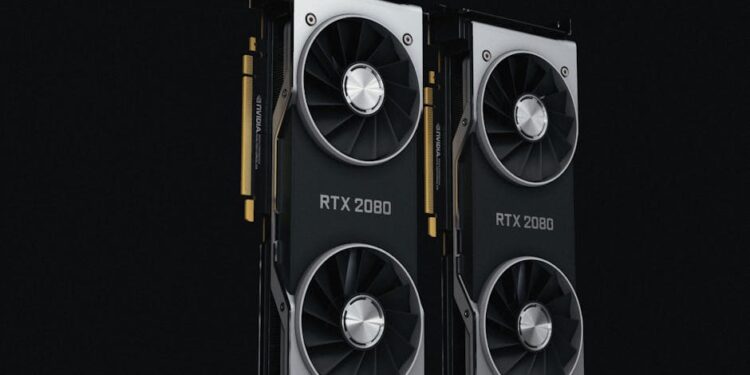
Nvidia ramps up H200 production to meet China's AI demand, navigating geopolitical challenges while enhancing its market presence.


“`html
Nvidia’s Bold Step: H200 Production for China
Nvidia CEO Jensen Huang announced that the company is ramping up H200 production to meet demand in China. The H200 is Nvidia’s latest high-performance computing (HPC) accelerator, designed for data centers that require extensive parallel processing, such as AI training and real-time analytics. Built on the Hopper GPU architecture, it offers significant performance improvements over previous models, aligning with China’s growing need for AI services.
China’s market is rapidly adopting AI technologies. Financial institutions are using predictive analytics, hospitals are incorporating deep-learning diagnostics, and e-commerce platforms are deploying recommendation systems that handle billions of interactions daily. The demand for capable hardware has outstripped the supply of local GPUs, positioning Nvidia’s H200 to fill this gap.
By increasing production for China, Nvidia is not just seeking revenue; it is establishing a strong presence in a region that consumes a large portion of global AI computing resources. This move shows confidence in navigating the complex regulatory landscape while providing the computing power that Chinese businesses need.
The Geopolitical Landscape: Implications for Tech and Trade
U.S.–China relations have faced significant trade and technology tensions. The U.S. has imposed export controls on advanced semiconductors due to national security concerns. Meanwhile, China is pushing its “Made in China 2025” initiative to achieve self-sufficiency in key technologies, including AI chips.
In this context, Nvidia’s decision to boost H200 production for China is both bold and risky. It shows the company’s readiness to operate within U.S. export regulations that allow certain AI accelerators to be shipped to China under specific licenses. However, this move may attract scrutiny from policymakers worried about potential military applications or state surveillance.
This move shows confidence in navigating the complex regulatory landscape while providing the computing power that Chinese businesses need.
China’s tech ambitions raise the stakes. The government’s “New Generation Artificial Intelligence Development Plan” aims to make China a global AI leader by 2030. To achieve this, Chinese companies need both software talent and the hardware to train models effectively. Nvidia’s H200, with its advanced tensor cores and high-bandwidth memory, fits well into this vision, potentially speeding up the gap between China’s current capabilities and its goals.
Other semiconductor companies, like AMD and Intel, have taken a more cautious approach, reducing or delaying shipments of their advanced chips to China. Nvidia’s decision could set a precedent, forcing the industry to reconsider the balance between market opportunities and geopolitical risks.
You may also like
 AI & Technology
Data‑Driven Raise Negotiations Redefine Career Capital
Aiming for a 6%–17% increase positions the request well above the 3.1% average merit increase.
Read More →Market Reactions: Investors Weigh In
Following the Bloomberg report, Nvidia’s stock rose about 2%. Traders saw this as a sign of new growth potential, especially after a year of supply-chain issues and declining demand for consumer GPUs.
Analysts have mixed opinions. Some believe the H200’s performance and China’s AI spending make this a “strategic masterstroke,” while others warn that complex trade relationships could expose Nvidia to sudden policy changes that might limit shipments.
Traders saw this as a sign of new growth potential, especially after a year of supply-chain issues and declining demand for consumer GPUs.
Investor sentiment is cautiously optimistic. Institutional investors are closely monitoring the rollout, weighing the potential for increased revenue against regulatory risks. Hedge funds involved in semiconductor supply chains are adjusting their models to account for possible escalations in export controls.

Strategic Perspective
Nvidia’s move into China reflects a trend among tech firms to capture market share in the world’s largest AI consumer, despite ongoing diplomatic tensions. Companies like Qualcomm and ARM are also seeking ways to keep their products accessible in China while navigating licensing challenges.
Nvidia’s H200 rollout could set a standard for the global tech supply chain. If successful, it may encourage other companies to pursue similar strategies. Conversely, any compliance issues or policy changes could lead to a retreat from the Chinese market, shifting supply chains toward domestic alternatives.
Critical Insights
The H200’s entry into China is more than just a product launch; it tests how multinational chipmakers will operate in a world where technology and geopolitics are intertwined. Nvidia’s ability to balance U.S. regulations with Chinese market demands will influence its revenue in the coming quarters.
Investors should monitor three key factors: the stability of export-control licensing, the speed of H200 adoption by Chinese companies, and the overall policy environment affecting semiconductor trade.
You may also like
 Government & Policy
Wall Street’s $10 billion India hospital bet sparks a fight over bills | Career Outlook
Wall Street's $10 billion investment in Indian hospitals raises concerns about rising healthcare costs and access to care, mirroring challenges in the U.S. healthcare system.
Read More →Investors should monitor three key factors: the stability of export-control licensing, the speed of H200 adoption by Chinese companies, and the overall policy environment affecting semiconductor trade. These elements will shape Nvidia’s future and the broader high-performance computing landscape.
Looking Ahead
As AI technology evolves, the hardware that supports it becomes increasingly valuable. Nvidia’s decision to boost H200 production for China indicates a commitment to this high-stakes market, betting that the rewards outweigh the risks. The next few months will reveal whether the H200 fosters deeper tech ties between the U.S. and China or highlights existing divides.
“`