No products in the cart.

Navigating the A.I. Labor Crisis: A Path Forward
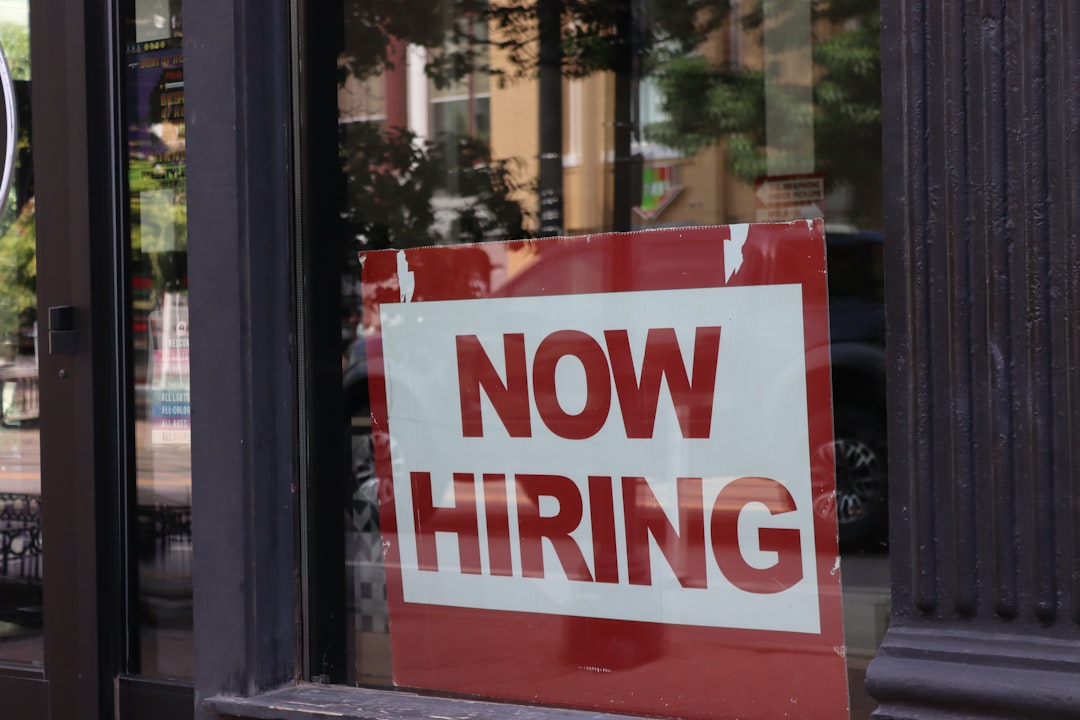
Explore solutions to the impending A.I. labor crisis with a renewed social contract, empowering workers through real-time data and targeted training.

The Looming A.I. Labor Crisis: A Historical Parallel
When the Bulova watch factory in Providence, Rhode Island, shuttered its doors in the 1980s, a generation of skilled craftsmen found themselves adrift. My father, a thirty‑year veteran of that plant, was forced into early retirement at 56, a casualty of a new economic rulebook that favored cheap overseas labor over domestic expertise. The community that had once pulsed with the rhythm of assembly lines grew quiet, its streets echoing a silence that would later become a political fault line.
That episode was not an isolated tragedy; it was the first movement of a larger tide that reshaped American manufacturing. The promise of free‑trade agreements and global supply chains seemed inevitable, yet the social safety nets meant to cushion displaced workers were thin at best. The result was a patchwork of hollowed‑out cities, rising inequality, and a culture of division that still informs today’s partisan debates.
Now, a new wave threatens to repeat that pattern, but at a speed and scale unprecedented in modern history. Artificial intelligence is automating tasks across the spectrum—from entry‑level data entry to complex diagnostic procedures—outpacing the ability of the workforce to adapt. Millions of Americans, whether white‑collar analysts or blue‑collar technicians, face the prospect of unemployment without a clear path forward (The NewYorkTimes, 2026). The warning is stark: without decisive action, the same hollowed‑out neighborhoods that emerged after the factories left could reappear, this time under the banner of a digital disruption.
Rethinking workforce transition: The Need for a Grand Bargain
History teaches that market forces alone cannot solve the human cost of technological upheaval. The solution, as argued by economists and labor leaders alike, is a renewed social contract—a grand bargain that binds public policy to private innovation.
First, employers must own the responsibility of defining the skill sets that will matter in an AI‑driven economy. Companies sit at the frontier of emerging job categories; they can anticipate which roles will proliferate and which competencies will become obsolete. By publishing real‑time hiring plans and technology adoption roadmaps, businesses give workers a transparent view of where demand is shifting.
Second, the government must translate that transparency into actionable support. Targeted training programs, tax incentives for upskilling, and robust safety nets can bridge the gap between a worker’s current capabilities and the requirements of tomorrow’s jobs. The public sector’s role is not to slow innovation but to ensure that the benefits of AI are broadly shared, not hoarded by a narrow elite.
By publishing real‑time hiring plans and technology adoption roadmaps, businesses give workers a transparent view of where demand is shifting.
You may also like
 Business Innovation
Remote Governance Takes Root: How State and Local Agencies Are Institutionalizing Decentralized Work
Remote governance is reshaping fiscal allocations, career pathways, and citizen interaction by institutionalizing cloud and AI tools, while equity safeguards will dictate its inclusive impact.
Read More →This partnership demands more than goodwill; it requires enforceable commitments. Legislation could tie eligibility for certain subsidies to a company’s demonstrated investment in employee development. Conversely, public funding for community colleges and vocational institutes could be conditioned on their alignment with industry‑identified skill priorities. Such reciprocal obligations would create a feedback loop where market signals and policy instruments reinforce each other, turning the crisis into a catalyst for coordinated growth.
Empowering Workers: The Role of Real‑Time Data in Job Readiness
At the heart of this grand bargain lies data—precise, timely, and AI‑enhanced. Traditional labor market reports lag months, even years, behind the realities on the ground. In a world where an algorithm can replace a routine task overnight, that lag is fatal.
Employers equipped with AI analytics can forecast which positions are likely to shrink and which new roles are emerging. By sharing these forecasts with employees, workers can enroll in the right courses before their current jobs disappear. Imagine a dashboard that alerts a warehouse supervisor that the next quarter will see a 30 % reduction in manual sorting tasks, simultaneously recommending a certified program in robotic systems maintenance.
For workers, access to such predictive insights transforms uncertainty into agency. It also democratizes the reskilling process: rather than relying on generic “new‑career” advice, individuals receive tailored pathways that align with the specific demands of their local labor market. The result is a workforce that moves fluidly between occupations, reducing the duration of unemployment spells and preserving earnings power.

Public agencies can amplify this effect by aggregating employer‑provided data into regional labor market observatories. These observatories would publish open‑source APIs, enabling community colleges, non‑profits, and even gig‑platforms to build customized training pipelines. In this ecosystem, data is not a proprietary asset but a public good that fuels continuous adaptation.
Apprenticeship models, blended learning programs, and on‑the‑job mentorships have proven effective in sectors like advanced manufacturing; they can be repurposed for AI‑centric roles.
The Private Sector’s Frontline
Beyond data sharing, companies must invest directly in the upskilling of their own employees. Apprenticeship models, blended learning programs, and on‑the‑job mentorships have proven effective in sectors like advanced manufacturing; they can be repurposed for AI‑centric roles. When a software firm partners with a local university to offer a credential in machine‑learning operations, it not only fills its talent pipeline but also raises the overall skill level of the community.
You may also like
 Business Innovation
Building a High-Agency Culture: Leadership Strategies for Success
Discover how leaders can foster a high-agency culture that boosts employee engagement, customer satisfaction, and financial performance.
Read More →Such initiatives also mitigate the reputational risk of mass layoffs. By positioning themselves as partners in career development rather than arbiters of obsolescence, firms can maintain morale and loyalty, which in turn sustains productivity during transitional periods.
Government as Catalyst
State and federal bodies have a toolbox of levers to accelerate this transition. Direct subsidies for employers who meet defined upskilling benchmarks, expansion of Pell‑grant eligibility to cover short‑term technical certifications, and the creation of “AI transition zones”—designated areas where tax credits reward both private training investments and public employment services—are all within legislative reach.

Equally important is the reinforcement of safety nets. Extended unemployment benefits tied to participation in approved training programs can keep workers financially afloat while they acquire new competencies. By linking benefits to measurable progress, the system encourages active engagement rather than passive receipt.

Strategic Perspective for a Sustainable Future
The challenge before us is not merely a question of job numbers; it is a test of social cohesion. The same forces that once emptied factory floors now threaten to empty digital workstations. Yet the tools to avert that outcome already exist: transparent employer data, targeted public investment, and a willingness to reimagine the social contract.
Strategic Perspective for a Sustainable Future The challenge before us is not merely a question of job numbers; it is a test of social cohesion.
Implementing a grand bargain will require political courage. It demands that policymakers look beyond short‑term electoral cycles and that corporations view workforce stability as a strategic asset rather than a cost center. When both sides recognize that a resilient labor market is the foundation of sustained economic competitiveness, the partnership becomes self‑reinforcing.
The Long‑Term View
AI will continue to evolve, introducing capabilities we cannot yet fully anticipate. A dynamic transition system, however, can adapt alongside it. By institutionalizing real‑time data exchanges, embedding upskilling into the fabric of corporate strategy, and maintaining a robust public safety net, the United States can turn a looming crisis into a catalyst for inclusive prosperity.
You may also like
Why AI Falls Short in Luxury Jewelry
Luxury jewelry thrives on craftsmanship and personal connections. Discover why AI can't replace the human touch in this sector.
Read More →In the end, the story of the Bulova factory is not a cautionary tale of inevitable loss but a reminder that societies that act decisively—by aligning the incentives of business with the needs of workers—can rewrite the narrative of technological disruption. The next chapter will be written not by the machines that replace us, but by the policies and partnerships that empower us to work alongside them.