No products in the cart.

NE Universities Must Evolve into Problem-Solving Hubs
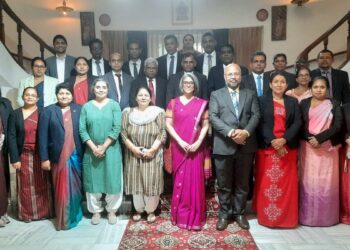
Arunachal Pradesh Chief Minister Pema Khandu has called for universities in Northeast India to transform into problem-solving institutions that tackle local challenges and enhance employability through practical skills and community engagement.

Arunachal Pradesh — Chief Minister Pema Khandu has urged universities in Northeast India to shift their focus towards becoming “problem-solving institutions.” This call to action was made during the two-day Roundtable of Vice-Chancellors of Northeast Universities, held at the Rashtriya Raksha University campus in Pasighat on August 11, 2026.
Khandu emphasized the need for higher education to adapt to the unique challenges faced by the region, including social, environmental, and strategic issues. He articulated a vision where universities not only prepare students for employment but also foster entrepreneurship, innovation, and public service. His goal is to transform universities into laboratories that address local problems through research and practical solutions.
Rethinking Higher Education’s Role
The Chief Minister’s remarks reflect a growing recognition that traditional educational models may not adequately serve societal needs. Khandu pointed out that institutions should integrate real-life challenges into their curricula, enabling students to engage with their communities and contribute to sustainable development.
According to an analysis by Career Ahead, this shift is crucial for enhancing graduates’ employability in Northeast India. Industries are increasingly seeking candidates with practical skills and problem-solving capabilities. Therefore, universities must revise their programs to align with these demands, creating a more relevant educational experience.
Khandu also criticized the reliance on rote learning and theoretical knowledge in Arunachal Pradesh’s education system. He advocated for a curriculum that prioritizes critical thinking and real-world applications. A report by EduRank supports this view, highlighting the rising demand for graduates who can effectively apply their knowledge, particularly in sectors like agriculture, tourism, and renewable energy.
Building Partnerships for Innovation
To realize this vision, Khandu proposed establishing partnerships between universities and local industries, government agencies, and civil society. Such collaborations could lead to innovative solutions in areas like sustainable agriculture, eco-tourism, and renewable energy. For instance, universities could assist local farmers in developing sustainable practices that enhance productivity while safeguarding the environment.
Khandu also criticized the reliance on rote learning and theoretical knowledge in Arunachal Pradesh’s education system.
Moreover, the Chief Minister called for the integration of technology in education. He suggested that universities adopt artificial intelligence and digital tools to create personalized learning experiences. This technological advancement could improve access to education, especially in remote areas, thereby supporting inclusive development goals.
Career Ahead’s research indicates that the demand for graduates with problem-solving skills is on the rise. As industries evolve, employers are looking for candidates who can think critically and innovate. Universities that adapt to these changes will not only enhance their relevance but also improve job readiness among students.
Community Engagement and Research Collaboration
Khandu’s vision extends beyond the classroom; it advocates for a comprehensive educational approach that includes community engagement. By collaborating with various sectors, universities can ensure that their research and educational initiatives address regional needs.
The proposed Northeast Higher Education Consortium aims to facilitate joint research, faculty exchanges, and shared resources among universities. This collaboration could strengthen academic networks and improve the quality of education. A report from EduRank suggests that universities in Arunachal Pradesh and the Northeast can lead in innovative education if they embrace collaboration.
Additionally, establishing Centres of Excellence for Indigenous Knowledge and Tribal Studies is vital for preserving local cultures. Khandu stressed that indigenous knowledge should be recognized as a valuable resource for contemporary applications, potentially creating new entrepreneurial opportunities that leverage local resources.
By focusing on these critical areas, institutions can align their missions with the United Nations’ sustainable development goals, benefiting both students and the broader community.

Preparing Students for Future Challenges
As universities evolve into problem-solving institutions, they can address pressing issues such as climate change, biodiversity conservation, and rural livelihoods. By focusing on these critical areas, institutions can align their missions with the United Nations’ sustainable development goals, benefiting both students and the broader community.
Khandu’s call to action has significant implications for students and their career prospects. By equipping graduates with practical skills and a problem-solving mindset, universities can enhance employability in a competitive job market. This shift promises a more engaging educational experience, moving away from rote learning towards critical thinking and real-world applications.

As universities collaborate with local industries, students may gain access to internships and hands-on experiences that bolster their resumes. Career Ahead’s research highlights that experiential learning opportunities are highly valued by employers, making this a crucial aspect of Khandu’s proposed educational reform.
As universities in Northeast India adopt this transformative vision, they could become catalysts for change within their communities. By addressing local challenges and promoting innovation, these institutions can contribute to a sustainable and prosperous future for the region.
Best practices include integrating local challenges into the curriculum, fostering partnerships with industries, and promoting experiential learning opportunities to enhance student engagement and employability.
Frequently Asked Questions
What are the best practices for implementing problem-solving curricula in universities?
Best practices include integrating local challenges into the curriculum, fostering partnerships with industries, and promoting experiential learning opportunities to enhance student engagement and employability.
How can higher education institutions in Northeast India collaborate with local industries?
Collaboration can occur through joint research projects, internships, and community engagement initiatives, allowing universities and industries to address regional challenges together.
What skills should curriculum developers focus on to meet regional challenges?
Curriculum developers should prioritize critical thinking, problem-solving, and technical skills relevant to local industries, while also incorporating indigenous knowledge and sustainable practices.
Related Articles
- VBSA Bill’s Impact on University Governance in India
Written by Career Ahead AI. AI can make mistakes, so verify key facts. Report errors to support@careeraheadonline.com.