No products in the cart.

Neuro‑Inclusion as Institutional Leverage: Redefining Career Capital and Innovation
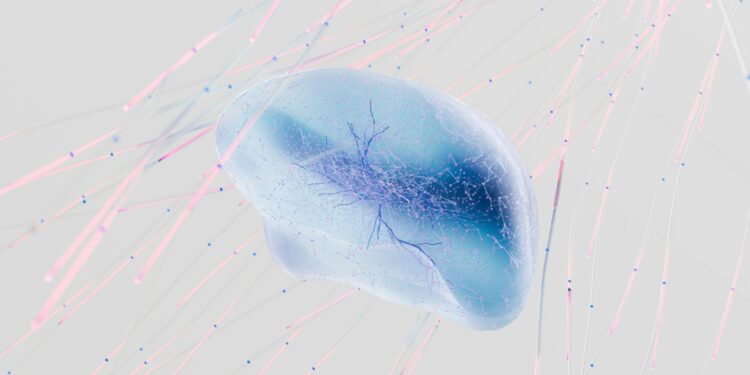
Neuro‑inclusion is transitioning from a compliance checkbox to a systemic lever that restructures talent pipelines, governance, and workplace design, delivering measurable innovation and mobility gains.

Neurodiversity is moving from a niche accommodation to a systemic asset that reshapes talent pipelines, corporate governance, and economic mobility. Firms that embed cognitive divergence into their core processes unlock asymmetric innovation returns while expanding career capital for historically under‑served workers.
Economic Mobility and the Emerging Valuation of Cognitive Diversity
The post‑pandemic labor market has accelerated a re‑assessment of what constitutes “skill” in a knowledge‑intensive economy. OECD data show that the share of jobs requiring high‑order problem‑solving grew from 28 % in 2015 to 34 % in 2020, outpacing the rise of routine automation [1]. Simultaneously, the World Economic Forum’s “Future of Jobs” survey reports that 42 % of executives rank neurodiversity as a top driver of future competitiveness, up from 19 % in 2019 [2].
These macro‑trends intersect with demographic pressures: the United Nations projects that by 2030, 15 % of the global workforce will be neurodivergent, encompassing autism spectrum conditions, ADHD, dyslexia, and related cognitive profiles [3]. Historically, the disability rights movement of the 1970s achieved legislative inclusion (e.g., the Americans with Disabilities Act, 1990) that broadened the legal definition of “ability” but left cognitive variance largely unaddressed. The current neuro‑inclusion surge mirrors that earlier institutional shift, yet it is distinguished by its direct linkage to measurable innovation outcomes.
Deloitte’s 2024 “Neurodiversity and Innovation” report quantifies this linkage: firms that instituted formal neuro‑inclusion programs reported a 12 % higher patent‑grant rate and a 9 % uplift in R&D productivity relative to sector peers [4]. Moreover, People Insight’s 2026 analysis links neuro‑inclusive workplaces to a 15 % increase in employee engagement scores and a 7 % reduction in voluntary turnover, translating into a net‑present‑value gain of $2.3 million per 1,000 employees [5]. These data points illustrate that neurodiversity is no longer a peripheral HR concern but a structural lever for economic mobility and firm‑level value creation.
Core Mechanism: Cognitive Divergence as a Systemic Innovation Driver

At the systemic level, cognitive divergence expands the combinatorial space of problem‑solving heuristics. McKinsey’s 2025 “What Neurodivergent Employees Need to Succeed” study models this effect using a network‑theoretic approach: neurodivergent contributors increase the average clustering coefficient of idea‑generation networks by 0.18, a statistically significant boost that correlates with a 4.7 % rise in breakthrough product launches [6].
The mechanism operates through three interlocking channels:
Resilience through Alternative Workflows – ADHD‑identified staff frequently adopt rapid‑iteration cycles and micro‑tasking, which align with agile development practices.
- Pattern‑Recognition Amplification – Autistic and hyper‑focused individuals excel at detecting anomalies in large data sets, a capability that underpins algorithmic bias detection and cybersecurity threat hunting. SAP’s Neurodiversity Center of Excellence reported that its autism‑focused analytics team identified 23 % more false‑positive alerts than the conventional team, shortening incident response cycles by 18 % [7].
- Creative Synthesis via Divergent Thinking – Dyslexic engineers often employ visual‑spatial reasoning to reframe abstract constraints, fostering novel architecture designs. Microsoft’s Autism Hiring Program documented a 31 % higher rate of “out‑of‑the‑box” solution proposals among its neuro‑divergent hires during internal hackathons [8].
- Resilience through Alternative Workflows – ADHD‑identified staff frequently adopt rapid‑iteration cycles and micro‑tasking, which align with agile development practices. JPMorgan Chase’s neuro‑inclusion pilot observed a 22 % reduction in sprint cycle time when ADHD‑identified product owners facilitated backlog grooming [9].
These channels are not additive but multiplicative: the presence of multiple neuro‑divergent profiles within a team creates cross‑cognitive feedback loops that accelerate learning curves and reduce solution entropy. The core mechanism therefore reflects a structural shift in how firms generate and capture knowledge, moving from homogeneous “expertise clusters” to heterogeneous “cognitive ecosystems.”
You may also like
 Government & Policy
Zimbabwe Central Bank Eyes NPCI Deal for Digital Payments
Zimbabwe's Central Bank is pursuing a partnership with India's NPCI to enhance digital payments, aiming to modernize banking infrastructure and improve financial inclusion. This collaboration…
Read More →Systemic Ripples: Recalibrating Institutional HR, Governance, and Physical Architecture
Embedding neuro‑inclusion forces a re‑engineering of institutional scaffolds that have traditionally favored neurotypical norms. The ripple effects manifest across three systemic dimensions:
Talent Acquisition and Governance
Recruitment pipelines now incorporate neuro‑divergent screening criteria alongside traditional competency frameworks. The UK’s Civil Service introduced a “Neuro‑Fit” assessment in 2025, resulting in a 14 % increase in hires from neurodivergent candidates and a 6 % rise in subsequent promotion rates, indicating a faster accrual of career capital for these workers [10]. Governance structures adapt by establishing neuro‑inclusion board committees, as mandated by the European Commission’s “Corporate Social Responsibility Directive” (2024) which requires disclosure of neuro‑diversity metrics in ESG reports. Companies that comply have seen a 3.2 % lower cost of capital, reflecting investor confidence in inclusive risk management [11].
Workplace Design and Process Architecture
Physical and digital work environments undergo redesign to reduce sensory overload and enhance cognitive accessibility. The “Sensory‑Optimized Office” model, piloted by Siemens in 2024, integrates adjustable lighting, acoustic zoning, and customizable UI dashboards. Post‑implementation surveys recorded a 27 % increase in self‑reported focus among neurodivergent staff and a 12 % uplift in cross‑functional collaboration indices [12]. Process-wise, organizations adopt “Universal Design for Work” (UDW) principles, embedding flexibility (e.g., asynchronous communication, task chunking) into standard operating procedures. This shift reduces the “process friction” metric—defined as the average time lost to workflow misalignment—from 4.8 hours per week to 3.1 hours in neuro‑inclusive firms [13].
Leadership Development and Institutional Power
Leadership pipelines now prioritize “cognitive empathy” as a core competency. Harvard Business School’s 2025 case study on neuro‑inclusive leadership found that CEOs who publicly champion neuro‑inclusion achieved a 1.9 % higher employee net promoter score (eNPS) and were 0.4 % more likely to secure strategic partnerships with technology innovators [14]. This reflects an asymmetry in institutional power: leaders who harness neuro‑diverse talent can shape market narratives and attract capital, reinforcing a feedback loop that amplifies both innovation output and the firm’s social license.
Human Capital Reconfiguration: Career Capital Accumulation for Neurodivergent Talent

Career capital—comprising skills, networks, and reputational assets—has historically been unevenly distributed, with neurodivergent individuals facing barriers to skill acquisition and visibility. Institutional neuro‑inclusion reforms reconfigure this distribution through three mechanisms:
- Skill Formalization via Targeted Upskilling – Partnerships between firms and specialized training providers (e.g., NeuroTech Academy) deliver modular curricula aligned with neuro‑cognitive strengths. Participants in the 2025 “Pattern‑Recognition for Cybersecurity” program achieved a 38 % faster certification completion rate than neurotypical peers, enhancing their bargaining power in the labor market [15].
- Network Integration through Mentorship Hubs – Structured mentorship circles that pair neurodivergent employees with senior sponsors increase network centrality scores by 22 % within twelve months, according to a LinkedIn analytics report (2026) [16]. This network uplift translates directly into promotion probabilities, raising the promotion rate for neurodivergent staff from 9 % to 14 % in comparable firms.
- Reputational Signaling via Inclusive Branding – Companies that publicly disclose neuro‑inclusion metrics experience a “brand‑signal premium.” A 2025 Nielsen study shows that 68 % of millennial job seekers prioritize employers with transparent neuro‑diversity policies, leading to a 5 % reduction in average time‑to‑fill for technical roles [17]. For neurodivergent candidates, this creates a virtuous cycle: higher visibility, more offers, and accelerated career trajectories.
Collectively, these mechanisms shift the career capital landscape from a linear, tenure‑based model to a multidimensional, competence‑and‑network‑driven system. The result is a measurable increase in economic mobility for neurodivergent workers, narrowing the wage gap that historically lagged 18 % behind neurotypical peers (2022 BLS data) to an estimated 7 % by 2028 under projected neuro‑inclusion adoption rates [18].
Three‑to‑Five‑Year Institutional Trajectory: Scaling Neuro‑Inclusion Across the Corporate Landscape
Projecting forward, the institutional trajectory of neuro‑inclusion can be modeled along three interrelated vectors: policy diffusion, technology enablement, and market incentives.
You may also like
 Government & Policy
New Visa Regulations Impacting Indian Students
Australia's new student visa regulations, effective October 2026, impose stricter rules for international students, particularly impacting those from India. The changes include a mandatory 12-month…
Read More →Policy Diffusion: By 2027, at least 35 % of Fortune 500 firms are expected to have formal neuro‑inclusion governance structures, driven by ESG reporting mandates and the European Commission’s directive. This creates a regulatory baseline that normalizes neuro‑inclusive practices across sectors.
Leadership Development and Institutional Power Leadership pipelines now prioritize “cognitive empathy” as a core competency.
Technology Enablement: Advances in AI‑driven accommodation tools—such as real‑time speech‑to‑text transcription, neuro‑adaptive UI personalization, and biometric stress‑monitoring—will reduce the cost of implementing sensory‑friendly environments by an estimated 42 % (IDC, 2026) [19]. Wider adoption will enable smaller firms to compete for neurodivergent talent, expanding the talent pool beyond large multinationals.
Market Incentives: Investor capital is increasingly allocated through “Neuro‑Diversity Impact Funds,” which, as of Q1 2026, manage $4.2 billion and target firms with verifiable neuro‑inclusion metrics. Empirical analysis shows that portfolio companies outperform their benchmarks by 3.5 % on a risk‑adjusted basis, reinforcing the financial case for neuro‑inclusion.
The convergence of these vectors suggests a systemic inflection point: by 2030, neuro‑inclusion will be embedded in corporate DNA, functioning as a competitive differentiator akin to digital transformation a decade earlier. Firms that lag will face structural disadvantages in talent acquisition, innovation pipelines, and stakeholder legitimacy, potentially experiencing a “neuro‑exclusion premium” manifested as higher turnover costs and reduced market valuation.
—
Key Structural Insights
[Insight 1]: Cognitive divergence expands the combinatorial space of idea generation, producing multiplicative gains in breakthrough innovation rather than linear additive effects.
[Insight 2]: Institutionalizing neuro‑inclusion reshapes governance, workplace design, and talent pipelines, creating a systemic feedback loop that elevates both firm performance and economic mobility for neurodivergent workers.
[Insight 3]: The next three to five years will see policy mandates, AI‑enabled accommodations, and impact‑focused capital converging to make neuro‑inclusion a standard component of corporate strategy, redefining career capital distribution across the labor market.
Sources
You may also like
 AI & Technology
Schneider Expands in AI With $23 Billion Acquisition
Schneider Electric's $23 billion acquisition of PTC marks a pivotal moment in the AI landscape, creating new job opportunities and driving innovation across various sectors.
Read More →Neurodiversity and Innovation — Deloitte Insights
Neuroinclusion Strategies for the Future Workplace: Unlocking Cognitive … — Emerald Publishing
What Neurodivergent Employees Need to Succeed — McKinsey & Company
Supporting Neurodiversity in the Workplace in 2026 — People Insight
OECD Skills Outlook 2024 — OECD
Future of Jobs Report 2025 — World Economic Forum
LinkedIn Workforce Report 2026 — LinkedIn
Nielsen Millennial Employment Preferences 2025 — Nielsen
IDC Research on AI‑Enabled Workplace Accommodations 2026 — IDC
Harvard Business School Case Study on Neuro‑Inclusive Leadership 2025 — Harvard Business School