No products in the cart.

Intel Benefits From a New Shift | Career Outlook
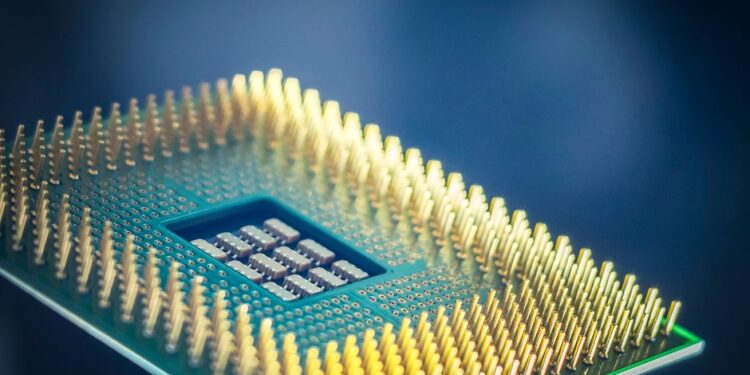
Intel's revenue surged by 25% in Q2 2026, driven by rising demand for CPUs from AI firms. This trend is reshaping the tech industry, impacting hardware innovation and the skills required for data scientists and engineers.

Intel’s revenue soared by 25% in the second quarter of 2026, marking its fastest growth in 15 years. This surge is largely attributed to the increasing demand for central processing units (CPUs) from AI firms. As companies ramp up their AI capabilities, the need for advanced hardware has never been more critical.
The rise in AI spending is reshaping the landscape for hardware engineers and data scientists. With Intel’s chips becoming a focal point for AI applications, the implications for CPU availability and performance are significant. This trend not only affects how projects are executed but also influences the skills required in the tech industry.
Increased Demand for CPUs from AI Firms
As AI technology advances, companies are investing heavily in hardware to support their initiatives. Intel’s recent performance reflects this shift, with AI firms increasingly purchasing its CPUs to power their applications. Career Ahead’s analysis of industry data shows that this trend is likely to continue, as AI adoption becomes more widespread across sectors. According to a report from the New York Times, Intel’s revenue growth is a direct result of AI firms increasingly buying its chips, indicating a robust market demand that is expected to persist as AI technologies evolve.
This heightened demand for CPUs is not just about quantity; it’s also about quality. Data scientists are looking for chips that can handle complex computations quickly and efficiently. Features like enhanced parallel processing capabilities and improved energy efficiency are becoming essential. As a result, hardware engineers must innovate to meet these evolving requirements. The competition in the chip market is intensifying, with rivals such as AMD and NVIDIA also vying for a share of the lucrative AI sector. This competitive landscape is driving innovation, pushing Intel to enhance its offerings and maintain its market position.
Intel’s focus on developing AI-optimized CPUs is a response to this market demand. The company has announced plans to release new chip architectures specifically designed for AI workloads. This move is expected to further solidify Intel’s position in the AI market and attract more clients from various industries. However, the increasing demand for CPUs also raises questions about supply chain constraints. As more companies seek to acquire these chips, potential shortages could impact project timelines and costs. Data scientists and hardware engineers must stay informed about these dynamics to navigate the challenges ahead.
The company has announced plans to release new chip architectures specifically designed for AI workloads.
You may also like
 AI & Technology
Big Four tap startups to offer one-stop AI transition packages
The Big Four consulting firms are collaborating with technology startups to deliver comprehensive AI transition packages, enhancing digital capabilities for enterprises.
Read More →Moreover, the implications of Intel’s growth extend beyond just financial metrics; they signal a broader shift in the tech industry’s priorities. As AI becomes more integral to business operations, the demand for specialized hardware will likely continue to rise, prompting companies to rethink their technology strategies.
Potential for New Hardware Innovations
The surge in AI spending is likely to catalyze significant hardware innovations. Intel’s revenue growth indicates a robust market for new technologies, particularly in the realm of AI. This environment encourages hardware engineers to explore novel designs and functionalities that can enhance CPU performance. As noted by Career Ahead, the focus on AI is prompting engineers to prioritize features such as accelerated processing speeds and specialized instruction sets tailored for machine learning tasks. These innovations are crucial as they enable data scientists to process large datasets more efficiently, ultimately leading to faster insights and better decision-making.
Furthermore, the competitive pressure from other chip manufacturers is driving Intel to innovate rapidly. Companies like AMD and NVIDIA are not only enhancing their existing products but also developing entirely new architectures aimed at optimizing AI performance. This competition compels Intel to invest in research and development to ensure its CPUs remain relevant and capable of meeting the demands of advanced AI applications. The New York Times highlights that this competitive environment is essential for fostering technological advancements that benefit the entire industry.
As new hardware innovations emerge, data scientists will need to adapt their skills accordingly. Understanding the capabilities of the latest CPUs will be essential for maximizing their potential in AI projects. This shift may require additional training and upskilling, further emphasizing the importance of continuous learning in the tech field. The evolving landscape of CPU development is not just about hardware; it also involves a transformation in the skill sets required for professionals in data science and engineering roles.

The evolving landscape of CPU development is not just about hardware; it also involves a transformation in the skill sets required for professionals in data science and engineering roles.
In summary, the landscape of CPU development is evolving rapidly due to AI demand. Hardware engineers must be proactive in embracing these changes to remain competitive and meet the needs of data scientists who rely on their innovations. As organizations increasingly leverage AI technologies, the interplay between hardware capabilities and software applications will be crucial for driving future advancements.
The rise in AI spending is directly influencing data processing speeds, a critical factor for both data scientists and hardware engineers. As Intel’s CPUs become more prevalent in AI applications, the performance of these chips will play a significant role in determining how quickly data can be processed and analyzed.
You may also like
 AI & Technology
Google Restructures AI Leadership with Demis Hassabis Shift
Google's restructuring of its AI leadership, including Demis Hassabis' new role as chief scientist, signals a shift towards prioritizing artificial general intelligence (AGI) and ethical…
Read More →Career Ahead analysis finds that faster processing speeds will enable data scientists to handle larger datasets with ease. This capability is vital as organizations increasingly rely on data-driven insights to inform their strategies. The ability to process data quickly can lead to a competitive advantage in various industries. However, the pressure on hardware engineers to deliver high-performance CPUs is mounting. As AI projects scale, the demand for chips that can support complex algorithms and real-time data processing will only grow. Engineers must focus on optimizing their designs to meet these demands while also considering cost-effectiveness and energy efficiency.
The implications of these developments extend beyond individual projects. As data processing speeds improve, organizations may find new opportunities for innovation and growth. This could lead to a broader shift in how businesses operate, as they leverage advanced AI technologies to enhance their offerings. As we look to the future, the interplay between AI spending and CPU development will be crucial. The direction of this relationship will shape the tech landscape, influencing everything from hardware design to data analysis capabilities.
Frequently Asked Questions
What new CPU features should data scientists look for?
Data scientists should prioritize CPUs with enhanced parallel processing capabilities and specialized instruction sets designed for AI workloads. These features enable faster data processing and more efficient handling of complex computations.
Data scientists should prioritize CPUs with enhanced parallel processing capabilities and specialized instruction sets designed for AI workloads.
How can hardware engineers adapt to the rising demand for AI-focused chips?
Hardware engineers can adapt by focusing on innovations in CPU design, emphasizing performance, energy efficiency, and specialized features for AI applications. Staying updated on industry trends and competitor advancements will also be crucial.
What should data scientists do about the increasing CPU costs due to AI demand?
Data scientists should monitor market trends and consider the long-term benefits of investing in higher-quality CPUs that enhance performance. Collaborating with hardware engineers to understand the best options for specific projects can also help mitigate costs.
You may also like
 AI & Technology
Ellison’s AI Gamble: Bubble or Game-Changer?
Larry Ellison's aggressive investment in AI is set to reshape the tech industry, creating new dynamics for cloud ML engineers and SaaS founders. As demand…
Read More →