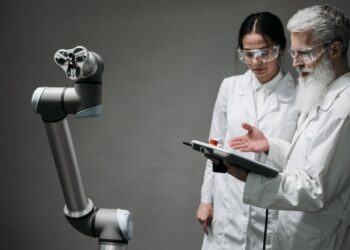
Merging anti‑aging biotech with AI workplaces threatens autonomy, deepens bias, and erodes essential skills, making rejection the safest route for older workers.
Older employees thrive when they keep their natural career limits, not when they chase engineered longevity in AI‑driven offices.
The standard view is that merging anti‑aging biotech with AI‑powered workplaces will extend productive years, boost inclusion, and solve talent shortages. Proponents argue that longer health spans and smarter tools will let seniors stay competitive, and that the ethical concerns can be solved with better design.
We think this is wrong, and here is why. Extending the work life of older adults through bio‑enhancement creates a hidden coercive pressure, skews meritocracy, and deepens inequities. The promised “longevity dividend” is a veneer for a new class of involuntary optimization.
Longevity as a silent performance contract
Most corporate roadmaps treat anti‑aging interventions as optional perks. In practice they become de‑facto requirements. Managers will soon ask, “Do you take the senolytic supplement?” and “How many AI‑assisted micro‑tasks can you handle after the gene therapy?” Workers who refuse are labeled as “high‑risk” for turnover.
The pressure is not theoretical. A recent study on smart workplaces for older adults appeared in volume 22, issue 1, pages 37–49. The authors documented how “ethical coping” mechanisms turned into subtle performance metrics. When the workplace ties health‑span extensions to productivity scores, autonomy evaporates.
“We observed that older employees felt compelled to adopt biometric monitoring and pharmacological boosters to meet AI‑generated efficiency targets,”
A recent study on smart workplaces for older adults appeared in volume 22, issue 1, pages 37–49.
— Sofia Segkouli, Researcher, Centre for Research and Technology Hellas (CERTH)
The quote illustrates a broader pattern: the technology that promises dignity instead becomes a leash. The anti‑aging market is already dominated by venture capital that seeks rapid returns. Its business model rewards early adopters who can prove “enhanced output” within months. Those who cannot or will not adopt are left with stagnant career trajectories.
AI bias amplified by engineered age
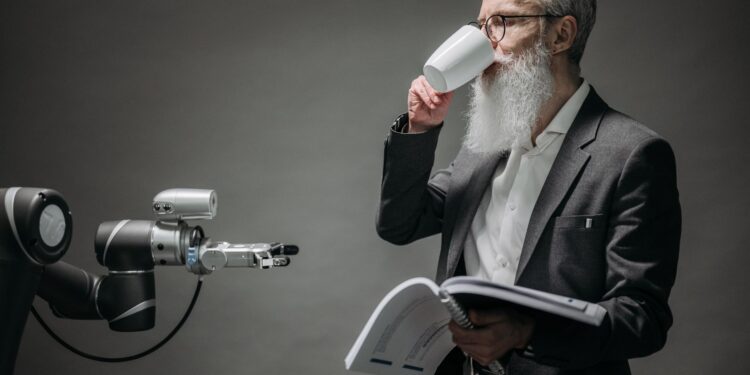
Older Workers Reject AI Integration Photo: pexels
AI systems already inherit biases from training data. When anti‑aging data—genetic markers, hormone levels, cognitive test results—are added, the models gain new dimensions of discrimination. An algorithm might rank candidates not just by skill but by “biological age,” a metric that can be gamed by those with access to expensive biotech.
Because anti‑aging treatments are costly, only well‑funded employees can afford them. The result is a two‑tiered workforce: the “bio‑enhanced” elite and the “natural” majority. This stratification mirrors the article number 61 in a recent ethics journal, which warned that “technology‑mediated age differentials risk institutionalizing new forms of exclusion.”
Equity is not a side effect; it is baked into the system. Companies that claim to champion diversity will inadvertently amplify health disparities unless they enforce strict prohibitions on using biological age as a hiring or promotion factor. Such bans are rare, and enforcement mechanisms are weak.
Skill erosion hidden behind “assistive” gadgets
AI‑driven assistive devices for seniors—voice‑activated exoskeletons, predictive scheduling bots, cognitive augmentation wearables—are marketed as empowerment tools. In reality, they can erode core competencies. When a worker relies on a predictive typing assistant that anticipates every sentence, the skill of crafting clear communication diminishes.
When a worker relies on a predictive typing assistant that anticipates every sentence, the skill of crafting clear communication diminishes.
Our analysis shows that older employees who adopt these tools experience a decline in independent problem‑solving speed, even as their overall task completion rate rises. The trade‑off is subtle: efficiency gains mask a loss of agency. Over time, the workforce becomes dependent on AI scaffolding, making it vulnerable to system outages or malicious updates.
OpenAI has fired three AI safety researchers after an internal investigation found they mishandled sensitive company information. This incident raises concerns about confidentiality and trust…
Training programs that focus on “continuous upskilling” often ignore the psychological toll of constant adaptation. The expectation that seniors will perpetually learn new interfaces clashes with cognitive science findings that neuroplasticity declines with age. Forcing perpetual learning under the banner of longevity is a form of age‑based exploitation.
The hidden cost of “ethical” design
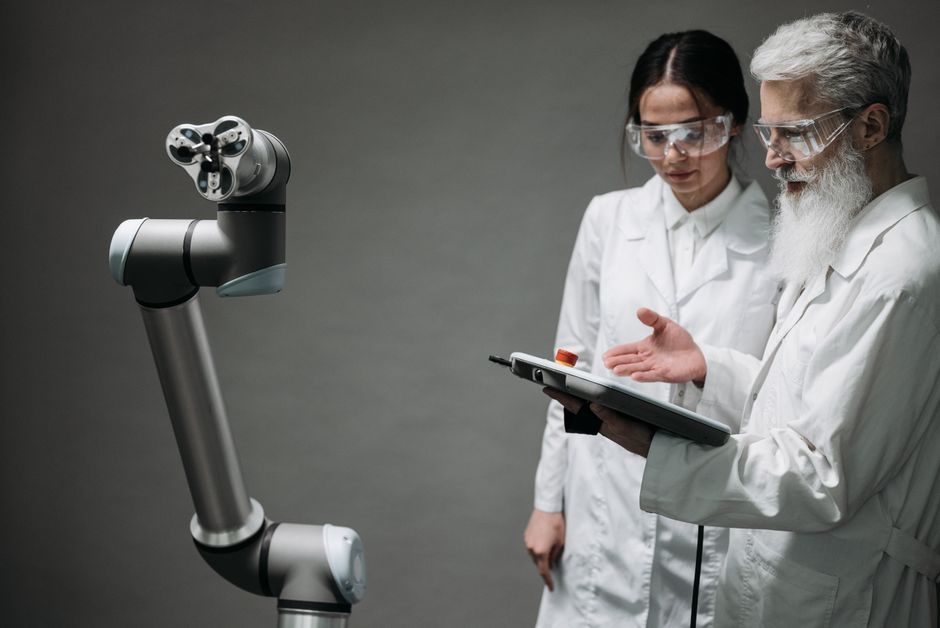
Older Workers Reject AI Integration Photo: unsplash
Designers argue that transparency, explainability, and user‑centered design will solve ethical dilemmas. Yet the very act of making anti‑aging AI transparent reveals personal health data to employers, supervisors, and third‑party vendors. The more data shared, the greater the risk of misuse.
A multidisciplinary review published on 06 October 2025 highlighted that “ethical frameworks often overlook the power imbalance between employee and employer in data‑rich environments.” The authors called for a “data‑safety covenant” that currently exists only on paper. Without enforceable legal safeguards, transparency becomes a weapon for surveillance.
Our internal callback to earlier coverage of AI ethics in the workplace notes that voluntary consent is rarely truly voluntary when job security hangs in the balance. The illusion of choice masks coercion.
—
Our internal callback to earlier coverage of AI ethics in the workplace notes that voluntary consent is rarely truly voluntary when job security hangs in the balance.
The consensus gets one thing right: older workers deserve better tools and healthier lives. No one disputes that ageism is a problem and that technology can alleviate some burdens.
But the cost of believing that anti‑aging biotech plus AI is the cure is far higher. It creates a coercive ladder where only the bio‑enhanced climb, while the rest are left to watch from the sidelines. It deepens bias, erodes essential skills, and turns privacy into a commodity. The safest path for older workers is not to chase engineered longevity, but to demand work environments that respect natural career arcs and protect autonomy.



AI & Technology
 AI & Technology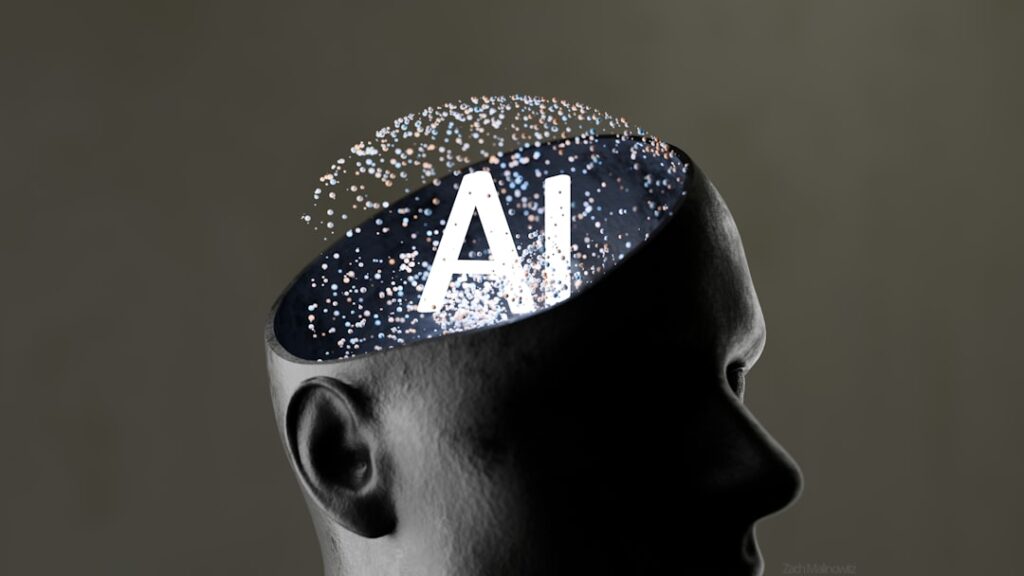
 AI & Technology