One factor beats every perk in employee satisfaction: a boss who can make small talk.
Most people will read that line and assume “small talk” is just friendly filler, not a strategic lever. In reality, the data point hides a deeper truth about how relational bandwidth fuels performance when algorithms handle the hard tasks.
What the “one factor” really tells us about leadership
The “1” in the opening sentence isn’t a ranking; it’s a signal that employees prioritize feeling seen over any material benefit. When a leader can turn a hallway greeting into a moment of genuine connection, the employee’s sense of “mattering” spikes. That psychological lift translates into higher engagement, lower turnover, and—ironically—a stronger capacity to work alongside AI tools that otherwise strip human nuance from daily workflows.
“a boss who’s good at making small talk”
— Zach Mercurio, leadership and workplace researcher
— Zach Mercurio, leadership and workplace researcher
In AI‑driven environments, machines excel at data crunching, pattern recognition, and even drafting emails. Yet they still lack the instinct to read a sigh behind a smile or to sense when a team member is silently wrestling with an ethical dilemma. Small talk supplies the human sensor net that catches those signals before they become performance gaps. The metric also aligns with research showing that a brief, five‑minute “power play” of purposeful conversation can reset a negotiation’s tone and boost influence. In a world where AI can generate endless slides, those five minutes become the most valuable currency of trust.
What the metric doesn’t capture about AI‑driven work
Building Workplace Connections with AI-Driven Conversation Photo: pexels
The focus on “1” factor can mislead leaders into thinking a single skill solves every relational challenge. It does not account for the complexity introduced by AI‑mediated communication—chatbots, virtual assistants, and algorithmic feedback loops. Employees may feel comfortable chatting with a bot, but that interaction lacks the emotional resonance required for true belonging. Moreover, the metric overlooks structural barriers: remote work, distributed teams, and cultural differences that shape how small talk is interpreted.
Another blind spot is the assumption that all small talk is equal. A perfunctory “How’s the weather?” does not carry the same weight as a conversation about a teammate’s recent project triumph or a personal milestone. The data point also ignores the risk of over‑reliance on informal chatter to compensate for missing formal feedback mechanisms. In AI‑rich settings, leaders must balance spontaneous rapport with data‑driven performance reviews to avoid mixed signals.
How to turn small talk into a strategic advantage
First, reframe small talk from “idle chatter” to “relational data collection.” Treat each brief exchange as a micro‑survey that informs how you allocate AI resources, adjust workloads, or intervene in emerging conflicts. Our analysis suggests a three‑step routine:
Set a micro‑window – carve out five minutes before or after meetings for purposeful, low‑stakes conversation. This aligns with the proven “5‑minute power play” that sharpens influence without derailing schedules.
Listen for the “mattering” cue – watch for signs that a colleague feels recognized or overlooked. A simple comment about a weekend hobby can reveal hidden stressors that AI analytics might miss.
Translate into action – feed the insight into your team’s AI dashboard as a qualitative tag (“needs recognition,” “high morale”). This creates a feedback loop where human intuition augments algorithmic decision‑making.
Second, coach leaders to practice “intentional small talk” in virtual spaces. Use video‑call “ice‑breaker” moments to ask open‑ended questions that invite personal stories, then mirror the sentiment back to demonstrate empathy. Over time, these practices become habit loops that reinforce a culture where AI tools are viewed as collaborators rather than replacements.
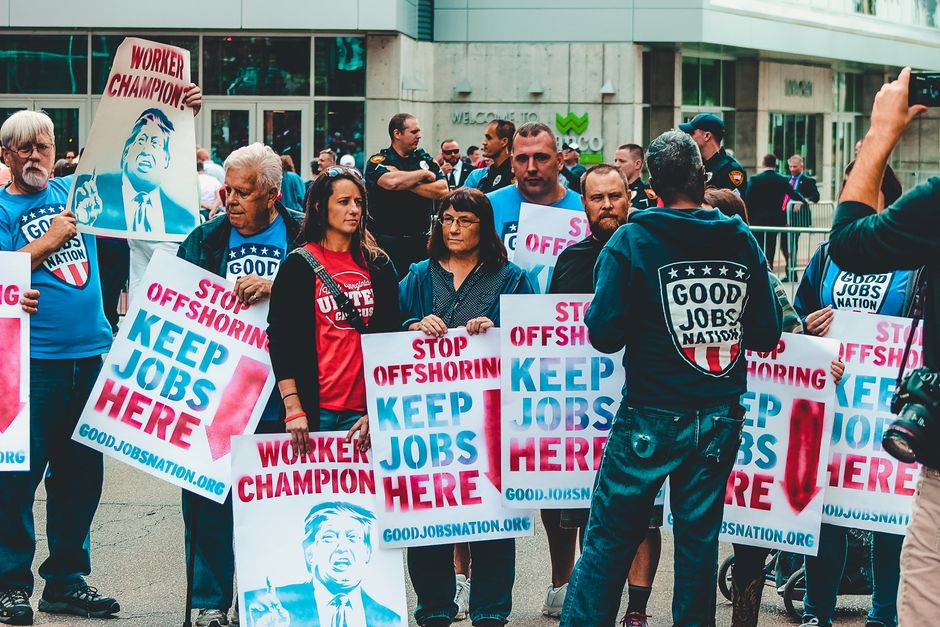
Unions in the manufacturing sector are actively negotiating safeguards against job losses due to AI, focusing on job security and retraining programs for workers.
Third, embed small‑talk metrics into leadership development programs. Track how often managers initiate these five‑minute windows and correlate the frequency with team performance scores. When the data shows a positive trend, celebrate it as a core competency alongside technical fluency.
In AI‑rich settings, leaders must balance spontaneous rapport with data‑driven performance reviews to avoid mixed signals.
What if the very small talk you dread is your biggest leverage? By treating those moments as strategic touchpoints, you future‑proof your leadership style against the homogenizing force of automation.
We see a clear pattern: organizations that institutionalize relational micro‑interactions outperform those that rely solely on AI‑generated performance dashboards. Our view is that the next wave of leadership excellence will be measured not just by how quickly a manager can interpret a data set, but by how adeptly they can weave human nuance into that interpretation. In practice, that means allocating time, training, and even budget to nurture the art of small talk—just as you would for any technical skill.
The Art of Human Connection in AI Age
Building Workplace Connections with AI-Driven Conversation Photo: unsplash
In the next 12 to 24 months, the “one factor” will likely evolve from a single preference into a composite index that blends conversational quality with AI‑enhanced sentiment analysis. Companies will deploy real‑time dashboards that flag moments when a leader’s small‑talk window yields a spike in employee “mattering” scores, prompting immediate reinforcement. Career Ahead’s read: leaders who master this hybrid skill set will become the architects of high‑trust, AI‑augmented workplaces where productivity and humanity rise together.
Written by Career Ahead AI. AI can make mistakes, so verify key facts. Report errors to support@careeraheadonline.com.
Career Ahead AI is Career Ahead Magazine's in-house AI newsroom, reporting on careers, education, jobs and business. It produces original summaries and analysis drawn from publicly available sources, with those sources credited, and operates under the editorial oversight of the Career Ahead team. AI can make mistakes, so please tell us when something looks wrong. Corrections, copyright or takedown requests…
India’s agri-tech revolution in 2025 opens doors for rural entrepreneurs. Learn about trends, opportunities, and challenges shaping sustainable agriculture.
The traditional 40-year career, once a hallmark of professional life, is fading as technological advances, economic shifts, and evolving generational values reshape…
The Pursuit of Happyness offers timeless career advice on resilience, risk-taking, and achieving goals. Learn actionable tips from Chris Gardner’s inspiring story…



Future Skills & Work

 Future Skills & Work