OpenAI Introduces MRC for AI Supercomputer Networking
OpenAI's new MRC protocol is set to transform AI supercomputing. By addressing networking bottlenecks, it enhances performance and reliability. This deep-dive explores its implications for the future of AI.
OpenAI has recently unveiled its Multipath Reliable Connection (MRC), a groundbreaking protocol designed to enhance the performance of AI supercomputers. This innovation emerges from the recognition that as AI models grow in complexity, the underlying networking infrastructure becomes a critical bottleneck. By addressing these challenges, OpenAI aims to streamline the training of large AI models, which is crucial for maintaining its competitive edge in the rapidly evolving AI landscape.
The introduction of MRC is not just a technical advancement; it represents a paradigm shift in how AI infrastructure is conceived. The protocol is built on the foundation of existing technologies but introduces significant improvements that promise to reduce latency and increase throughput. This is essential as the demand for AI capabilities continues to escalate, driven by applications in various sectors, from healthcare to finance.
How MRC Enhances Data Transfer
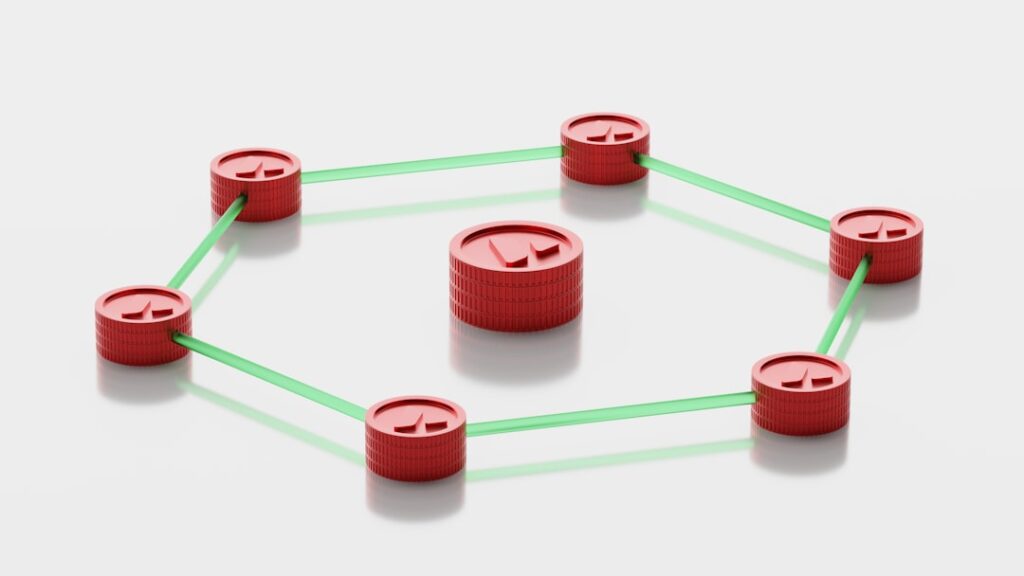
MRC employs several innovative mechanisms to optimize data transfer in supercomputing environments. One of its key features is adaptive packet spraying, which distributes data packets across multiple network paths. This method contrasts sharply with traditional protocols that rely on single-path transfers, which can lead to congestion and delays. By utilizing multiple paths, MRC enhances bandwidth utilization and minimizes latency, ensuring that training jobs proceed without interruption.
Additionally, MRC incorporates microsecond-level failure recovery through static source routing. This capability allows the system to detect and circumvent failures almost instantaneously, a feat that conventional networks struggle to achieve. As stated in a technical overview by networkacademy.io, the efficiency of data transfer is paramount in supercomputing, where even minor delays can significantly impact overall performance.
Furthermore, MRC’s architecture supports a two-tier topology, allowing for the connection of over 131,000 GPUs with fewer switches than traditional designs require. This reduction not only lowers costs but also simplifies the network infrastructure, making it more resilient to failures. The implications of this design are profound, as it enables organizations to scale their AI capabilities more effectively.
OpenAI’s MRC protocol directly addresses this need by significantly reducing the downtime associated with network failures and congestion.
Razorpay's partnership with OpenAI to introduce ChatGPT Ads marks a significant shift in how Indian brands approach digital marketing. This move opens new avenues for…
The introduction of MRC is poised to have far-reaching implications for AI development. As organizations increasingly rely on large-scale AI models, the ability to train these models efficiently becomes critical. OpenAI’s MRC protocol directly addresses this need by significantly reducing the downtime associated with network failures and congestion. This improvement can lead to faster iteration cycles for AI models, allowing companies to bring innovations to market more rapidly.
Moreover, the use of MRC can democratize access to advanced AI capabilities. Smaller organizations that previously lacked the resources to invest in complex networking infrastructure can now leverage OpenAI’s advancements to compete in the AI space. According to stationx.net, understanding networking fundamentals is essential for anyone looking to navigate the AI landscape effectively. MRC’s introduction could thus lower the barrier to entry for many aspiring AI developers.
As AI models become more sophisticated, the need for robust training infrastructures will only grow. MRC’s ability to enhance network reliability and performance positions it as a critical component in the future of AI supercomputing. This shift may encourage more research and development in networking technologies tailored specifically for AI applications.
Challenges and Industry Adoption
Despite the promising advancements presented by MRC, there are ongoing debates regarding the implications of such technology. Some experts argue that while MRC offers significant improvements, it may also lead to increased complexity in network management. The reliance on multiple paths for data transfer could introduce new challenges, particularly in monitoring and maintaining network health. As highlighted by zerotomastery.io, understanding networking concepts is crucial for tackling these challenges effectively.
Furthermore, there are concerns about how quickly the broader industry will adopt MRC. While OpenAI has implemented it in its own supercomputers, the transition to new protocols can be slow, especially in established organizations with legacy systems. Critics suggest that the inertia of existing infrastructures may hinder the rapid deployment of MRC across the industry.
MRC’s ability to enhance network reliability and performance positions it as a critical component in the future of AI supercomputing.
Another point of contention is the environmental impact of scaling AI supercomputing infrastructure. As organizations invest in more powerful hardware and networking solutions, questions arise about energy consumption and sustainability. The balance between performance and environmental responsibility is a critical debate that will shape the future of AI technology.
Future Innovations in AI Networking
The future of AI supercomputing with MRC looks promising. As the demand for AI capabilities continues to rise, the need for efficient networking solutions will become more pronounced. OpenAI’s MRC protocol is likely to inspire further innovations in networking technologies, potentially leading to new standards in the industry. The emphasis on reliability and performance will drive research into even more advanced protocols that can handle the increasing complexity of AI workloads.
Moreover, as organizations adopt MRC, we may see a shift in how AI projects are structured. The ability to train models more efficiently could lead to more ambitious projects, pushing the boundaries of what AI can achieve. This evolution may also encourage collaboration between tech companies and research institutions, as shared infrastructure becomes more feasible.
In the long term, the integration of MRC into AI supercomputing could redefine competitive dynamics in the AI sector. Organizations that embrace this technology may gain a significant edge over those that do not, leading to a more competitive landscape where efficiency and innovation are paramount.
Written by Career Ahead AI. AI can make mistakes, so verify key facts. Report errors to support@careeraheadonline.com.
Career Ahead AI is Career Ahead Magazine's in-house AI newsroom, reporting on careers, education, jobs and business. It produces original summaries and analysis drawn from publicly available sources, with those sources credited, and operates under the editorial oversight of the Career Ahead team. AI can make mistakes, so please tell us when something looks wrong. Corrections, copyright or takedown requests…
Reliance is moving from building India's New Energy infrastructure to commercial execution. From solar manufacturing, batteries and green hydrogen to compressed biogas…
Modern banking is no longer just about financial services—it is increasingly a technology industry powered by infrastructure, artificial intelligence, and regulation. In…
Golden Visas are evolving fast—from Portugal’s policy shift to the UAE’s merit-based model. For Indians exploring global mobility, this 2025 guide compares…


Entrepreneurship & Business

Entrepreneurship & Business