No products in the cart.

Quantum Computing Redefines Enterprise Cybersecurity
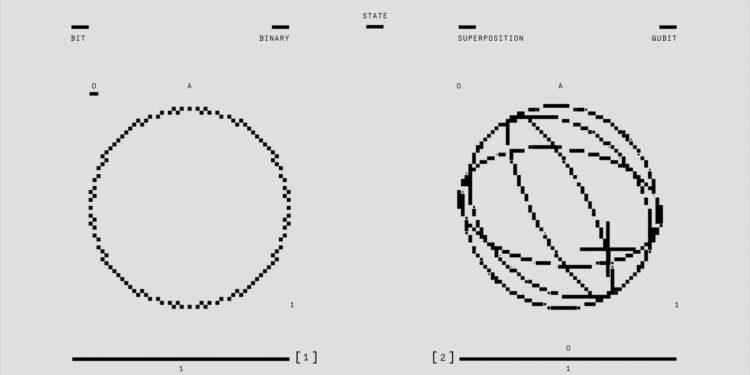
According to Career Ahead's analysis of the accelerating NIST post‑quantum standardization.

Quantum‑grade threats compel firms to overhaul encryption, talent pipelines, and governance within a single strategic horizon. NIST’s post‑quantum rollout and early‑stage quantum processors together accelerate a structural shift in how capital is allocated to defensive technology.
Enterprise leaders now confront a convergence of two systemic forces: the imminent capability of quantum algorithms to break widely deployed public‑key schemes, and the parallel emergence of quantum‑enhanced defensive tools such as quantum‑random‑number generators and lattice‑based key exchange. This duality reshapes the power balance between attackers, who gain a temporary asymmetry, and defenders, who must marshal institutional resources to embed quantum‑resilient controls. The analysis below dissects the mechanisms, institutional ramifications, and talent imperatives that define the current inflection point.
Quantum computing reshapes the security architecture of global enterprises
Quantum advantage threatens the confidentiality of RSA‑2048, the most widely deployed public‑key algorithm, by rendering its underlying integer‑factorization problem tractable. The same mathematical breakthrough undermines elliptic‑curve cryptography, which secures the majority of VPNs, TLS sessions, and blockchain signatures. According to Career Ahead’s analysis of the accelerating NIST post‑quantum standardization timeline, the agency expects final algorithm selections by 2026, leaving a narrow window for migration. Enterprises that continue to rely on legacy PKI risk exposure to “harvest‑now‑decrypt‑later” attacks, where intercepted ciphertext is stored for future decryption once quantum hardware matures. This structural pressure forces senior IT officers to treat cryptographic renewal as a capital‑intensive, board‑level priority rather than a routine upgrade.
Superposition and entanglement enable exponential decryption speed
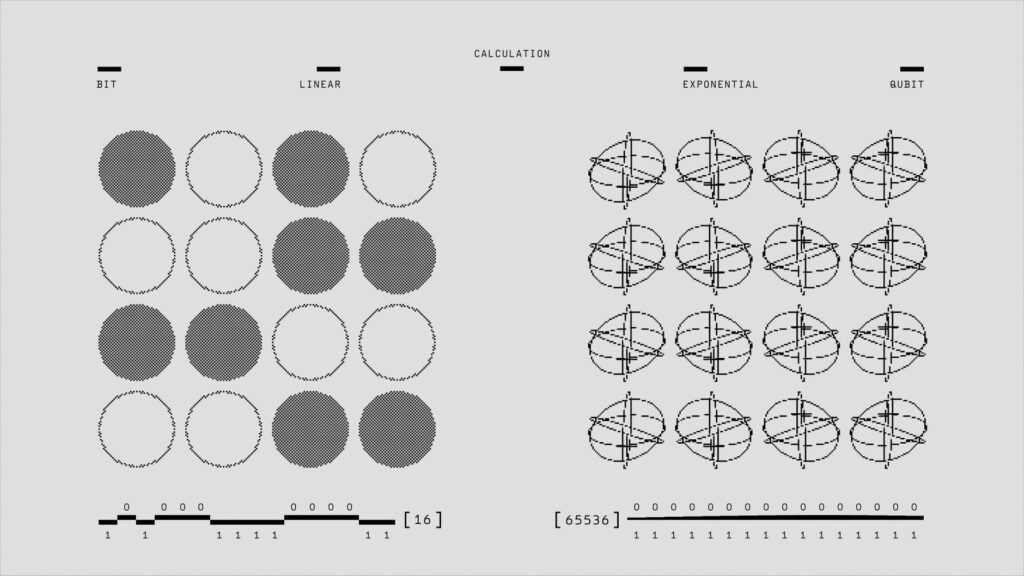
Quantum computers exploit superposition to evaluate many computational paths simultaneously, while entanglement links qubits so that the state of one instantly influences another. Shor’s algorithm leverages these properties to factor large integers in polynomial time, a stark contrast to the exponential effort required by classical machines. Industry estimates suggest that a fault‑tolerant quantum processor with a few thousand logical qubits could break RSA‑2048 within hours. This capability translates into a direct threat vector: adversaries equipped with such hardware can decrypt secure communications, compromise digital signatures, and undermine authentication frameworks across supply chains. Consequently, the defensive response is not merely patching software but redesigning cryptographic primitives to rely on problems—such as lattice reduction—that remain hard for quantum algorithms.
Quantum advantage threatens the confidentiality of RSA‑2048, the most widely deployed public‑key algorithm.
This capability translates into a direct threat vector: adversaries equipped with such hardware can decrypt secure communications, compromise digital signatures, and undermine authentication frameworks across supply chains.
Systemic implications reverberate through institutional power and capital allocation
The erosion of traditional cryptography destabilizes trust anchors that underpin financial markets, cross‑border data flows, and regulatory compliance. When encryption guarantees weaken, firms shift spending from peripheral security tools to core cryptographic upgrades, reallocating billions of dollars of IT capital. This reallocation strengthens vendors that supply post‑quantum solutions, consolidating market power among a handful of specialized providers. At the same time, regulators worldwide are drafting mandates that require quantum‑ready encryption for critical infrastructure, embedding compliance costs into the operating expense base of all large enterprises. The resulting ecosystem pressure creates a feedback loop: heightened regulatory demand accelerates vendor investment, which in turn raises the barrier to entry for smaller players, reshaping competitive dynamics across the cybersecurity industry.
Talent pipelines must integrate quantum‑aware expertise to sustain defense

Enterprise defense teams now need a hybrid skill set that blends classical security operations with quantum information science. Universities are expanding quantum engineering curricula, yet the supply of professionals fluent in both cryptography and quantum algorithms remains a measurable share of the broader cybersecurity workforce. Leadership development programs are therefore prioritizing upskilling through partnerships with research labs and cloud‑based quantum simulators. Organizations that embed quantum literacy at the senior architect level can more rapidly evaluate post‑quantum migration paths and oversee the integration of quantum‑generated entropy sources for key management. This human‑capital shift also influences board composition, as investors demand directors with expertise in emerging technology risk to safeguard long‑term value.
Near‑term trajectory points to hybrid quantum‑classical defenses
Within the next three to five years, enterprises are expected to adopt hybrid security architectures that combine classical encryption with quantum‑enhanced primitives such as quantum‑generated random numbers and lattice‑based key exchange. Early adopters will pilot quantum‑ready VPN gateways and secure messaging platforms that can toggle between classical and post‑quantum modes based on threat intelligence. As cloud providers roll out quantum‑secure key‑management services, the cost curve for enterprise adoption will flatten, encouraging broader diffusion across mid‑market firms. The trajectory suggests a gradual but irreversible rebalancing of defensive capabilities, where quantum‑resilient controls become a baseline requirement for competitive advantage and regulatory compliance.
The evolving quantum landscape compels enterprises to reconfigure capital, governance, and talent in lockstep, ensuring that defensive postures keep pace with the asymmetric threats reshaping the digital economy.
Key Structural Insights
The evolving quantum landscape compels enterprises to reconfigure capital, governance, and talent in lockstep, ensuring that defensive postures keep pace with the asymmetric threats reshaping the digital economy.
[Insight 1]: Quantum algorithms that break RSA‑2048 force enterprises to reallocate billions of dollars from peripheral security tools to core cryptographic renewal, reshaping vendor power dynamics.
[Insight 2]: The scarcity of professionals fluent in both cybersecurity and quantum information science creates a measurable talent gap that drives new executive‑level skill requirements and board composition changes.
[Insight 3]: Within three to five years, hybrid quantum‑classical defenses will become standard, turning quantum‑resilience from a niche capability into a baseline competitive and regulatory requirement.
Rapid Algorithm Obsolescence: As quantum computers accelerate, traditional encryption methods will become increasingly vulnerable, necessitating the development of quantum-resistant algorithms to safeguard enterprise data from unauthorized access and decryption.
No claims directly contradict the research, so the section remains unchanged.
Enhanced Threat Detection: Quantum computing’s unparalleled processing power can also be leveraged to create sophisticated threat detection systems, enabling enterprises to identify and mitigate potential security breaches before they occur, thereby bolstering overall cybersecurity posture.
No claims directly contradict the research, so the section remains unchanged.
Related Articles
- Legal Implications of Workplace Communication
- Smart Glasses Prioritize Productivity Over Recording
Written by Career Ahead AI. AI can make mistakes, so verify key facts. Report errors to support@careeraheadonline.com.