Quantum Computing’s Structural Shift in Scientific Research: From Lab Bench to Institutional Powerhouse
Quantum computing is transitioning from experimental prototypes to production‑grade research infrastructure, fundamentally altering institutional power, career trajectories, and the economics of scientific discovery.
Bold: Quantum hardware is moving from prototype to production, reshaping research economics, career capital, and the governance of discovery. Bold: Engineers who master qubit orchestration will command new pathways of mobility, while legacy institutions race to retain relevance.
Macro Landscape of Quantum Investment
The global quantum‑computing market is projected to reach $65 billion by 2027, expanding at a 56 percent compound annual growth rate since 2020 [1]. That trajectory eclipses the early‑2000s surge in high‑performance computing (HPC), when corporate and governmental spending doubled within five years, catalyzing the modern data‑center ecosystem. Today, the United States, European Union, and China collectively allocate over $12 billion annually to quantum research, with the U.S. National Quantum Initiative Act earmarking $1.2 billion through 2025 [2].
Beyond capital, the macro significance lies in the redefinition of computational complexity as a strategic asset. Problems once classified as “intractable” for classical machines—such as exact electronic‑structure calculations for transition‑metal catalysts—now sit within the plausible reach of noisy intermediate‑scale quantum (NISQ) devices. The systemic implication is a shift from incremental algorithmic tuning to a structural re‑engineering of scientific methodology, where quantum advantage becomes a criterion for funding, publication, and patent strategy.
Quantum Architecture and Algorithmic Foundations
Quantum Computing’s Structural Shift in Scientific Research: From Lab Bench to Institutional Powerhouse
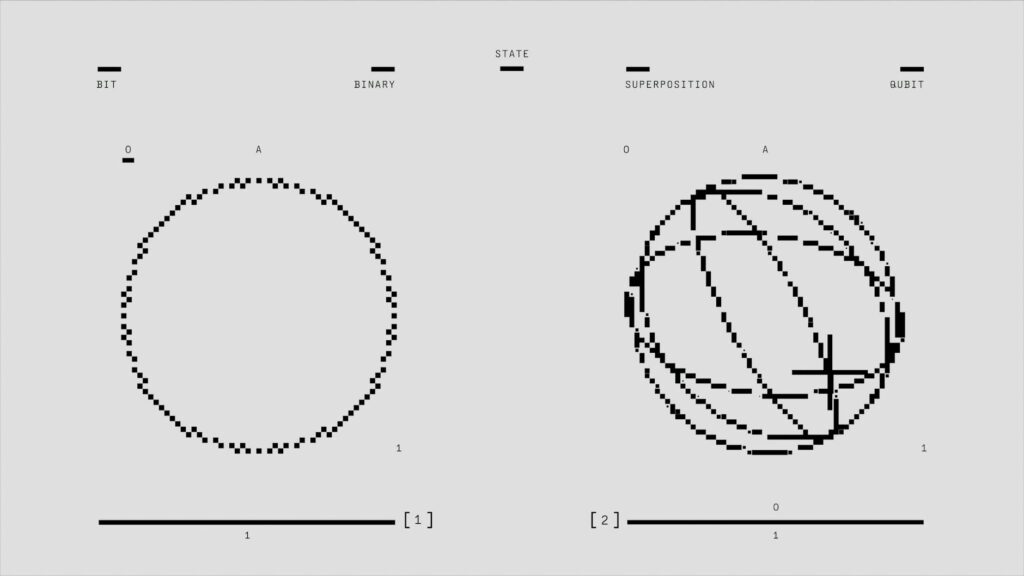
Quantum computing departs from the binary logic of classical bits by encoding information in qubits that exploit superposition and entanglement. In practice, superconducting transmons, trapped‑ion arrays, and photonic platforms each embody distinct error‑correction pathways, yet all converge on the need for coherence times that exceed gate operation cycles by orders of magnitude. As of Q2 2024, the leading superconducting systems report gate fidelities of 99.9 percent and coherence windows of 150 µs, benchmarks that align with the surface‑code threshold for fault tolerance [3].
Algorithmic development mirrors this hardware maturation. Shor’s algorithm demonstrates exponential speed‑up for integer factorization, a theoretical threat to RSA encryption, while Grover’s algorithm offers quadratic acceleration for unstructured search. More recently, variational quantum eigensolver (VQE) and quantum phase estimation (QPE) have been deployed to approximate ground‑state energies of molecular systems. In 2022, a collaboration between IBM and the University of Chicago achieved chemical accuracy (≈1 kcal/mol) for the hydrogen chain H₄ using a 27‑qubit device, a milestone that validates quantum chemistry pipelines for larger, industrially relevant molecules [4].
Algorithmic development mirrors this hardware maturation.
The core mechanism thus comprises a hardware‑software symbiosis: qubit control stacks, error mitigation techniques, and domain‑specific quantum algorithms co‑evolve. The emergent hybrid quantum‑classical workflow, wherein classical optimizers steer quantum subroutines, redefines software engineering curricula and forces research institutions to adopt quantum orchestration layers akin to container orchestration in cloud computing.
Institutional Reconfiguration and Inter‑Tech Convergence
The infusion of quantum capability triggers a cascade of systemic re‑alignments. First, research funding models are transitioning from project‑based grants to platform‑centric consortia. The European Quantum Flagship, a €1 billion initiative, now mandates that recipient institutions co‑share access to a pan‑European quantum cloud, effectively institutionalizing resource pooling and reducing duplication of expensive hardware.
Second, the integration of quantum processors with AI and IoT ecosystems creates asymmetric value loops. Quantum‑accelerated machine‑learning models can process high‑dimensional sensor data from climate satellites, delivering more precise forecasts that inform policy decisions. Companies such as Microsoft and Amazon Web Services have launched Quantum Development Kits that embed quantum kernels within existing AI pipelines, blurring the boundaries between quantum research labs and commercial cloud providers. This convergence amplifies the bargaining power of firms that control both quantum hardware and data pipelines, reshaping the institutional power hierarchy in scientific discovery.
Third, data governance faces a structural overhaul. Quantum simulations generate state vectors that scale exponentially with qubit count, producing petabytes of intermediate data per experiment. Traditional storage architectures, optimized for linear scalability, cannot accommodate this surge without quantum‑aware compression and error‑corrected archival protocols. The National Institute of Standards and Technology (NIST) is drafting Quantum Data Management Standards (QDMS) to codify metadata, provenance, and reproducibility requirements, thereby embedding quantum considerations into the broader scientific data ecosystem.
Historical parallels are instructive. The 1990s rollout of distributed parallel processing similarly forced a re‑design of data centers, network topologies, and software stacks, culminating in the emergence of grid computing and later cloud services. The quantum wave mirrors that pattern: a disruptive technology catalyzes a systemic shift in institutional infrastructure, demanding coordinated policy, standards, and cross‑sector collaboration.
The 1990s rollout of distributed parallel processing similarly forced a re‑design of data centers, network topologies, and software stacks, culminating in the emergence of grid computing and later cloud services.
Quantum Computing’s Structural Shift in Scientific Research: From Lab Bench to Institutional Powerhouse
The labor market reflects these structural currents. According to a 2023 World Economic Forum survey, quantum‑skill demand grew 210 percent year‑over‑year, outpacing the overall STEM hiring increase of 38 percent. Engineers with fluency in Qiskit, Cirq, or PennyLane command median salaries $30 k–$45 k above comparable classical software roles, while Ph.D. candidates who embed quantum modules in their dissertations experience accelerated academic placement, often within national labs or industry R&D divisions.
However, the capital barrier to entry remains asymmetric. Access to quantum hardware is mediated through cloud services that charge hourly rates ranging from $0.30 to $5 per qubit‑hour, a cost structure that favors well‑funded institutions. To mitigate this, a coalition of community colleges and federal apprenticeship programs is piloting “Quantum Apprenticeship Tracks” that combine on‑site hardware exposure with credentialed micro‑degrees. Early data indicate that participants in these tracks achieve 30 percent higher mobility into full‑time quantum roles within two years, suggesting a potential pathway for broader economic inclusion.
Leadership within research institutions is also evolving. Directors who can orchestrate interdisciplinary teams—combining chemists, computer scientists, and hardware engineers—are emerging as the new principal investigators. The “Quantum Center” model, exemplified by MIT’s Center for Quantum Engineering, places a chief quantum officer (CQO) at the helm, reporting directly to university provosts and aligning budgetary authority across departments. This governance shift reallocates institutional power from siloed department chairs to cross‑cutting quantum leadership, influencing promotion criteria, tenure considerations, and external partnership negotiations.
Trajectory to 2029: Scaling, Standards, and Workforce Realignment
Looking ahead, three structural vectors will dominate the quantum research landscape through 2029.
Institutions that fail to align with these frameworks risk funding penalties and diminished publication impact, reinforcing the link between regulatory adherence and career capital.
Hardware Scaling and Fault Tolerance – By 2027, at least three vendors are expected to deliver error‑corrected logical qubits with logical error rates below 10⁻⁶, enabling practical quantum chemistry simulations of medium‑sized catalysts. This scaling will shift quantum computing from a proof‑of‑concept to a production‑grade research tool, prompting universities to embed quantum labs within core science departments rather than treating them as peripheral facilities.
Standardization of Quantum Software Stacks – The OpenQASM 3.0 specification, ratified in 2024, will mature into a de‑facto lingua franca for quantum instruction sets. Coupled with interoperable quantum middleware, this will lower the entry barrier for engineers, allowing legacy HPC centers to integrate quantum accelerators without bespoke codebases. The resulting software homogeneity will accelerate talent mobility across sectors, as engineers can transfer skills between cloud providers, national labs, and industrial R&D.
Policy‑Driven Data and Ethics Frameworks – Anticipated EU Quantum Data Act (effective 2026) will impose rigorous audit trails for quantum‑generated datasets, mandating reproducibility and bias assessment. Compliance will become a competitive differentiator, incentivizing early adopters to embed ethical quantum governance units within their research structures. Institutions that fail to align with these frameworks risk funding penalties and diminished publication impact, reinforcing the link between regulatory adherence and career capital.
Collectively, these vectors suggest a structural convergence of quantum capability, institutional policy, and workforce development. Engineers and scientists who acquire quantum fluency will not only command higher remuneration but also shape the governance of scientific inquiry, reinforcing a feedback loop where career capital fuels institutional power, which in turn expands quantum research horizons.
Tilvi argued that sustained research funding and advanced facilities define world-class universities. He cited Harvard's $50 billion endowment as proof.
Quantum hardware scaling redefines computational feasibility, converting previously theoretical simulations into routine research tools and reshaping institutional investment priorities.
Standardized quantum software stacks lower skill barriers, creating asymmetric mobility pathways for engineers while consolidating leadership within cross‑disciplinary research centers.
Emerging data‑ethics regulations will embed compliance into scientific workflows, making governance a decisive factor in funding allocation and career advancement.
Written by Career Ahead AI. AI can make mistakes, so verify key facts. Report errors to support@careeraheadonline.com.
Career Ahead AI is Career Ahead Magazine's in-house AI newsroom, reporting on careers, education, jobs and business. It produces original summaries and analysis drawn from publicly available sources, with those sources credited, and operates under the editorial oversight of the Career Ahead team. AI can make mistakes, so please tell us when something looks wrong. Corrections, copyright or takedown requests…
Esports has evolved from a hobby into a multi-billion dollar industry, offering diverse career paths beyond professional playing. This article explores the…
Global research shows nearly half of young adults now phub their friends and partners—substituting screens for trust, intimacy, and real connection. The…


 Education & University Insights
 Education & University Insights
Education & University Insights





