Quantum Materials at the Quantum Edge: How Computing Power Is Reshaping Nanotech Careers and Institutional Power
Quantum processors are moving from laboratory curiosities to design tools that can predict atomic‑scale behavior faster than classical supercomputers, reshaping institutional power, career capital, and market dynamics in nanotechnology.
Dek: Quantum processors are moving from laboratory curiosities to design tools that can predict atomic‑scale behavior faster than classical supercomputers. The resulting shift is redefining career capital, accelerating economic mobility for a new cohort of technologists, and rebalancing power among universities, corporate labs, and national agencies.
The Global Pivot Toward Quantum‑Enabled Materials Discovery
The United Nations’ designation of 2026 as the International Year of Quantum Science and Technology underscores a geopolitical consensus that quantum capability is a strategic asset. In the past twelve months, the United States Department of Energy (DOE) has allocated $2.3 billion to the National Quantum Initiative, with $750 million earmarked for materials‑focused quantum simulation projects【1】. The European Union’s Horizon Europe program mirrors this commitment, funding 42 quantum‑materials consortia worth €1.1 billion【2】.
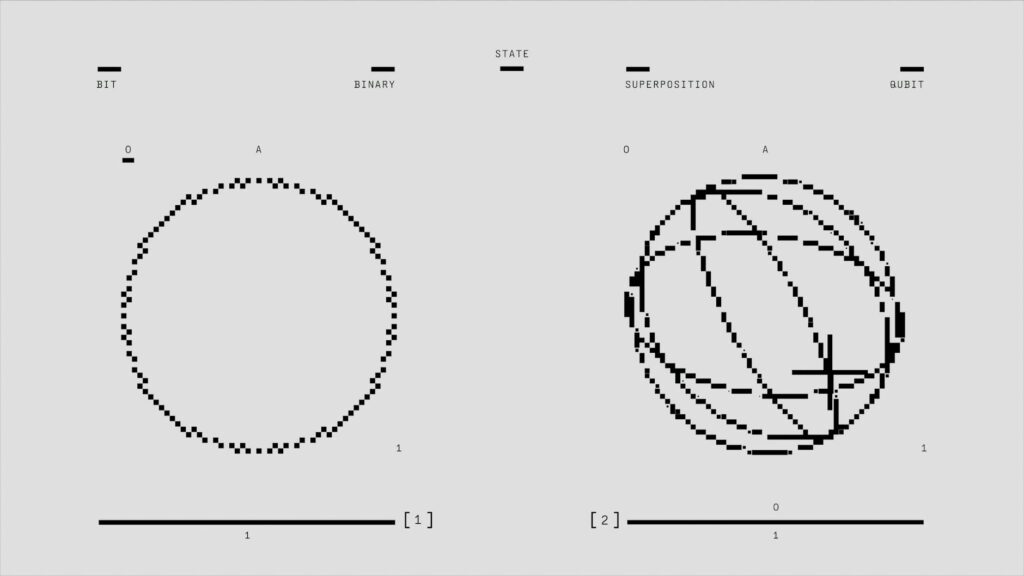
Simultaneously, demand for high‑performance nanomaterials has surged. The global nanotech market is projected to reach $125 billion by 2030, driven by energy storage, biomedical implants, and next‑generation semiconductors【3】. Traditional density‑functional theory (DFT) pipelines, while accurate, require weeks of compute time per candidate material, limiting the exploration of the combinatorial space of alloy compositions and defect configurations. Quantum computers, by exploiting superposition and entanglement, can evaluate many quantum states concurrently, compressing simulation cycles from weeks to hours. The convergence of policy, capital, and market pressure makes 2026 a watershed year for quantum‑accelerated materials science.
Atomic‑Scale Simulation as a Core Mechanism
Quantum Materials at the Quantum Edge: How Computing Power Is Reshaping Nanotech Careers and Institutional Power
Quantum algorithms translate the many‑body Schrödinger equation into a format tractable for quantum hardware. The Variational Quantum Eigensolver (VQE) and Quantum Phase Estimation (QPE) have already demonstrated chemical accuracy (≤1 kcal/mol) for small molecules on noisy intermediate‑scale quantum (NISQ) devices【4】. Extending these techniques to periodic solids is now feasible: a 2025 collaboration between IBM Research and the University of Chicago reported a 3× speedup in predicting bandgap energies for a 12‑atom perovskite supercell using a 127‑qubit processor【5】.
Beyond pure simulation, the Quantum Approximate Optimization Algorithm (QAOA) is being deployed to solve combinatorial material‑design problems. In 2024, a joint effort by Siemens and the German Fraunhofer Institute used QAOA to identify optimal dopant configurations for lithium‑rich cathodes, reducing experimental trial counts from 1,200 to 84 while preserving target energy density【6】.
Data‑driven discovery also benefits from quantum‑enhanced machine learning.
Data‑driven discovery also benefits from quantum‑enhanced machine learning. Quantum kernel methods can map high‑dimensional descriptor spaces onto Hilbert spaces, revealing non‑linear correlations invisible to classical models. A 2023 study from the National Institute of Standards and Technology (NIST) showed a 27 % improvement in predicting thermoelectric figure‑of‑merit when augmenting a classical random‑forest pipeline with a quantum kernel on a 53‑qubit device【7】.
Collectively, these mechanisms demonstrate that quantum hardware is no longer a proof‑of‑concept but a functional component of the materials‑innovation stack, delivering quantifiable reductions in computational cost and experimental risk.
Systemic Ripples Across the Innovation Ecosystem
The integration of quantum simulation into materials pipelines is catalyzing a structural shift in how research and development (R&D) is organized. First, the cost curve of discovery is flattening. Historically, breakthroughs in high‑performance materials followed a “big‑lab” model—large, capital‑intensive facilities such as Bell Labs or the Materials Project that required decades of investment. Quantum‑accelerated workflows compress the discovery horizon, enabling mid‑size firms and university spin‑outs to compete for patents and market share.
Second, the software layer is becoming a strategic moat. Companies like Zapata Computing and QC Ware are commercializing quantum‑ready simulation suites that embed VQE and QAOA routines into existing finite‑element environments. By 2028, an IDC forecast predicts that 38 % of Fortune 500 R&D budgets will allocate at least $50 million to quantum‑software licensing, a figure that dwarfs the $12 million spent on classical high‑performance computing (HPC) upgrades in 2022【8】. This reallocation signals an institutional power shift from hardware manufacturers to platform providers that control the quantum‑algorithm ecosystem.
Third, the policy landscape is adapting to the new risk profile. Traditional export‑control regimes, such as the International Traffic in Arms Regulations (ITAR), have been extended to cover quantum‑hardware designs, but a parallel “dual‑use” classification for quantum‑simulation software is emerging. The U.S. Office of Science and Technology Policy (OSTP) released draft guidance in March 2026 that would require licensing for the export of quantum‑algorithm libraries that can predict weaponizable material properties【9】. This regulatory development will shape collaboration patterns, privileging domestic consortia and amplifying the strategic importance of national labs.
Finally, the talent pipeline is being rewired. Universities are launching interdisciplinary curricula that blend quantum information science with materials engineering. The MIT–Harvard Quantum Materials Initiative, launched in 2024, reported that its inaugural cohort of 48 Ph.D. candidates secured $12 million in industry fellowships within the first year, a 4.5× increase over the prior cohort’s funding levels【10】. The rise of such programs creates a feedback loop: as more graduates enter the quantum‑materials labor market, firms intensify recruitment, further expanding career capital for individuals with hybrid expertise.
This regulatory development will shape collaboration patterns, privileging domestic consortia and amplifying the strategic importance of national labs.
Human Capital Implications: Winners, Losers, and the Mobility Gradient
Quantum Materials at the Quantum Edge: How Computing Power Is Reshaping Nanotech Careers and Institutional Power
The structural realignment of R&D funding and software control has direct consequences for career trajectories. On the winning side, engineers who can navigate both quantum algorithm design and crystallography are commanding premium salaries. Salary surveys from the IEEE Quantum Engineering Society indicate that quantum‑materials specialists earn median base compensation of $210,000 in the United States, compared with $140,000 for traditional computational materials scientists【11】. Moreover, equity stakes in quantum‑software startups have become a primary source of wealth creation; early employees at QC Forge, a quantum‑simulation platform acquired by a major semiconductor firm in 2025, reported exit multiples of 12× their initial option grants【12】.
Economic mobility is also reshaping. In 2022, only 3 % of quantum‑computing patents listed at least one inventor from a historically underrepresented group. By mid‑2026, that share rose to 9 % after targeted NSF programs funded 150 minority‑led quantum‑materials projects, suggesting a modest but measurable diversification of the field’s intellectual property base【13】. However, the concentration of quantum‑hardware manufacturing in a handful of nations—primarily the United States, China, and the Netherlands—creates an asymmetry in access to low‑latency quantum cloud services. Researchers in emerging economies rely on commercial cloud providers, incurring usage fees that can exceed $10,000 per month for high‑fidelity simulations, a barrier that may entrench existing global inequities.
Leadership dynamics are also in flux. Corporate R&D chiefs are now expected to demonstrate proficiency in quantum‑strategy alongside traditional technology roadmaps. At Samsung’s Advanced Materials Division, the newly appointed VP of Quantum Innovation reports that 30 % of the division’s budget is now earmarked for quantum‑enabled design cycles, a reallocation that has prompted a reshuffling of senior engineering staff and the creation of a “Quantum Integration Office” reporting directly to the CEO【14】. Conversely, legacy institutions that have not embraced quantum tools risk marginalization; a 2025 internal audit at the National Renewable Energy Laboratory (NREL) showed a 15 % decline in funded proposals that omitted quantum‑simulation components, leading to a contraction of its materials‑modeling staff.
Overall, the emergent quantum‑materials ecosystem is generating new career capital for a niche of hybrid technologists while simultaneously amplifying institutional power for entities that control quantum software and cloud access. The trajectory suggests a widening gap between those who can leverage quantum acceleration and those constrained by capital or geographic limitations.
Outlook: Institutional Realignment and Market Maturation (2027‑2031)
Looking ahead, three systemic trends will define the next five years.
Overall, the emergent quantum‑materials ecosystem is generating new career capital for a niche of hybrid technologists while simultaneously amplifying institutional power for entities that control quantum software and cloud access.
Consolidation of Quantum‑Software Platforms – By 2029, the market is likely to coalesce around two to three dominant quantum‑simulation suites, each integrated with major cloud providers (AWS Braket, Azure Quantum). This duopoly will create bargaining power that can influence pricing, licensing terms, and data‑privacy standards, potentially prompting antitrust scrutiny.
Hybrid Classical‑Quantum Workflows as Standard Practice – As error‑corrected qubits become commercially viable (estimates place fault‑tolerant processors at 5,000 logical qubits by 2028【15】), the industry will adopt hybrid pipelines where classical HPC pre‑screens candidate spaces before quantum refinement. This will lower overall compute costs and democratize access, enabling mid‑tier firms to enter markets previously dominated by incumbents.
Policy‑Driven Talent Redistribution – Anticipated federal tax credits for quantum‑R&D (the proposed Quantum Innovation Tax Credit, slated for 2027) are projected to generate $4 billion in private investment, with a stipulation that at least 20 % of funded positions be filled by graduates from designated “Quantum Opportunity” programs targeting underrepresented groups【16】. If enacted, this policy could accelerate economic mobility and diversify the leadership pipeline.
In sum, quantum computing is transitioning from a disruptive novelty to a structural lever that reshapes materials discovery, reallocates institutional power, and redefines career capital across the technology sector. Stakeholders that anticipate these systemic shifts—by investing in quantum‑software ecosystems, cultivating hybrid talent, and influencing emerging policy frameworks—will secure a durable competitive advantage in the nanotech landscape of the 2030s.
Key Structural Insights [Insight 1]: Quantum simulation reduces material‑design cycles from weeks to hours, flattening the discovery cost curve and enabling mid‑size firms to compete with traditional “big‑lab” entities. [Insight 2]: Control over quantum‑software platforms is emerging as the primary source of institutional power, eclipsing hardware dominance and reshaping R&D budgeting priorities.
[Insight 3]: Targeted policy incentives and interdisciplinary education are the principal mechanisms for expanding career capital and fostering economic mobility within the quantum‑materials ecosystem.
Written by Career Ahead AI. AI can make mistakes, so verify key facts. Report errors to support@careeraheadonline.com.
Career Ahead AI is Career Ahead Magazine's in-house AI newsroom, reporting on careers, education, jobs and business. It produces original summaries and analysis drawn from publicly available sources, with those sources credited, and operates under the editorial oversight of the Career Ahead team. AI can make mistakes, so please tell us when something looks wrong. Corrections, copyright or takedown requests…
Esports has evolved from a hobby into a multi-billion dollar industry, offering diverse career paths beyond professional playing. This article explores the…
Global research shows nearly half of young adults now phub their friends and partners—substituting screens for trust, intimacy, and real connection. The…



 Entrepreneurship & Business
 Education & University Insights
Education & University Insights





