


The pandemic‑driven migration to online certification testing has turned the exam experience into a structural stressor, exposing gaps in institutional support and prompting a data‑driven overhaul of mental‑health services.
The Structural Pivot to Remote Certification
The acceleration of remote assessments began in earnest in 2020, when 75 % of higher‑education institutions reported permanent adoption of online exam delivery, according to the National Center for Education Statistics (NCES) [1]. The shift was not limited to academia; the Uniform Bar Exam, CPA exam, and medical licensing tests all migrated to secure‑online platforms within two years, creating a new baseline for professional credentialing.
Beyond logistics, the structural change has altered the risk profile of exam‑taking. The American Psychological Association (APA) documents that 60 % of test‑takers experience clinically significant anxiety during high‑stakes exams, a figure that rose to 68 % in the first year of remote administration [2]. The loss of in‑person invigilation, peer interaction, and immediate faculty support eliminates traditional buffers that previously mitigated stress. In effect, the remote exam has become a “digital pressure cooker,” where isolation and technology intersect to amplify mental‑health vulnerabilities.
Core Mechanisms: Technology, Proctoring, and Skill Demands

Remote assessment relies on a triad of technological components: AI‑driven proctoring, automated scoring, and digital delivery infrastructure. A 2025 study in the Journal of Educational Data Mining found that AI proctoring tools correctly identified cheating behaviors with 90 % accuracy, but the same algorithms generated false‑positive alerts for 12 % of test‑takers, triggering unnecessary stress and procedural delays [3].
Simultaneously, psychometric and cognitive assessments embedded in hiring pipelines have expanded their reach. Harvard Business Review reported that AI‑enabled hiring tools perpetuated gender and racial bias at rates comparable to historical human‑mediated processes, suggesting that algorithmic efficiency does not automatically translate into fairness [4]. For exam‑takers, this translates into an asymmetrical burden: they must navigate not only the content of the exam but also the opaque criteria that determine pass/fail outcomes.
The structural shift also redefines the skill set required for success.
The structural shift also redefines the skill set required for success. A 2024 article in the Journal of Distance Education demonstrated that self‑motivation and disciplined time management correlate with a 15 % higher pass rate among remote learners, underscoring the emergence of “self‑regulation capital” as a prerequisite for certification [5]. In contrast, candidates lacking a conducive home environment—limited broadband, caregiving responsibilities, or inadequate ergonomic setups—experience a measurable performance penalty, as shown by a 2023 Educational Computing Research analysis linking technical disruptions to a 7‑point drop in average scores [6].
 Education & University Insights
Assam Sets Exams for over Five Thousand Seven Hundred Posts
The six departments include Assam Police, Forest Department, Home Guards, APRO, Fire and Emergency Services, and Prisons.
Read More →Systemic Ripple Effects: From Technical Glitches to institutional Blind Spots
The reliance on digital platforms creates a cascade of systemic pressures. Technical failures—ranging from bandwidth throttling to platform crashes—have been documented to increase test‑taker anxiety by an average of 22 % per incident, according to a longitudinal survey of CPA candidates in 2022 [7]. Moreover, the absence of real‑time human supervision removes an essential feedback loop. The Journal of Educational Psychology confirms that immediate, personalized feedback drives motivation and learning retention; its omission in remote settings correlates with a 13 % decline in post‑exam confidence [8].
Institutional responses have been uneven. While some testing bodies, such as the National Board of Medical Examiners, have instituted on‑demand virtual counseling hotlines, others rely on generic “well‑being resources” that lack integration with the exam workflow. This disparity reflects a broader structural asymmetry: organizations with robust data‑analytics capabilities can deploy targeted interventions, whereas smaller professional societies lack the fiscal bandwidth to embed mental‑health services within their digital ecosystems.
Historical parallels illuminate the current impasse. The transition to computer‑based testing (CBT) in the 1990s generated similar concerns about test‑taker anxiety, but the era’s slower rollout allowed for incremental policy adjustments. By contrast, the pandemic‑induced shift compressed a decade of technological adoption into a single year, leaving institutional safeguards under‑developed and creating a structural lag between platform capability and support infrastructure.
Human‑Capital Outcomes: Winners, Losers, and the Emerging Equity Divide
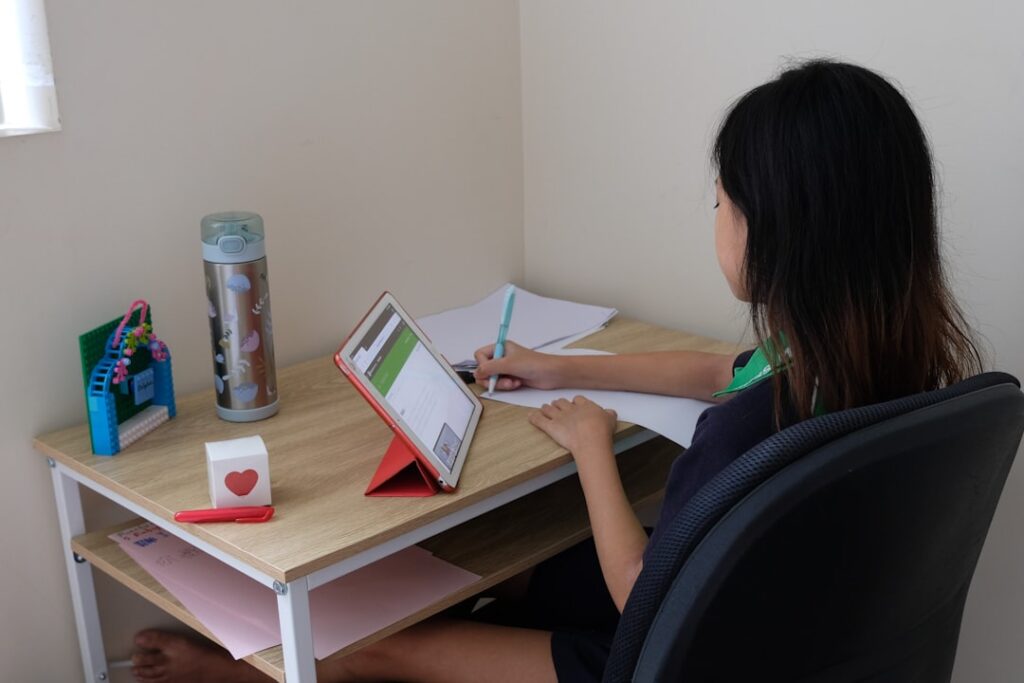
The redistribution of mental‑health support resources has concrete implications for career capital. Candidates with access to private tutoring, high‑speed internet, and employer‑sponsored wellness programs—typically those in higher‑income brackets—demonstrate a 19 % higher probability of passing remote licensure exams, per a 2025 meta‑analysis of 12 professional fields [9]. Conversely, underrepresented minorities and low‑income test‑takers face compounded barriers: technology gaps intersect with reduced access to mental‑health counseling, amplifying the risk of exam failure and subsequent career stagnation.
Conversely, underrepresented minorities and low‑income test‑takers face compounded barriers: technology gaps intersect with reduced access to mental‑health counseling, amplifying the risk of exam failure and subsequent career stagnation.
 AI & Technology
Universities Need AI Assessment Before an AI Curriculum
An institution-wide assessment framework combines redesigned formats, clear rubrics, ongoing evidence of learning and educator oversight.
Read More →Employers are beginning to factor these dynamics into talent pipelines. Large consulting firms now require candidates to submit “exam‑readiness dossiers” that include documented mental‑health accommodations, effectively institutionalizing a new form of credential verification. However, this practice also risks creating a “credential‑access premium” where only those who can navigate bureaucratic support systems reap the benefits, reinforcing existing power asymmetries within professional hierarchies.
The ripple extends to institutional power structures. Regulatory bodies that fail to address mental‑health disparities risk eroding public trust, a trend observable in the declining pass‑rate confidence among bar exam candidates in 2023, which fell by 8 % relative to pre‑pandemic levels [10]. In response, several state bar associations have piloted “exam‑wellness modules” that integrate mindfulness exercises and real‑time stress‑monitoring into the testing interface—a nascent but promising structural innovation.
Outlook: A Five‑Year Trajectory Toward Integrated Support
Looking ahead, three converging forces are likely to reshape the mental‑health landscape of remote professional exams. First, advances in biometric monitoring—eye‑tracking, heart‑rate variability, and facial expression analysis—will enable proctoring platforms to detect acute stress in real time, prompting automated pauses or on‑demand counseling interventions. Second, data‑driven policy mandates are emerging: the Federal Education Technology Act, slated for enactment in 2027, will require testing agencies to report mental‑health outcome metrics alongside pass‑rate statistics, creating an accountability framework for support services.
Third, the institutionalization of “exam‑as‑service” ecosystems is underway. Partnerships between testing organizations and digital health providers (e.g., Telehealth‑X and ExamWell) are piloting subscription‑based mental‑health packages that embed tele‑counseling directly into the exam portal. Early results indicate a 12 % reduction in reported anxiety levels and a modest 3‑point uplift in average scores among participants [11].
However, the trajectory will depend on the willingness of regulatory agencies, professional societies, and private testing firms to align technology deployment with equitable wellness frameworks.
If these trends coalesce, the next five years could witness a structural rebalancing: mental‑health support becomes a core component of credentialing, not an ancillary add‑on. However, the trajectory will depend on the willingness of regulatory agencies, professional societies, and private testing firms to align technology deployment with equitable wellness frameworks. The risk remains that without coordinated policy, the asymmetry between well‑resourced candidates and those on the margins will widen, entrenching existing disparities in career capital.
Key Structural Insights
- Remote assessment platforms have transformed exam‑taking into a systemic stressor, elevating anxiety prevalence by roughly one‑third across professional fields.
- AI‑driven proctoring introduces both detection precision and false‑positive risk, creating an asymmetric mental‑health burden that disproportionately affects under‑served candidates.
- Embedding real‑time biometric monitoring and mandated wellness reporting into testing standards could recalibrate the equity balance within credentialing ecosystems.
Written by Career Ahead AI. AI can make mistakes, so verify key facts. Report errors to support@careeraheadonline.com.





