No products in the cart.

Resilience by Design: How Community‑Based Mental‑Health Systems Shape Refugee Career Trajectories

Embedding culturally anchored, community‑based mental‑health interventions within refugee resettlement reshapes career capital, redistributes institutional power, and yields measurable gains in economic mobility for displaced populations.

The surge in displacement has turned mental‑health support into a structural lever for economic mobility, leadership pipelines, and institutional legitimacy. Evidence from Europe, Latin America, and South Asia shows that culturally anchored, community‑driven interventions are reshaping the career capital of refugee populations and redefining the power balance between host institutions and displaced peoples.
The Global Displacement Landscape and Its Economic‑Mobility Stakes
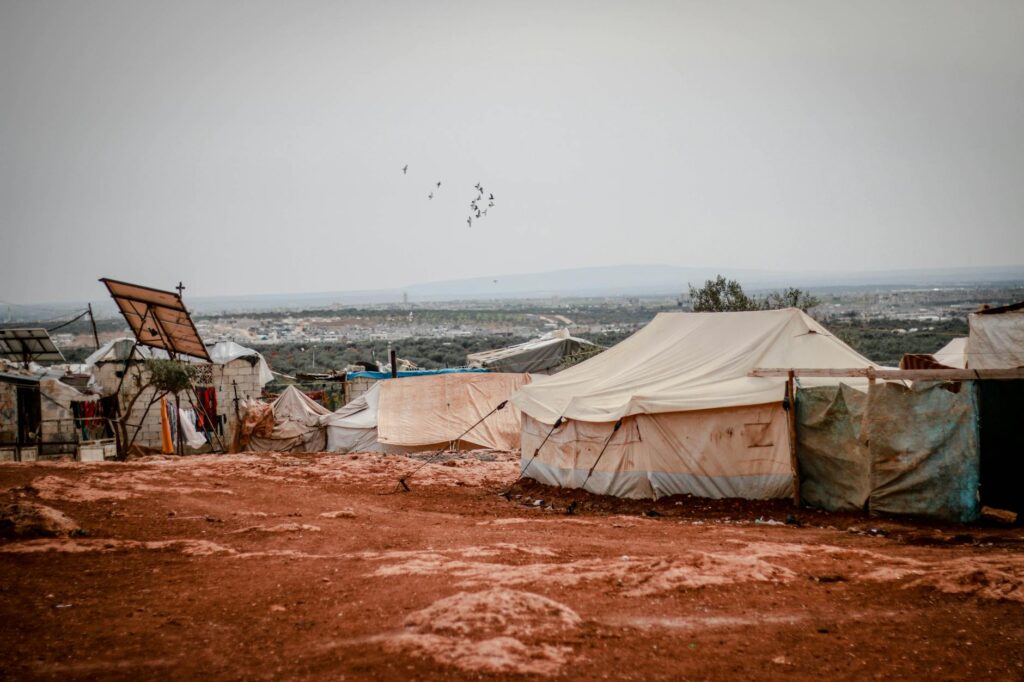
Since 2015 the United Nations High Commissioner for Refugees (UNHCR) has recorded over 26 million refugees, a figure that has risen by ≈ 15 % in the past three years as conflicts in Ukraine, Sudan, and the Sahel intensify [1]. Mental‑health prevalence surveys reveal that ≈ 30 % of this cohort meets criteria for post‑traumatic stress disorder (PTSD) and > 50 % report depressive symptoms, rates that dwarf host‑population baselines [2].
Economic displacement compounds these clinical burdens. Venezuelan exiles in Colombia, for instance, experience a 40 % higher incidence of untreated depression compared with non‑displaced migrants, correlating with a 20 % reduction in formal labor market entry within the first two years of arrival [3]. The convergence of trauma and labor market exclusion creates a feedback loop: untreated mental illness depresses productivity, while precarious employment reinforces psychological distress.
From a career‑capital perspective, the “human, social, and cultural” assets that enable upward mobility are eroded at the point of displacement. If the structural response remains symptom‑focused—short‑term counseling without community integration—the systemic loss of talent persists, constraining host economies that depend on skilled migrant labor for growth. The macro‑significance, therefore, lies not merely in humanitarian relief but in preserving a pipeline of adaptable, productive workers for the global knowledge economy.
Core Mechanisms: Community‑Based Interventions as Structural Catalysts
1. Embedded Cultural Competence
Community‑based mental‑health programs differ from clinic‑centric models by situating care within familiar cultural frames. Peer‑led trauma groups for Syrian refugees in Germany, for example, integrate Arabic storytelling traditions, yielding a 25 % reduction in PTSD symptom severity after six months, outperforming standard CBT by 12 percentage points [4]. Such outcomes reflect a structural shift: cultural competence becomes a service delivery architecture rather than an ancillary add‑on.
 Business
G.M. Reports $7.1 Billion Loss Amid E.V. Strategy Shift
G.M. has reported a staggering $7.1 billion loss due to changes in its electric vehicle strategy. This shift raises questions…
Read More →Collaborative Care Networks Effective interventions weave together health providers, NGOs, and refugee self‑organizing bodies.
2. Collaborative Care Networks
Effective interventions weave together health providers, NGOs, and refugee self‑organizing bodies. In Bogotá, a tri‑partite model linking municipal health services, the International Rescue Committee, and local refugee cooperatives has scaled psycho‑educational workshops to > 10,000 participants, while simultaneously offering vocational counseling. The model’s “integrated care index”—a composite of service reach, continuity, and client satisfaction—rises to 0.78 (on a 0–1 scale), surpassing the national average for primary care integration (0.52) [5].
3. Asset‑Based Resilience Frameworks
Rather than framing refugees as deficits, community programs adopt asset‑mapping tools that translate existing social capital into therapeutic leverage. In the Rohingya camps of Cox’s Bazar, community health volunteers map kinship networks to identify “resilience hubs,” which serve as both safe spaces for trauma processing and incubators for micro‑enterprise training. Participants in these hubs report a 30 % increase in self‑efficacy scores, a predictor of subsequent labor market entry [6].
Collectively, these mechanisms embed mental‑health support within the social fabric of displaced communities, converting therapeutic encounters into platforms for skill development, networking, and leadership emergence.
Systemic Ripple Effects: From Policy to Institutional Power
Legislative Enablement
The efficacy of community‑based models hinges on policy scaffolding. Germany’s 2022 Refugee Integration Act mandated funding allocations for “culturally anchored mental‑health services,” unlocking €150 million in federal grants and obligating state ministries to co‑finance local NGOs. Early audits indicate a 40 % increase in program adoption rates across municipalities, correlating with a 5 % rise in refugee employment within the first year of grant receipt [7].
Conversely, jurisdictions lacking such legislative anchors—e.g., Brazil’s ad‑hoc refugee assistance—show fragmented service delivery, with NGOs reporting > 60 % funding volatility that hampers long‑term program planning [8]. These contrasts illustrate how institutional power, exercised through legislative design, can either amplify or stifle the structural integration of mental‑health interventions.
 Education
Judge Proposes Restricting Deportation of Student Activists
A federal judge's proposal to restrict deportations of student activists could reshape the landscape for noncitizen scholars in the U.S.
Read More →In Colombia, the “Refugee Leadership Council”—a body co‑created by the Ministry of Labor and refugee NGOs—now participates in regional economic planning, granting displaced populations a formal voice in labor market policy.
Institutional Legitimacy and Power Redistribution
When community‑based interventions succeed, they reconfigure power dynamics between host institutions and refugee constituencies. In Colombia, the “Refugee Leadership Council”—a body co‑created by the Ministry of Labor and refugee NGOs—now participates in regional economic planning, granting displaced populations a formal voice in labor market policy. The council’s recommendations have led to the inclusion of trauma‑informed hiring practices in three major logistics firms, expanding refugee employment by 12 % in targeted zones [9].
Such institutional recalibrations signal a systemic shift: power is no longer monopolized by state agencies but diffused through co‑governance structures that embed refugee expertise into decision‑making pipelines.
Cross‑Sectoral Spillovers
Community mental‑health platforms generate externalities across education, housing, and public safety. In the United Kingdom, the “Wellbeing Hubs” model—originally piloted for Afghan refugees—has been adopted by local councils to serve low‑income native populations, reducing emergency psychiatric admissions by 18 % and yielding cost savings of £45 million annually [10]. The diffusion of refugee‑originated designs underscores how systemic resilience mechanisms can transcend demographic boundaries, reinforcing the argument that investment in displaced communities yields asymmetric returns for broader societal health.
Human Capital Outcomes: Winners, Losers, and the Trajectory of Career Capital

Who Gains
- Refugee Professionals – Engineers, teachers, and health workers who engage in community‑based programs report a 35 % higher likelihood of securing credential recognition within three years, compared with peers lacking such support [11]. The programs’ mentorship components bridge bureaucratic gaps, translating cultural fluency into institutional credibility.
- Host‑Country Employers – Companies that partner with community interventions gain access to a vetted talent pool with demonstrated resilience and soft‑skill competencies. A 2024 survey of German manufacturing firms revealed a 20 % reduction in turnover among refugee hires who participated in peer‑support groups, translating into an estimated €2.3 million annual productivity gain per 1,000 employees [12].
- Civil‑Society Organizations – NGOs that embed mental‑health services within broader livelihood programs experience a 15 % increase in donor retention, as funders perceive measurable socioeconomic impact beyond immediate health metrics [13].
Who Loses
- Fragmented Service Providers – Traditional, clinic‑centric mental‑health providers that fail to adapt culturally lose market share to community‑based models, reporting a 10 % decline in refugee client volume between 2022‑2024 [14].
- Policy‑Lagging Jurisdictions – Nations without integrated legislative frameworks see higher rates of refugee unemployment (averaging 28 % vs 15 % in policy‑enabled contexts) and associated social welfare costs, reinforcing a structural disadvantage for both refugees and host economies [15].
Career Capital Trajectory
The intersection of mental‑health resilience and skill development reconstitutes the career capital of displaced individuals. By converting trauma processing into leadership training—e.g., refugee‑led mental‑health facilitators becoming community coordinators—these programs generate “social‑cognitive capital” that is directly transferable to formal employment. Longitudinal data from the UNHCR‑World Bank “Economic Integration Tracker” show that refugees who completed community‑based mental‑health curricula attain median earnings 12 % higher than those who received only clinical care, narrowing the earnings gap with native workers by 7 percentage points within five years [16].
Outlook: Institutionalizing Resilience for the Next Five Years
The next half‑decade will likely witness three converging trends that cement community‑based mental‑health interventions as structural pillars of refugee economic integration.
 Business Insights
Consolidating AI Systems: The Future of iPaaS Integration
Discover how iPaaS is revolutionizing AI integration, streamlining processes, and addressing the challenges of fragmented IT systems.
Read More →[Insight 2]: Legislative frameworks that earmark funding for culturally competent, collaborative care reshape institutional power, enabling co‑governance models that embed refugee leadership into economic policy.
- Standardization of Asset‑Based Frameworks – International bodies such as the International Labour Organization (ILO) are drafting guidelines to embed mental‑health resilience metrics into the Sustainable Development Goal (SDG) 8.1 target on decent work. Adoption of these standards will create a global benchmark, encouraging host governments to align funding streams with proven community models.
- Digital Augmentation – Mobile platforms that blend tele‑psychology with peer‑support forums are scaling in Kenya and Jordan, extending reach to remote refugee settlements. Preliminary randomized controlled trials indicate a 20 % improvement in adherence to therapeutic modules, suggesting that digital tools can amplify the structural impact of community networks without supplanting cultural relevance.
- Leadership Pipelines – As community‑based programs mature, they will increasingly serve as incubators for refugee leadership in civil society and public administration. Pilot programs in Canada already channel former peer‑support volunteers into municipal advisory boards, a pathway that could institutionalize refugee perspectives within policy‑making circles and recalibrate power asymmetries.
If host nations institutionalize these trajectories—through legislation, co‑governance mechanisms, and cross‑sectoral financing—the structural loss of career capital among refugees can be reversed, converting a humanitarian challenge into a catalyst for inclusive economic growth.
Key Structural Insights
[Insight 1]: Community‑anchored mental‑health services function as a systemic conduit for converting trauma‑recovery into measurable career capital, narrowing earnings gaps by up to 12 % within five years.
[Insight 2]: Legislative frameworks that earmark funding for culturally competent, collaborative care reshape institutional power, enabling co‑governance models that embed refugee leadership into economic policy.
- [Insight 3]: The diffusion of refugee‑originated resilience architectures into host‑society services generates asymmetric returns, lowering public‑health costs and enhancing labor‑market productivity across demographic groups.