


Neighborhood micro-regeneration is reshaping the institutional calculus of talent flows, delivering measurable gains in economic activity, household income, and skilled-worker stability across divergent cityscapes.
Urbanization Surge and the Imperative for Neighborhood Revitalization
The United Nations projects that by 2030 more than 60 % of humanity will reside in urban agglomerations, intensifying pressure on aging infrastructure and spatially fragmented districts [1]. Historically, waves of urban consolidation—from post‑World War II reconstruction in Europe to the New Deal’s public housing programs—demonstrated that targeted physical upgrades can rewire local labor markets. Contemporary evidence confirms a comparable magnitude: the Baker Institute estimates that comprehensive revitalization initiatives generate up to $1.5 billion in incremental economic activity over a decade, translating into higher tax bases and expanded public services [3].
Beyond aggregate output, revitalized districts exhibit a 25% uplift in population growth and a 30% rise in median household income, markers of a more resilient talent pool [2]. These macro‑level shifts create a structural context in which municipal leaders must align renewal investments with the strategic goal of retaining skilled workers, rather than merely addressing physical decay.
Micro-Regeneration as the Core Mechanism of Talent Retention
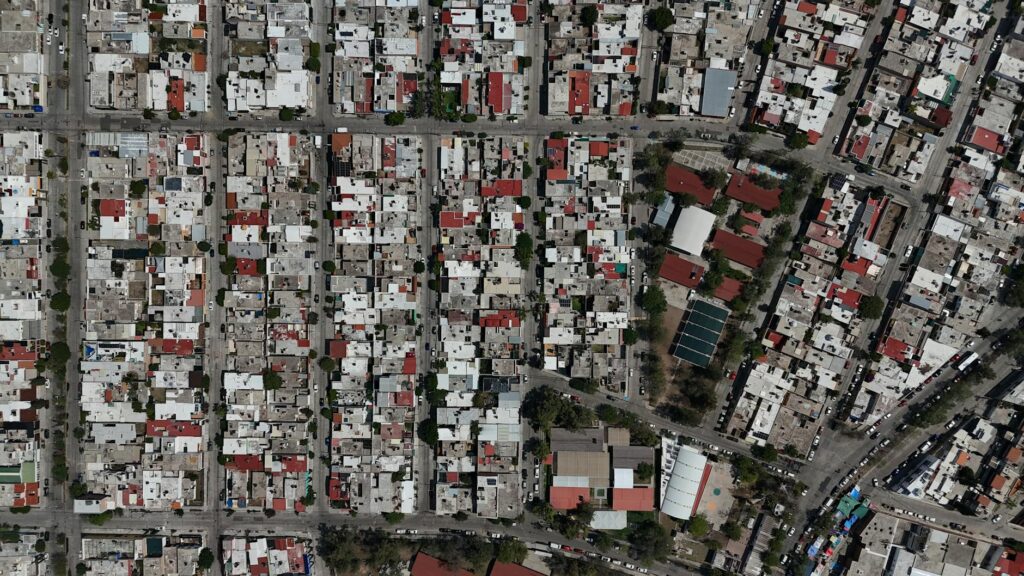
Micro-regeneration—small-scale, data-driven interventions that preserve existing street grids while injecting mixed-use development—has emerged as the operative lever for talent retention. A 2025 analysis in Cities documented that such interventions raise local economic vitality by 15% without displacing core mobility patterns [1]. The mechanism operates on three interlocking fronts:
First, tax revenue elasticity rises as higher-earning households settle, expanding municipal capacity to fund education and public transit—critical determinants of long-term talent pipelines.
- Physical Upgrades – Street-level improvements (lighting, sidewalks, green corridors) reduce commute friction, directly affecting residential satisfaction scores.
- Economic Catalysts – Incentivized incubator spaces and co-working hubs lower entry barriers for startups, fostering a “talent-anchor” effect.
- Data-Enabled Targeting – Interpretable machine-learning models identify high-impact parcels, allowing municipalities to allocate subsidies where marginal returns on talent retention are greatest [1].
Case in point: Barcelona’s Poblenou district leveraged micro-regeneration to transition from a declining industrial zone to a tech-centric enclave. Between 2018 and 2023, the area’s employment in knowledge-intensive occupations rose from 12% to 28%, while average resident tenure increased by 3.4 years, indicating stronger attachment to place [2].
 Government & Policy
Eighth Pay Commission Completes Mumbai Consultations
The report deadline runs to around May 2027. Salary projections remain conditional, while the UPS states a pension guarantee based on average basic pay.
Read More →Systemic Ripple Effects on Economic and Institutional Power
The localized gains of micro-regeneration reverberate through broader institutional structures. First, tax revenue elasticity rises as higher-earning households settle, expanding municipal capacity to fund education and public transit—critical determinants of long-term talent pipelines. Second, institutional power dynamics shift; neighborhoods that successfully retain talent become political bargaining chips, compelling city councils to prioritize equitable service delivery to avoid “talent flight” to peripheral suburbs.
Structural determinants—housing stock quality, transit connectivity, and community resources—moderate these pathways. A 2022 health-equity study highlighted that neighborhoods with robust public-transport links and affordable housing experienced 20% lower attrition rates among health-sector professionals compared with districts lacking such assets [4]. This underscores that talent retention is not a by-product of isolated projects but a function of integrated systemic design.
Human Capital Accumulation within Revitalized Districts

Talent retention translates into human capital deepening when skilled workers engage in continuous learning, mentorship, and local entrepreneurship. Revitalized districts foster this through:
- Skill-matching platforms that align local employer demand with resident expertise, reducing friction in the labor market.
- Community-centered training programs funded by the incremental tax base, which have been shown to increase certification rates among residents by 12% within three years of implementation [3].
- Network externalities generated by co-located firms, where knowledge spillovers raise productivity across sectors.
Detroit’s Corktown illustrates the cumulative effect: after a decade of micro-regeneration, the district recorded a 17% increase in STEM-related job postings and a 9% rise in local university enrollment in related fields, suggesting a feedback loop where revitalization attracts talent, which in turn fuels further economic diversification [2].
Projected 3-5-Year Trajectory of Talent Flows
Looking ahead, the trajectory of talent retention in revitalized neighborhoods can be modeled through a systemic elasticity framework that integrates demographic, economic, and policy variables. Projections based on the Baker Institute’s econometric scenarios indicate:
 Entrepreneurship & Business
Europe Adds to Business Regulatory Burden, Speaker Says
The exchange covered deregulation, CBAM, an India-EU trade agreement and trade figures for India’s ties with the EU and the Netherlands.
Read More →Projected 3-5-Year Trajectory of Talent Flows Looking ahead, the trajectory of talent retention in revitalized neighborhoods can be modeled through a systemic elasticity framework that integrates demographic, economic, and policy variables.
- Year 1-2: Immediate stabilization of out-migration rates as micro-regeneration projects reach completion; modest gains in median income (≈ 4%).
- Year 3-4: Acceleration of talent inflow driven by emerging “innovation clusters,” with population growth averaging 1.8% annually and a 7% rise in high-skill employment.
- Year 5: Consolidation phase where institutional capacity (e.g., expanded vocational curricula, transit upgrades) sustains a net talent surplus relative to comparable districts, positioning the city for competitive advantage in the national talent market.
Cities that embed adaptive governance—continuous data monitoring, community feedback loops, and flexible financing mechanisms—will capture the upper bound of this trajectory. Conversely, jurisdictions that rely on top-down, one-size-fits-all renewal risk creating “green-gentrification” traps that erode the very talent they aim to retain.
Key Structural Insights
> [Insight 1]: Micro-regeneration’s 15% boost to local economic vitality operates without disrupting existing street patterns, preserving commuter efficiency that underpins talent stability.
> [Insight 2]: Structural determinants such as affordable housing and transit connectivity amplify talent retention, generating a 20% reduction in professional attrition when jointly optimized.
> [Insight 3]: A 3-5-year elasticity model predicts that cities combining data-driven parcel targeting with community-centered skill development can achieve a net talent surplus, reshaping institutional power hierarchies.
Sources
Ripples create waves: Assessing the catalytic effects of neighborhood micro-regeneration – Cities (Elsevier) [1]
Where renewal works best? Unrevealing spatiotemporal effects of community renewal – Nature Communications [2]
Businesses Economic Impact on Revitalization and Its Decades of Urban – Baker Institute [3]
Revisiting revitalization: exploring how structural determinants moderate pathways between neighborhood change and health – International Journal for Equity in Health* [4]
Written by Career Ahead AI. AI can make mistakes, so verify key facts. Report errors to support@careeraheadonline.com.





