No products in the cart.

Rupee recovers 18 paise to settle at 96.55 against U.S. dollar
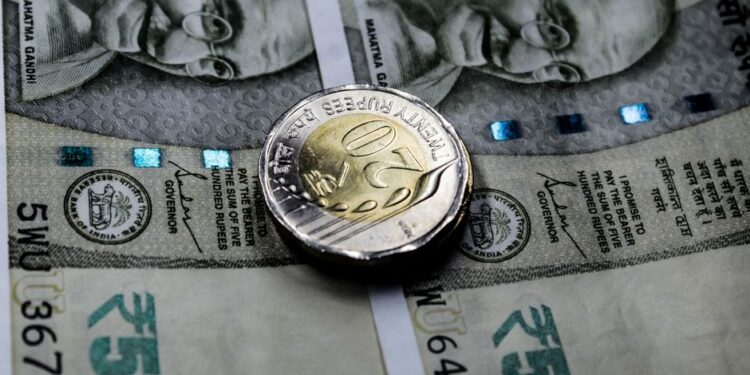
The Indian rupee gained 18 paise to close at 96.55 against the U.S. dollar, influenced by geopolitical tensions and market dynamics. This recovery is significant for businesses involved in international trade, as it affects import and export costs.

The Indian rupee gained 18 paise, closing at 96.55 against the U.S. dollar on July 24, 2026. This recovery happened amid geopolitical tensions and market volatility, which affect currency values. Forex traders observed that the rupee opened lower at 96.81 but stabilized due to intervention from the Reserve Bank of India (RBI) and public sector banks. According to The Hindu, the RBI’s actions helped reduce excessive volatility, preventing further depreciation of the rupee.
Several factors contributed to this recovery. Foreign institutional investor outflows and negative sentiments in domestic equity markets played a role. The rupee’s performance is vital for the economy and businesses involved in imports and exports. With the dollar index slightly down, the rupee’s rebound gives hope to traders and analysts. As noted by Economic Times, this recovery is significant, especially after a period of record lows, indicating potential stabilization in the currency market.
Impact of Currency Fluctuations on Import/Export Costs
Currency fluctuations significantly affect import and export costs. When the rupee strengthens against the dollar, it can lower costs for imported goods. This makes it easier for businesses to manage expenses. For example, a stronger rupee means importers spend less in local currency to buy foreign products, which can lower prices for consumers. This is especially beneficial for sectors that rely on raw materials and components from abroad, as lower import costs can boost profit margins.
However, the benefits of a stronger rupee may not be equal for all. Import/export managers must consider various factors like the type of goods traded and overall market conditions. For instance, while electronics and raw materials may see price drops, luxury goods may not experience the same due to global supply chain issues. The balance between local demand and international supply can complicate pricing strategies, requiring businesses to navigate these challenges to stay competitive.
Career Ahead’s analysis shows that import/export managers should monitor currency trends closely. If the rupee strengthens, businesses may want to lock in prices for imports to take advantage of favorable exchange rates. Conversely, if the rupee weakens again, they may need to adjust pricing to maintain profitability. Additionally, currency fluctuations can impact supplier negotiations, allowing importers to use a stronger rupee to negotiate better terms or discounts.
Career Ahead’s analysis shows that import/export managers should monitor currency trends closely.
The effects of currency fluctuations go beyond immediate cost changes. Companies may face long-term implications, such as altered supplier relationships and shifts in market demand. Understanding these dynamics is crucial for import/export managers to navigate international trade effectively. The ability to forecast these changes can give businesses a competitive edge, allowing them to adapt strategies proactively.
Financial analysts must also adjust their forecasting models to reflect currency changes. A stronger rupee can lead to revised projections for revenue and costs, impacting overall financial health. Analysts should include currency risk assessments in their models for more accurate predictions. As highlighted by CNBC TV18, fluctuations in the rupee’s value can significantly affect corporate earnings, making it essential for analysts to remain vigilant and responsive to market conditions.
Adjusting Financial Forecasts Amid Currency Changes
As the rupee stabilizes, financial analysts need to reassess their forecasts to reflect the new exchange rate environment. The recovery of the rupee could improve profit margins for companies that depend on imports. Analysts should consider how these changes will affect their revenue growth and cost management projections. This reassessment is crucial for industries sensitive to currency movements, like manufacturing and retail.
Moreover, analysts must evaluate potential currency volatility in their forecasts. Geopolitical issues, including tensions in West Asia, can cause sudden shifts in currency values. Therefore, incorporating sensitivity analyses into forecasting models will help analysts prepare for unexpected changes. Recent geopolitical events highlight the need for agility in financial planning, as companies must be ready to adjust strategies quickly.
Career Ahead research suggests that financial analysts should create a framework for closely monitoring currency movements. This includes tracking key economic indicators and geopolitical developments that could impact exchange rates. By staying informed, analysts can adjust their forecasts dynamically, ensuring their predictions remain relevant in a fluctuating market. Collaboration with import/export managers can also enhance the accuracy of financial projections, as operational insights provide valuable context for financial assumptions.
Career Ahead research suggests that financial analysts should create a framework for closely monitoring currency movements.

In summary, the recovery of the rupee presents both challenges and opportunities for financial analysts. By adapting their forecasts and working closely with operational teams, they can effectively navigate currency fluctuations. The ongoing changes in the currency landscape require a proactive approach to financial planning, ensuring businesses remain resilient amid uncertainty.
Looking ahead, the relationship between geopolitical events and currency movements will be critical. Analysts and managers must stay informed to navigate the evolving landscape of international trade. As the global economy faces various pressures, the ability to anticipate and respond to currency fluctuations will be vital for maintaining a competitive advantage.
Frequently Asked Questions
How will the rupee’s recovery impact my import costs?
Career Ahead analysis shows that a stronger rupee can lower import costs, helping businesses manage expenses better. However, the extent of this benefit may vary based on the type of goods imported.
Career Ahead analysis shows that a stronger rupee can lower import costs, helping businesses manage expenses better.
What strategies can financial analysts use to adjust forecasts after currency changes?
Financial analysts should include sensitivity analyses in their models and closely monitor currency movements. This approach will help them make more accurate predictions in a fluctuating market.

What should import/export managers do to mitigate risks from currency fluctuations?
Import/export managers should consider using financial instruments like forwards and options to hedge against currency risk. Additionally, maintaining multi-currency accounts can help manage cash flow effectively.
Written by Career Ahead AI. AI can make mistakes, so verify key facts. Report errors to support@careeraheadonline.com.