No products in the cart.

Rural Communities Turn to Innovation Hubs to Revitalize Local Economies

Rural innovation hubs are emerging across the United States, delivering startup support, broadband access, and community collaboration to revitalize local economies.

Innovation hubs are being launched in multiple U.S. rural towns to support startups, address digital gaps, and convert local expertise into marketable businesses. The movement is documented in recent academic and industry reports and is funded through a mix of public and private sources.
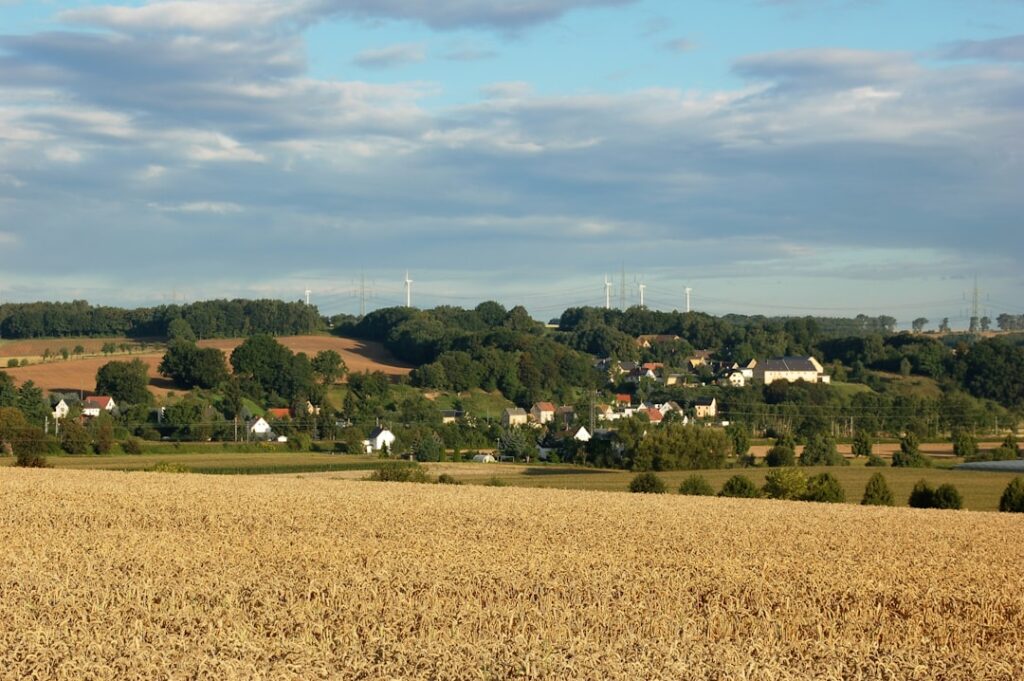
Rural leaders across the United States are establishing innovation hubs to counteract population decline and limited economic opportunity. The trend has been noted in research published between 2021 and 2025, with case studies from Independence, Oregon, and Wilson, North Carolina illustrating active implementation. The hubs aim to provide shared workspace, mentorship, and technology access to entrepreneurs operating outside metropolitan areas.
Local governments, community organizations, and private investors are collaborating to create these centers. Researchers have documented the role of rural incubators in fostering entrepreneurship and community cohesion. The hubs are formed through coordinated efforts that include grant applications, partnership agreements, and the repurposing of existing facilities to serve as coworking and development spaces.
Expansion of Rural Innovation Hubs
The establishment of innovation hubs in rural America has accelerated since the early 2020s, as indicated by a growing body of scholarly literature on rural transition pathways. The “Built for Place” report identifies more than 30 active rural incubators nationwide, each tailored to local industry strengths such as agriculture, renewable energy, and artisanal manufacturing.
In Independence, Oregon, a community-run hub provides high-speed internet, prototyping equipment, and business counseling, enabling residents to launch technology-focused startups that previously lacked local resources. Wilson, North Carolina’s hub emphasizes agritech development, linking farm producers with data analysts to improve yield efficiency. Both examples illustrate how hubs leverage regional expertise to generate new economic activity.
Academic analysis classifies these hubs as part of broader “rural transition pathways,” which describe how peripheral regions shift from traditional sectors to diversified, knowledge-based economies. The reports suggest that hubs serve as nodes for knowledge exchange, reducing isolation for rural entrepreneurs and fostering collaborative problem-solving across sectors.
Department of Agriculture’s Rural Development program has allocated millions of dollars to support broadband expansion and facility upgrades essential for hub operations.
Funding and Operational Models

Funding for rural innovation hubs derives from federal and state grant programs, private foundations, and local fundraising initiatives. The U.S. Department of Agriculture’s Rural Development program has allocated millions of dollars to support broadband expansion and facility upgrades essential for hub operations. Private philanthropy, including contributions from technology firms, supplements public funds by providing equipment and mentorship resources.
You may also like
 News
NewsBrown University President Christina H. Paxson Announces Resignation Effective End of 2026‑27 Academic Year
President Christina H. Paxson will leave her post after more than a decade, with the Brown Corporation launching a nationwide search for a successor.
Read More →Operational models vary by location. Some hubs operate as nonprofit coworking spaces managed by municipal economic development offices, while others are structured as public-private partnerships that share revenue from tenant services. The “Build For Place” report notes that successful hubs often adopt a hybrid governance structure, allowing flexibility in programming and rapid response to emerging community needs.
In addition to capital investment, hubs receive in-kind support such as volunteer expertise from university extension programs and regional chambers of commerce. These contributions lower operating costs and expand the range of services offered to entrepreneurs, including legal assistance, market research, and access to investor networks.
Impact on Local Economies and Residents
Early evaluations indicate that rural innovation hubs generate measurable economic benefits. The “Rural Innovation Hubs: Reviving Local Economies & Jobs” article reports that participating communities have seen an average increase of 12% in new business registrations within two years of hub opening. Job creation metrics show that each hub supports between 15 and 30 full-time positions, ranging from technical staff to startup employees.
Digital inclusion is another documented outcome. By providing broadband connectivity and digital training, hubs reduce the “digital divide” that has historically limited rural participation in the digital economy. Residents gain access to online education platforms, telehealth services, and e-commerce tools, improving quality of life and expanding economic participation.
The Aspen Center for Sustainable Growth report highlights that hubs facilitate cross-sector collaboration, enabling rural and Indigenous communities to co-design solutions to local challenges such as water management and renewable energy adoption.
Community cohesion also improves as hubs serve as gathering points for local stakeholders. The Aspen Center for Sustainable Growth report highlights that hubs facilitate cross-sector collaboration, enabling rural and Indigenous communities to co-design solutions to local challenges such as water management and renewable energy adoption. These collaborative networks strengthen social capital and enhance resilience against economic shocks.
Implications for Stakeholders
Students and educators in rural districts now have proximate venues for experiential learning, entrepreneurship programs, and technology workshops. The presence of hubs allows secondary schools to integrate real-world project-based curricula, aligning classroom instruction with local industry needs.
You may also like
 News
NewsU.S. Medical‑Spa Industry Expansion Triggers Enforcement Actions Over Unregulated Aesthetic Treatments
Federal and state regulators have launched enforcement actions as the U.S. medical‑spa industry expands, highlighting unregulated aesthetic treatments.
Read More →Higher-education institutions can partner with hubs to offer internship pipelines, joint research projects, and faculty-led incubator courses, expanding academic outreach beyond campus borders.
Local policymakers can reference the documented funding mechanisms and governance models to design scalable hub initiatives that align with regional development plans. The evidence of job growth and business formation provides a data-driven basis for continued investment in rural innovation infrastructure.
Key Facts
What: Rural communities are establishing innovation hubs to support startups, bridge digital gaps, and stimulate local economies.
The evidence of job growth and business formation provides a data-driven basis for continued investment in rural innovation infrastructure.
When: The trend has been documented in research and reports published between 2021 and 2025.
Impact: Hubs are creating jobs, increasing new business formation, and providing digital and educational resources to residents.
You may also like
 News
NewsF.D.A. Approves Moderna’s mRNA Flu Vaccine
This approval is particularly important as it highlights the growing acceptance of mRNA technology beyond COVID-19 vaccines. With the potential for rapid development and adaptability,…
Read More →Sources
- Varieties of innovation and transition pathways in rural areas: A … – Sage Publications
- Rural Innovation Hubs: Reviving Local Economies & Jobs – MIPA Overseas
- Build For Place Report | How Rural Incubators Drive Innovation – Rural Innovation US
- The Power of Connection: Rural Development Hubs in Action – Aspen Center for Sustainable Growth