No products in the cart.

Section 702 Expiration Boosts U.S. Intelligence Gathering

The lapse of Section 702 forces U.S. intelligence to rely on tighter, lower‑visibility methods, reshaping global spying and sparking a strategic rebalancing.

The lapse of a cornerstone surveillance law forces agencies to rely on more disciplined, lower‑visibility methods, reshaping the architecture of overseas spying.
Why the immediate gap is narrower than expected
The legal vacuum created at midnight on June 12, 2026—the moment the year‑long certification issued on March 17, 2026 expires—does not instantly blind the United States; instead, it activates a suite of pre‑existing statutory work‑arounds that keep the core flow of foreign communications intact. Agencies can pivot to Section 704, to executive‑order‑based “incidental collection” provisions, and to the “target‑of‑interest” doctrine that permits the acquisition of foreign data when it is incidentally captured during the surveillance of a U.S. person. These mechanisms, while technically distinct, share a common legal lineage that has been refined over the past decade; they were deliberately designed to survive a temporary lapse in Section 702, precisely because the intelligence community recognized the strategic peril of a single‑point failure.
Consequently, the short‑term operational impact is muted; the United States retains the ability to harvest bulk foreign communications, albeit under a more fragmented legal scaffolding. The real transformation begins not with the loss of a tool, but with the decision‑making calculus that now weighs the cost of each workaround against the risk of congressional rebuke. In practice, this calculus nudges analysts toward tighter targeting, more rigorous minimization procedures, and a heightened reliance on internal oversight—effects that, paradoxically, may improve the quality of the intelligence that does get collected.
“A months-long standoff over privacy and the future of the nation’s top spy office has pushed a cornerstone surveillance law to the brink.” — David DiMolfetta, Cybersecurity Reporter at Nextgov/FCW
The hidden shift toward human and open‑source tradecraft

When the legal scaffolding for bulk electronic interception becomes less certain, the intelligence community inevitably leans on the other pillars of its collection portfolio: human intelligence (HUMINT) and open‑source intelligence (OSINT). Both disciplines have historically been secondary to signals intelligence (SIGINT) in the U.S. architecture, but the Section 702 expiration accelerates a rebalancing that is already in motion.
Moreover, advances in machine‑learning‑driven analytics have lowered the marginal cost of sifting through massive public datasets, allowing analysts to extract actionable signals that previously required the firepower of a bulk‑collection program.
First, HUMINT operations—recruiting assets, conducting debriefs, and running covert field stations—gain renewed strategic value because they are not subject to the same statutory constraints. The trade‑off is clear: human sources provide depth and context that raw data cannot, yet they are costlier, slower to develop, and fraught with diplomatic sensitivities. Agencies therefore begin to allocate budgetary resources that were once earmarked for bulk data storage toward recruitment pipelines, language training, and cultural immersion programs.
You may also like
 Government & Policy
National PNG Drive 3.0 Objectives Unpacked
India's National PNG Drive 3.0 aims to enhance energy accessibility by adding 50 lakh new piped natural gas connections, promoting cleaner energy use across the…
Read More →Second, OSINT, which includes everything from social‑media mining to satellite imagery analysis, experiences a surge in institutional emphasis. The open nature of these sources means that the United States can continue to monitor foreign actors without triggering the legal debates that surround electronic interception. Moreover, advances in machine‑learning‑driven analytics have lowered the marginal cost of sifting through massive public datasets, allowing analysts to extract actionable signals that previously required the firepower of a bulk‑collection program.
The net effect is a more diversified intelligence portfolio that, while less dependent on any single collection method, also introduces new vulnerabilities. HUMINT assets are susceptible to counter‑intelligence attacks, and OSINT can be polluted by adversarial disinformation campaigns. The shift therefore compels the intelligence community to develop more robust vetting and validation frameworks—a strategic adaptation that will reverberate long after Section 702 is either renewed or replaced.
Strategic rebalancing: power dynamics in a post‑702 world
Beyond the technical adjustments, the expiration of Section 702 reshapes the geopolitical calculus of surveillance competition. Foreign governments, observing the United States’ legal hiccup, interpret the lapse as both a cautionary tale and a tactical opening. Nations that have long decried U.S. bulk‑collection practices—most notably the European Union and China—accelerate their own legislative efforts to expand domestic surveillance authorities, arguing that a “level playing field” is essential for national security.
This reciprocal escalation creates a feedback loop: as allied and rival states bolster their capabilities, the United States must either accept a relative decline in raw data acquisition or double‑down on alternative methods that are less transparent to partner agencies. The resulting asymmetry can erode the trust that underpins intelligence‑sharing agreements such as the Five Eyes alliance, because partners may question the completeness of the U.S. contribution when bulk SIGINT is curtailed.
The resulting asymmetry can erode the trust that underpins intelligence‑sharing agreements such as the Five Eyes alliance, because partners may question the completeness of the U.S.
Simultaneously, the private sector—particularly U.S. tech firms that have historically been compelled to furnish data under Section 702—find themselves in a liminal space. Without a clear legal mandate, these companies may adopt more restrictive data‑access policies, citing privacy commitments and the risk of foreign litigation. The downstream effect is a contraction of the data pipeline that feeds not only government analysts but also commercial threat‑intelligence services, further amplifying the strategic gap.
You may also like
 Government & Policy
Why Rising Instrument Prices Endanger School Music Education
Rising tariffs on musical instruments are significantly increasing costs for school music programs, putting their viability at risk. Career Ahead's analysis identifies potential funding strategies…
Read More →Our view is that the United States will respond by sharpening its targeting criteria, investing in cross‑domain analytics, and negotiating more granular data‑sharing accords that compensate for the loss of bulk access. This recalibration, while preserving core capabilities, also forces a more accountable intelligence posture—one that aligns with the broader societal push for privacy safeguards without surrendering strategic advantage.
The privacy paradox persists
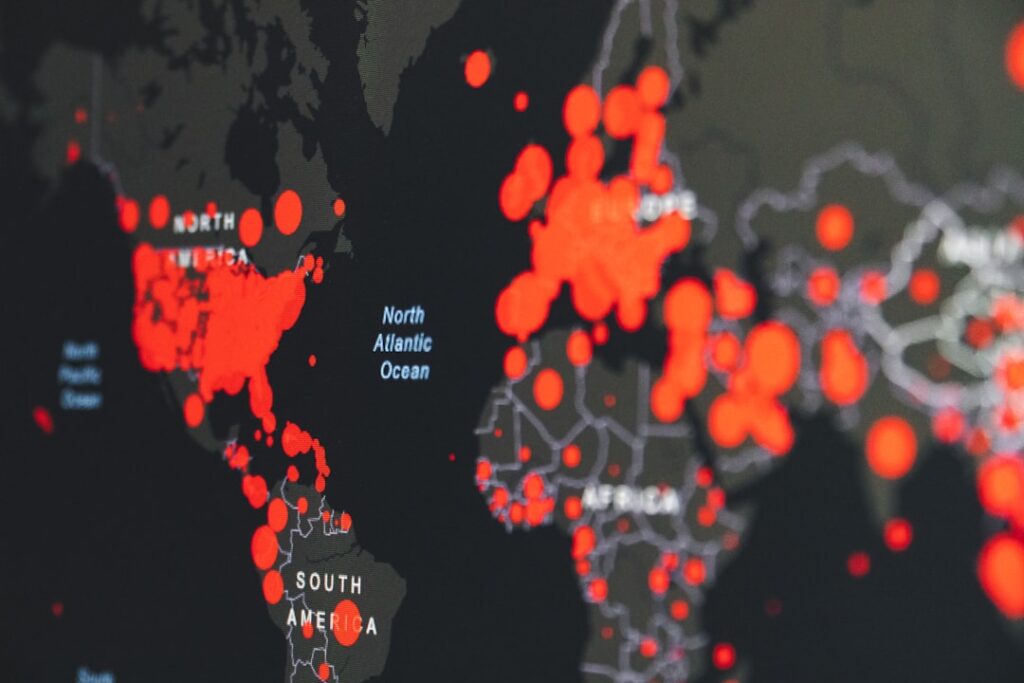
Even as agencies adapt, the public debate over surveillance does not recede. Civil‑liberties advocates point to the expiration as evidence that the United States can function without a sweeping, warrant‑less collection regime, arguing that the same security objectives can be met through “smarter, not bigger” intelligence. Conversely, proponents of robust surveillance contend that the work‑arounds are merely a veneer, and that the underlying capacity to surveil foreign communications remains effectively unchanged.
The paradox lies in the simultaneous erosion of legal certainty for agencies and the amplification of privacy concerns among the populace. When the law lapses, oversight bodies—Congressional committees, the Privacy and Civil Liberties Oversight Board, and the FISA Court—gain a fleeting window to scrutinize agency practices, yet their findings often become entangled in partisan battles that delay substantive reform. In this environment, the United States risks a credibility deficit: it projects an image of relentless intelligence gathering while grappling with internal legitimacy challenges that could, over time, constrain its operational latitude.
A disciplined future for global intelligence
We believe the Section 702 expiration will ultimately act as a catalyst for a more disciplined intelligence enterprise. By compelling agencies to justify each collection channel, to invest in alternative tradecraft, and to negotiate clearer data‑sharing parameters, the United States can emerge with a leaner, more resilient architecture. This outcome, however, hinges on the willingness of policymakers to codify the lessons learned into durable statutory reforms rather than allowing the temporary gap to become a permanent blind spot.
A disciplined future for global intelligence We believe the Section 702 expiration will ultimately act as a catalyst for a more disciplined intelligence enterprise.
In sum, the disappearance of a single legal instrument does not spell the end of U.S. global intelligence gathering; it reshapes it, forcing a strategic pivot that may, paradoxically, strengthen both effectiveness and accountability.
You may also like
 Government & Policy
ITAT Ruling Clears Businessman of Tax Penalty via Relative’s Job
The ITAT ruled in favor of Gupta after he explained that the foreign currency discovered in his home belonged to his sister-in-law, Kemp, who worked…
Read More →The evolution of surveillance in the wake of Section 702’s lapse underscores a timeless truth: when a dominant tool is removed, the system adapts, and the adaptation itself becomes the new lever of power.