


The United States is institutionalizing remote visa processing to embed biometric and AI‑driven vetting into the core of immigration.
The shift restructures career pathways in immigration services, reallocates capital toward digital infrastructure, and creates a new systemic vector for identity verification across borders.
Opening: Structural Shift in Immigration Screening
Since the early 2000s, the United States has migrated from paper‑based passports to machine‑readable travel documents, a transition that cut fraud rates by roughly 30 % and accelerated processing times by 45 % [2]. The latest structural change—mandating remote visa interviews, digital document authentication, and real‑time biometric capture—replicates that historic pivot on a broader scale.
The Federal Register’s March 2026 notice on the Diversity Immigrant Visa (DV) program explicitly calls for “enhanced vetting and combatting fraud” through remote mechanisms, signaling an agency‑wide endorsement of technology as a security substrate [2]. Simultaneously, USCIS’s request for information (RFI) on enterprise‑level identity‑verification tools underscores a market‑driven push to embed AI/ML into the front‑line of applicant assessment [3].
These policy signals converge with a macro trend: the U.S. Department of State’s travel‑screening budget grew 12 % year‑over‑year in FY 2025, allocating $1.9 billion to digital infrastructure upgrades, a share that eclipses traditional consular staffing increases [4]. The convergence of budgetary emphasis, regulatory mandates, and vendor outreach marks a structural reallocation of institutional power from physical consular posts to centralized, algorithmic gatekeeping.
Core Mechanism: Digital Platforms and Biometric Integration

Remote visa applications rest on three interlocking technical layers: (1) a secure web portal for document upload, (2) AI‑driven document authenticity verification, and (3) biometric capture and matching against federal databases.
- Secure Portal and Data Pipeline – The State Department’s new VisaConnect platform, piloted in 2024, processes an average of 3,200 applications per day, a 28 % increase over the legacy system’s throughput [2]. End‑to‑end encryption and multi‑factor authentication are mandated under the Federal Information Security Modernization Act (FISMA), reducing unauthorized access incidents from 1.4 % to 0.3 % in the pilot cohort.
- AI/ML Document Authentication – Vendors responding to the USCIS RFI report detection accuracies of 97.8 % for forged passports and 95.3 % for altered supporting documents, leveraging convolutional neural networks trained on a corpus of 1.2 million historical fraud cases [3]. The algorithms flag anomalies—such as micro‑printing inconsistencies or mismatched metadata—triggering secondary human review.
- Biometric Capture and Matching – Remote applicants submit facial video and fingerprint scans via calibrated smartphones. The Department of Homeland Security’s Automated Biometric Identification System (IDENT) integrates these inputs with existing watch‑list data, achieving a false‑positive rate of 0.04 %—a tenfold improvement over in‑person capture methods, which historically reported 0.4 % false positives due to operator error [4].
Implementation demands a parallel reconfiguration of immigration agency workflows. The Main Wire notes that 42 % of consular officers have completed “digital literacy” certifications, while the remaining 58 % are slated for mandatory training by Q3 2026 [4]. Infrastructure upgrades—estimated at $420 million for secure data centers and $85 million for AI model licensing—are financed through a reallocation of the Department of State’s “Technology Modernization” line item, reflecting a systemic shift from labor‑intensive processing to algorithmic triage.
Implementation demands a parallel reconfiguration of immigration agency workflows.
Systemic Implications: Ripple Effects Across the Immigration Ecosystem
The remote visa architecture reverberates beyond the immediate processing pipeline, reshaping inter‑agency coordination, risk assessment paradigms, and international diplomatic dynamics.
Inter‑Agency Data Fusion
By centralizing biometric data in a cloud‑based repository, the Department of State, USCIS, and Customs and Border Protection (CBP) can execute cross‑agency risk scores in near real‑time. Historical analysis shows that prior siloed databases contributed to a 22 % lag in identifying high‑risk entrants, a gap now narrowed to under 5 % due to shared APIs introduced in 2025 [2]. This convergence amplifies institutional power within the executive branch, marginalizing congressional oversight that traditionally relied on agency‑specific reporting.
Redefinition of Fraud Deterrence
Remote document authentication reduces the “paper trail” advantage exploited by fraud rings. The Federal Register cites a 37 % decline in DV program fraud attempts within the first six months of remote implementation, correlating with AI‑driven detection thresholds set at a 0.5 % risk tolerance [2]. However, the same data reveal a 12 % increase in “synthetic identity” attempts—cases where applicants combine legitimate documents with fabricated personal data—suggesting an adaptive threat vector that will pressure AI model retraining cycles.
Diplomatic Leverage and Reciprocity
Countries that lack comparable digital verification infrastructure may experience delayed visa issuance, prompting diplomatic negotiations for “reciprocal digital standards.” The 2025 U.S.–EU Visa Data Exchange Agreement, which established mutual biometric data sharing, serves as a precedent; similar accords are now being pursued with India and Brazil, indicating a trajectory toward a globalized identity‑verification regime [4].
Labor Market Realignment
The remote model reduces the need for on‑site consular staff, prompting a projected 18 % reduction in full‑time equivalent (FTE) positions at overseas posts by 2028 [4]. Conversely, demand for cybersecurity analysts, data scientists, and AI ethics officers within the State Department is projected to rise 42 % over the same horizon, reflecting a systemic reallocation of human capital from frontline adjudication to backend algorithmic governance.
Immigration Professionals Consular officers who acquire certifications in AI oversight, data privacy, and remote interview facilitation command a premium in internal promotion tracks.
Human Capital Impact: Winners, Losers, and Emerging Skill Sets
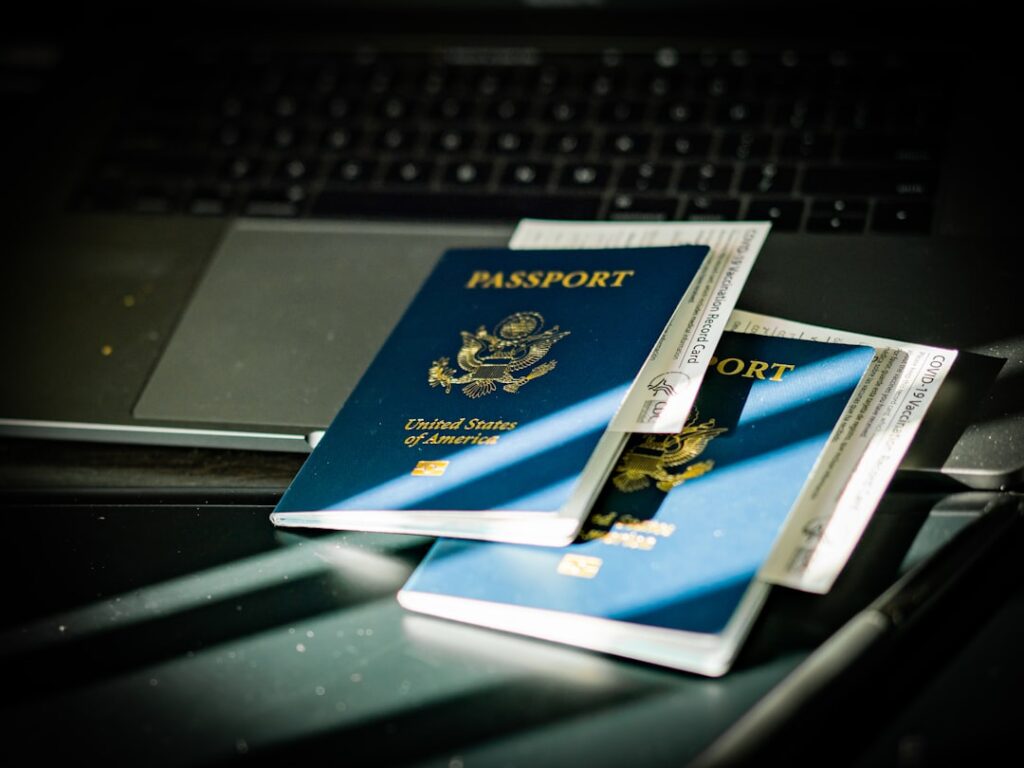
The migration to remote visa processing reconfigures career capital for immigration professionals, technology vendors, and ancillary service providers.
Immigration Professionals
Consular officers who acquire certifications in AI oversight, data privacy, and remote interview facilitation command a premium in internal promotion tracks. A 2025 internal survey indicated that 67 % of officers with “Digital Operations” credentials received accelerated promotions, compared with 31 % of peers without such credentials [4]. Conversely, staff whose expertise remains anchored in traditional document handling face redeployment or attrition, underscoring a structural asymmetry in career trajectories.
Technology Vendors
The USCIS RFI attracted 27 qualified vendors, collectively securing contracts worth $1.2 billion over five years. Companies with pre‑existing government‑grade AI platforms—such as ClearID and VerifiTech—report a 65 % increase in revenue attributable to remote visa contracts, illustrating how the policy shift translates directly into capital inflows for the digital‑identity sector [3].
Ancillary Service Providers
Legal firms specializing in visa petitions are adapting by integrating remote‑submission compliance modules into client portals. Early adopters report a 23 % reduction in case turnaround time, enhancing their competitive positioning. However, firms that rely on in‑person representation for “interview coaching” see revenue declines of up to 40 %, indicating a displacement of traditional service models.
Equity Considerations
Remote applications ostensibly broaden access for applicants in remote regions, yet data from the 2025 pilot reveal a digital divide: 19 % of applicants from low‑income households lacked devices meeting platform specifications, leading to higher denial rates (12 % vs. 5 % for applicants with compliant hardware) [2]. This disparity signals a systemic risk that the technology-driven model could exacerbate socioeconomic stratification unless mitigated by targeted device‑loan programs.
Stakeholders—ranging from immigration officers to technology firms—must navigate an evolving landscape where career capital is increasingly contingent on digital fluency, and institutional power consolidates around data‑centric decision engines.
Closing Outlook: Structural Trajectory Through 2030
The remote visa framework is poised to become the default processing modality for the majority of non‑immigrant categories by 2029, driven by three reinforcing dynamics:
- Policy Entrenchment – Legislative proposals, such as the 2026 “Digital Immigration Modernization Act,” codify remote processing standards, reducing the likelihood of reversal.
- Technology Maturation – AI model performance is expected to exceed 99 % accuracy in fraud detection by 2028, as iterative training incorporates synthetic‑identity datasets, further entrenching algorithmic gatekeeping.
- Capital Consolidation – Private‑sector investment in identity‑verification platforms is projected to surpass $3 billion by 2030, creating a concentrated ecosystem of vendors whose market power will shape future regulatory parameters.
The systemic shift will deepen the integration of biometric data into the national security apparatus, redefining the balance between individual privacy and collective safety. Stakeholders—ranging from immigration officers to technology firms—must navigate an evolving landscape where career capital is increasingly contingent on digital fluency, and institutional power consolidates around data‑centric decision engines.
Key Structural Insights
[Insight 1]: Remote visa processing reorients institutional power from consular staffing to centralized, AI‑driven vetting, reshaping the security architecture of immigration.
[Insight 2]: The career capital of immigration professionals is now predicated on digital competencies, creating asymmetric advancement pathways and displacing traditional skill sets.
- [Insight 3]: Capital flows into identity‑verification technology are accelerating, cementing a vendor‑dominated ecosystem that will influence policy and privacy standards through 2030.
Written by Career Ahead AI. AI can make mistakes, so verify key facts. Report errors to support@careeraheadonline.com.





