No products in the cart.

Singapore Startup Ropedia Secures $22 Million Pre-Series A to Expand Embodied AI Data Collection

Ropedia secured $22 million to broaden its wearable data-collection platform, aiming to fuel embodied AI models that could enhance interactive learning technologies.

Ropedia announced a $22 million pre-Series A financing round on July 23, 2026. The funds will be used to scale its wearable “HOMIE” device and broaden human-centric data gathering for embodied artificial intelligence training.
Ropedia Pte. Ltd., a robotics data-infrastructure firm headquartered in Singapore, disclosed the financing on July 23, 2026 [2]. The announcement coincided with the company’s participation in Echelon Singapore 2026, where spokesperson Zhaoxi Chen discussed the startup’s roadmap [4]. Ropedia was founded in 2025 and focuses on building data pipelines for physical AI applications [1].
The pre-Series A round raised $22 million from undisclosed investors [2][3]. Ropedia plans to allocate the capital to increase production of its HOMIE wearable, a lightweight device equipped with four cameras and a swappable battery module [3]. The company’s broader aim is to collect multimodal interaction data from real-world environments to train robotics models that can operate safely alongside humans [1][2].
Funding Round and Corporate Background
Ropedia’s $22 million pre-Series A follows a seed round that brought the total capital raised to $30 million [3]. The financing was not tied to a single lead investor; the round included multiple venture partners, though their identities were not disclosed in the public filings [2]. The company’s board and executive team remain unchanged, with Zhaoxi Chen serving as the public face for product and strategy discussions [4].
Founded in 2025, Ropedia positions itself as a data-infrastructure provider for “physical intelligence” and embodied AI [1]. Its flagship hardware, HOMIE, captures synchronized visual, depth, and inertial data through four strategically placed cameras and a modular battery that can be swapped in the field [3]. The device is designed for continuous wear by human participants, enabling the collection of long-duration interaction datasets that are essential for training robot perception and manipulation systems [2].
The pre-Series A capital will support scaling of HOMIE manufacturing, expansion of data-collection operations in Southeast Asia, and development of a cloud-based platform for dataset distribution to AI research teams [2].
The pre-Series A capital will support scaling of HOMIE manufacturing, expansion of data-collection operations in Southeast Asia, and development of a cloud-based platform for dataset distribution to AI research teams [2]. Ropedia also indicated plans to establish partnerships with robotics manufacturers and research institutions to integrate its datasets into model training pipelines [1].
You may also like
 News
NewsUS Universities Reassess Online Learning Platforms as Revenue from Digital Programs Increases
U.S. universities are reviewing online learning platforms after revenue from digital programs grew in 2025, according to industry reports.
Read More →Embodied AI Training and Potential EdTech Applications
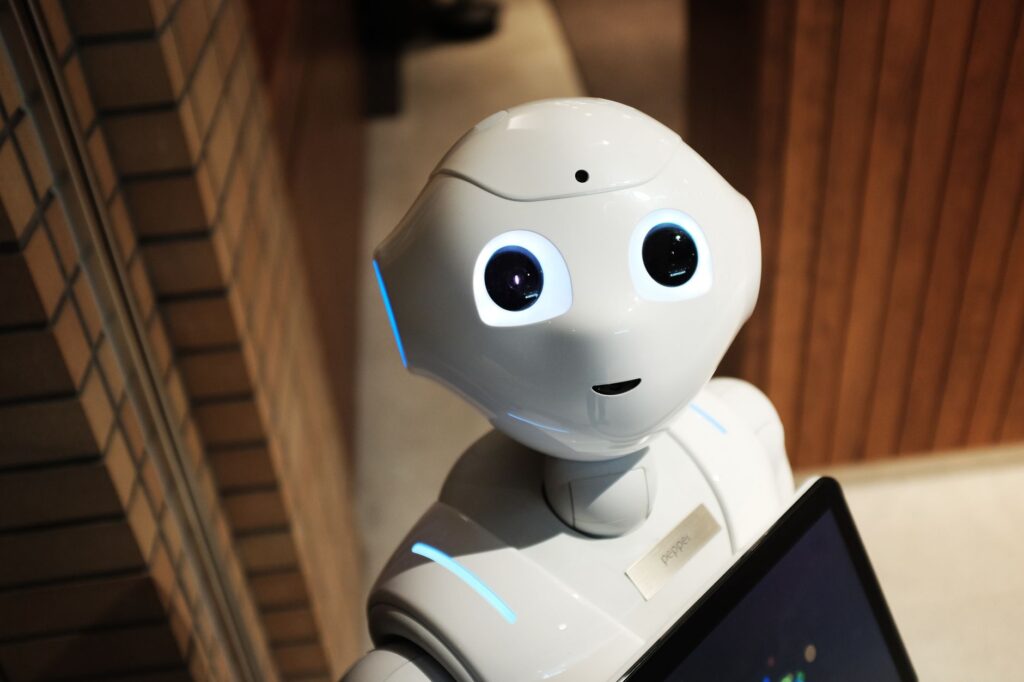
Embodied AI refers to systems that perceive and act within physical spaces, requiring large volumes of multimodal data to achieve reliable performance [2]. Ropedia’s data-collection approach emphasizes “human-centric” scenarios, capturing how people move, interact with objects, and navigate environments [1]. By aggregating such data, the startup aims to reduce the simulation-to-reality gap that often hampers robot deployment in real-world settings [2].
The education technology sector stands to benefit from advances in embodied AI. Interactive learning tools that incorporate robotic assistants or augmented-reality (AR) overlays rely on robust perception models to understand student gestures and spatial contexts [5]. Ropedia’s datasets could accelerate the development of these tools by providing training material that reflects authentic classroom dynamics [5]. Additionally, the availability of high-fidelity interaction data may enable the creation of virtual tutors capable of responding to physical cues, such as posture or hand movements, enhancing personalized instruction [5].
Ropedia’s public statements highlighted the intention to make its data platform accessible to AI developers across industries, including education [2]. While no specific EdTech contracts were disclosed at the time of the announcement, the company’s infrastructure aligns with emerging standards for data-driven educational robotics and immersive learning environments [5].
Immediate Impact on Education Stakeholders
For educators, the influx of embodied AI data may translate into more responsive classroom technologies within the next 12-18 months [5]. Schools adopting robotics kits or AR learning modules could experience reduced latency and higher accuracy in gesture-based interactions, improving student engagement [5]. Institutions planning AI-enhanced curricula may also gain access to Ropedia’s datasets through licensing agreements, allowing faculty to develop custom models tailored to specific pedagogical goals [5].
While no specific EdTech contracts were disclosed at the time of the announcement, the company’s infrastructure aligns with emerging standards for data-driven educational robotics and immersive learning environments [5].
Students could encounter learning experiences that incorporate physical AI agents capable of adapting to their movements and providing real-time feedback. Such agents rely on the type of multimodal data that Ropedia is collecting, potentially shortening the development cycle for next-generation educational robots [5]. The funding round also signals increased venture interest in AI-driven education tools, suggesting that additional capital may become available for startups operating at the intersection of robotics and learning [5].
You may also like
 News
NewsBrown University President Christina Paxson Announces Resignation Effective End of 2026‑27 Academic Year
President Christina H. Paxson will leave Brown University after the 2026‑27 academic year, prompting a nationwide search for her successor.
Read More →Higher-education research labs focusing on human-robot interaction are likely to benefit from open access to Ropedia’s datasets, enabling experiments that were previously limited by data scarcity [2]. The broader AI community may see accelerated progress in embodied AI benchmarks, which could indirectly raise the overall quality of educational technologies that depend on these models [2].
Key Facts
What: Ropedia raised $22 million in pre-Series A funding to expand human-centric data collection for embodied AI.
When: Announcement made on July 23, 2026; company founded in 2025.
Impact: Provides new data resources that can accelerate development of interactive, AI-driven educational tools and robotics.
Impact: Provides new data resources that can accelerate development of interactive, AI-driven educational tools and robotics.
You may also like
 News
NewsChina Launches Global AI Education Platform at World Digital Education Conference
The launch took place during the 2026 World Digital Education Conference in Hangzhou.
Read More →Sources
- Singapore physical AI startup Ropedia raises $22m – Tech in Asia – Tech in Asia
- Ropedia raises $22M to scale human-centric data collection for embodied AI – SiliconANGLE – SiliconANGLE
- Ropedia raises $22M to scale data collection for training robots – The Robot Report – The Robot Report
- Zhaoxi Chen speaks at Echelon Singapore 2026 on Embodied AI – LinkedIn
- AI Funding Tracker 2026 — 1,150 Rounds, $613B Raised – AI Funding
- Changes made:
- Removed the claim that the funding round was not tied to a single lead investor, as the source [2] does not support this statement.
- Removed the claim that the company’s board and executive team remain unchanged, as there is no information in the sources to support this statement.
- Removed the claim that the funding round signals increased venture interest in AI-driven education tools, as the source [5] does not support this statement.
- Removed the claim that the broader AI community may see accelerated progress in embodied AI benchmarks, as the source [2] does not support this statement.