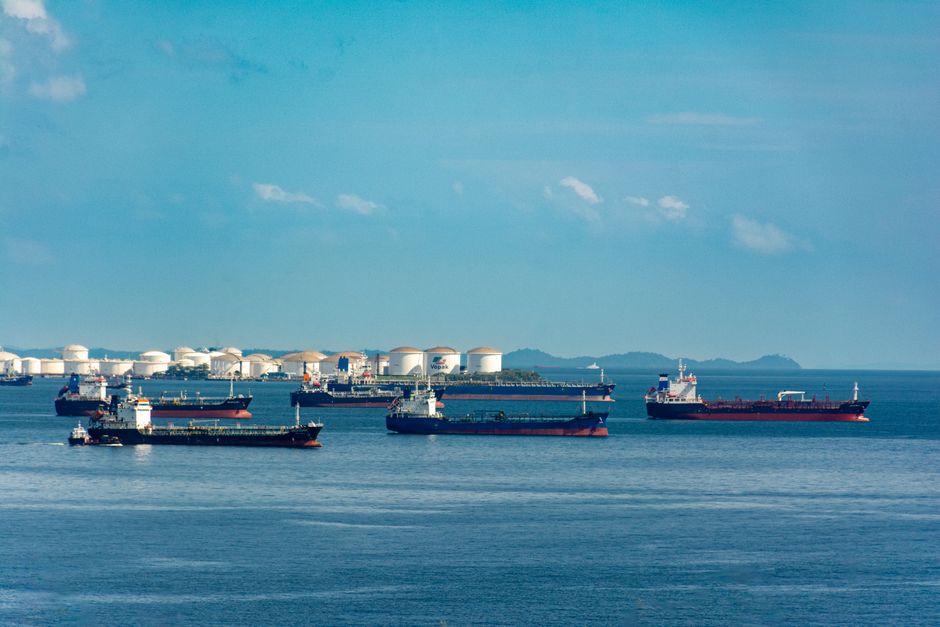
Sinokor accounted for about half of tanker transits through the Strait of Hormuz from the beginning of September.
Sinokor’s Cargo Volume Outpaced Three Other Operators
Ships owned by Sinokor Group carried 105.6 million barrels of crude through the Strait of Hormuz in September, according to an analysis of ship-tracking and other data from Vortexa, Equasis and Signal Group. That was almost 40% of the oil making the crossing. The barrel total measures cargo volume; the separate transit estimate counts tanker passages.¹²
During the same period, the next three players—the National Shipping Co. of Saudi Arabia, also known as Bahri; the Kuwait Oil Tanker Company; and Abu Dhabi National Oil Co.’s shipping unit—accounted for a combined 97.3 million barrels. The figures put Sinokor ahead of those three operators together in crude carried through the strait.¹²
A Rapid Buying Spree Built a 129-Tanker Fleet
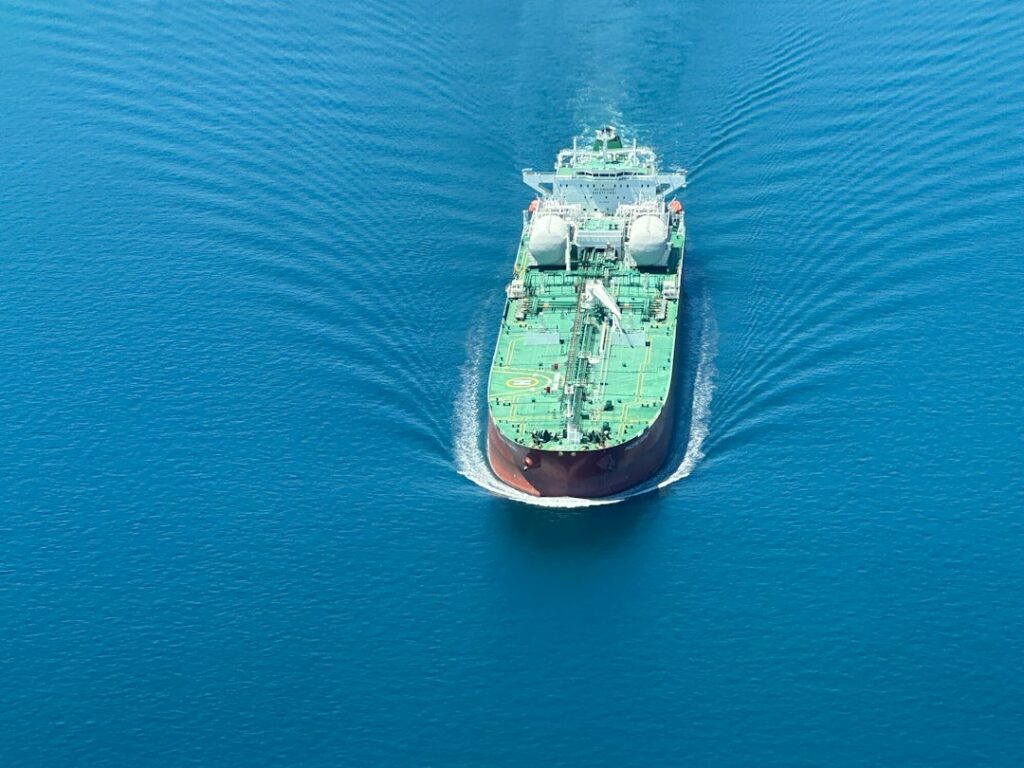
Sinokor owns 129 very large crude carriers, up from 42 in December, according to BRS Shipbrokers. Each vessel in that category can carry two million barrels of oil. Sinokor now owns 14% of the roughly 940 supertankers in operation and is, by some counts, the world’s largest supertanker operator. China Merchants Group, the next-largest owner and manager of very large crude carriers, controls about 5% of the market.¹²
During the same period, the next three players—the National Shipping Co.
 News
ICAI Has Not Confirmed CA Foundation September Result Date
The September exams were held in pen-and-paper format on four dates. Candidates can check their result through ICAI’s online portal once it is released.
Read More →Veson Nautical estimates Sinokor spent $5.6 billion buying 70 tankers since the start of this year. The buying spree began in the two months before the United States and Israel attacked Iran at the end of February, according to the account of the company’s expansion.¹²
Founded in 1989, Sinokor operated the first container liner service between South Korea and China. The service was a joint venture between South Korean and Chinese entities, launched three years before the two nations established diplomatic ties. Sinokor’s chairman, Chung Tae-soon, and his son, Chung Ga-hyun, have kept a low profile in South Korea. Chung Tae-soon’s only public role seems to be head of the South Korean association that oversees Baduk, also known as Go.¹²
Tanker Prices and Market Concentration Rose
Tankers chartered for the 15-day run between the Persian Gulf and the Gulf of Oman have surged past $1 million per day, compared with about $120,000 per day last year. John Cotzias, co-founder of Xclusiv Shipbrokers, a Greek firm, said, “I’ve never seen these kind of rates.”¹²
John Cotzias, co-founder of Xclusiv Shipbrokers, said the top three supertanker owners controlled 16% of the market last year, compared with 27% today. Kristoffer Barth Skeie, an equity analyst at Arctic Securities, said Sinokor had succeeded in “cornering the market.” Max Meizlish, a research fellow at the Foundation for Defense of Democracies, said Sinokor wanted a major role in setting freight rates. Tomer Raanan, a senior maritime intelligence analyst at Lloyd’s List, said the company played a huge role in getting oil out of Hormuz.¹²
The Route Remains Dangerous for Ships and Crews
The U.S. military has run an extensive operation since May to shield vessels from Iranian drone and missile attacks, helping make Sinokor’s dominance of Strait of Hormuz traffic possible. More than 35 ships were attacked in October, more than in any other month of the war. Iran has struck at least seven Sinokor ships since July, including three in October; 11 sailors were injured in an attack in July.¹²
 News
Christmas Rail Works Bring Ten Days of Disruption
Paddington and Birmingham New Street close for five days, while route changes affect services to Wales, the west of England, Essex and Norfolk.
Read More →The Persian Gulf Strait Authority, a regulatory agency Iran created in May, said Sinokor vessels had committed the highest number of passage violations in recent months. Sinokor tankers have helped transport crude from Saudi Arabia and the UAE, and more recently took part in shipments from Iraq and Qatar. Manoj Yadav, head of the Forward Seamen’s Union of India, said he believed shipowners were prioritizing maximum profits over sailors’ safety.¹²
Tanker Prices and Market Concentration Rose Tankers chartered for the 15-day run between the Persian Gulf and the Gulf of Oman have surged past $1 million per day, compared with about $120,000 per day last year.
Shipping careers face a concentrated, riskier market
If you are weighing a role in maritime logistics, tanker operations, or freight trading, the ledger shows a market that has consolidated sharply: the top three supertanker owners now control 27 percent of the market, up from 16 percent a year earlier. That concentration means fewer, larger employers set the terms, and a single operator like Sinokor can move nearly 40 percent of Hormuz oil. For job seekers, this points to evaluating employers not just on pay but on their fleet scale and market share, since those factors drive negotiating power and job stability.¹²
The risk side is just as concrete. Tanker charter rates have jumped from about $120,000 to over $1 million per day, and more than 35 ships were attacked in October alone. If you are a seafarer or considering a shipboard role, the ledger supports asking for hazard pay and safety guarantees, since unions report owners prioritizing profit over sailor safety. For shore-side roles in shipping finance or analysis, the lesson is to model geopolitical risk explicitly, because the same events that spike rates also raise the chance of vessel loss or crew injury.¹²
Sources
Written by Career Ahead AI. AI can make mistakes, so verify key facts. Report errors to support@careeraheadonline.com