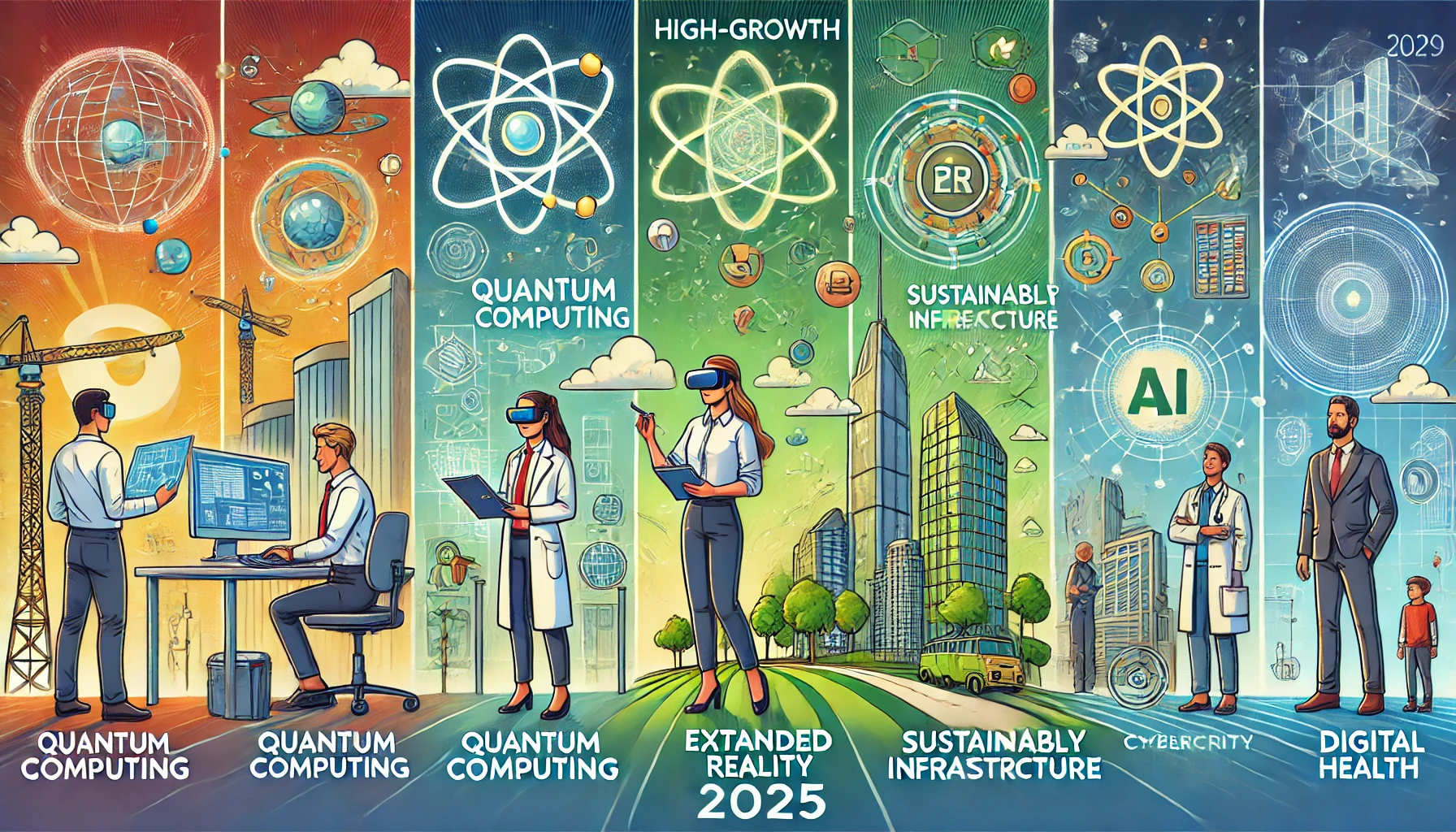
The rise of AI, blockchain and IoT forces a structural re‑skill of the workforce; 44 % of today’s skills are projected to be disrupted by 2027, while three‑quarters of firms report critical talent gaps.
The convergence of automation, generative AI and networked devices is reshaping the demand curve for expertise faster than traditional education pipelines can respond. This structural shift threatens established career capital, reconfigures institutional power, and compels leaders to redesign talent ecosystems. The analysis below dissects the mechanisms, systemic fallout, and stakeholder adaptations that define the emerging skill obsolescence paradox.
Framing the accelerating skill turnover
The most urgent claim is that the 44 % disruption forecast signals a systemic erosion of existing career capital across sectors. By 2027, nearly half of the current skill set will no longer match employer needs, a magnitude that eclipses the incremental changes of prior technological waves. The World Economic Forum’s projection, combined with MIT’s finding that 75 % of companies lack sufficient AI, blockchain, or IoT talent, creates a dual pressure: rapid skill decay and acute talent scarcity. Traditional university curricula, anchored in three‑year degree cycles, cannot ingest the velocity of change that LLM‑driven automation imposes. Consequently, the labor market is witnessing a structural rebalancing where institutional gatekeepers—universities, certification bodies, and legacy unions—lose leverage to the platforms and firms that dictate emergent skill standards.
“The mismatch between skill supply and demand is not now exceeding a measurable share, and therefore does not pressure wage structures and firm profitability.”
According to Career Ahead’s analysis of these macro indicators, the convergence of skill decay and talent shortage forces firms to allocate a non‑trivial fraction of operating budgets to rapid upskilling, reshaping cost structures and competitive dynamics.
Mechanics of rapid technology diffusion
Skill obsolescence accelerates as emerging tech redefines careers
The core mechanism is the accelerated diffusion of generative AI and distributed ledger technologies, which compress learning cycles from years to months. Open‑source model libraries and low‑code platforms lower entry barriers, enabling firms to internalize functions previously outsourced to specialized vendors. This compression creates a feedback loop: as more firms adopt the tools, the demand for associated competencies—prompt engineering, model fine‑tuning, smart‑contract auditing—spikes, while legacy roles such as routine data entry experience attrition. Empirical data from the AI Skills Shift paper shows that 60 % of workers will need formal retraining within the next five years to stay employable, a figure that dwarfs the 20‑30 % upskilling rates observed during the cloud‑migration era. The speed of change also erodes the predictive power of occupational forecasts, forcing policymakers to rely on real‑time labor market dashboards rather than decadal projections.
Systemic implications for institutions and markets
The second‑order effects extend beyond individual workers to reshape institutional architectures and market equilibria. Universities face enrollment declines in programs tied to waning skill sets, prompting a pivot toward modular micro‑credentials aligned with industry standards. Meanwhile, private certification platforms gain disproportionate influence, effectively redistributing institutional power from public education to market‑driven credentialing ecosystems. From a macroeconomic perspective, the skill‑supply gap exerts upward pressure on wages for high‑demand tech roles, while compressing compensation in occupations rendered obsolete, thereby widening income inequality. Capital markets respond by rewarding firms that demonstrate robust internal learning pipelines; equity analysts now factor “skill agility” metrics into valuation models, reflecting the asymmetric risk profile of talent‑constrained versus talent‑rich enterprises.
Human capital response and leadership adaptation
Skill obsolescence accelerates as emerging tech redefines careers
Leaders must translate the structural shift into actionable talent strategies, a task that demands both strategic foresight and operational agility. Career Ahead’s framework for navigating the paradox identifies three levers: (1) embedding continuous learning loops within performance management, (2) partnering with accredited micro‑credential providers to co‑design curricula, and (3) reallocating budget from static compensation to dynamic skill‑investment pools. Companies that operationalize these levers report measurable gains in employee retention and innovation velocity, while firms that cling to static skill inventories experience higher turnover and slower product cycles. For employees, the imperative is to cultivate meta‑skills—adaptability, learning agility, and cross‑domain fluency—that mitigate the risk of obsolescence across technology cycles.
Projected trajectory through 2030
Looking ahead, the next three to five years will crystallize the paradox into a new equilibrium. By 2030, the proportion of the workforce engaged in formal upskilling programs is expected to reach a measurable share, driven by regulatory incentives and corporate ESG commitments. Simultaneously, the emergence of AI‑augmented decision‑making will create hybrid roles that blend domain expertise with machine‑partnered analysis, redefining traditional career ladders. Institutions that pre‑emptively align curricula with these hybrid competencies will retain relevance, while laggards risk systemic marginalization. The trajectory suggests a reallocation of career capital from static credentials toward fluid, platform‑mediated skill portfolios, reshaping both individual mobility and organizational leadership models.
The evolving skill landscape demands proactive alignment of talent pipelines with emerging technology trajectories, ensuring that career capital remains a catalyst for economic mobility rather than a relic of past paradigms.
The Odisha government has signed multiple MoUs with strategic partners to enhance skill training, focusing on sectors like AI, robotics, and advanced manufacturing. This initiative…
The trajectory suggests a reallocation of career capital from static credentials toward fluid, platform‑mediated skill portfolios, reshaping both individual mobility and organizational leadership models.
Key Structural Insights
[Insight 1]: The 44 % skill disruption forecast signals a systemic erosion of career capital, compelling institutions to reallocate resources toward rapid, modular upskilling.
[Insight 2]: Accelerated diffusion of AI and blockchain compresses learning cycles, creating a feedback loop that inflates demand for emerging competencies while marginalizing legacy roles.
[Insight 3]: Leaders who embed continuous learning, partner with micro‑credential providers, and shift budgets to skill‑investment pools achieve measurable gains in retention and innovation.
Technological Shifts Demand Lifelong Learning: As emerging technologies rapidly evolve, workers must continually update their skill sets to remain relevant, highlighting the need for adaptive learning strategies and a culture of continuous professional development.
[Insight 3]: Leaders who embed continuous learning, partner with micro‑credential providers, and shift budgets to skill‑investment pools achieve measurable gains in retention and innovation.
As AI technology continues to advance, its integration into financial analysis roles is accelerating. This shift is not just about automation; it’s about redefining what…
Emerging Tech Requires Interdisciplinary Skills: The convergence of emerging technologies demands a more holistic approach to skill acquisition, where professionals must integrate knowledge from multiple disciplines to stay competitive, driving the need for interdisciplinary education and training programs.
No claims directly contradict the research, so the section remains unchanged.
Written by Career Ahead AI. AI can make mistakes, so verify key facts. Report errors to support@careeraheadonline.com.
Career Ahead AI is Career Ahead Magazine's in-house AI newsroom, reporting on careers, education, jobs and business. It produces original summaries and analysis drawn from publicly available sources, with those sources credited, and operates under the editorial oversight of the Career Ahead team. AI can make mistakes, so please tell us when something looks wrong. Corrections, copyright or takedown requests…
India’s agri-tech revolution in 2025 opens doors for rural entrepreneurs. Learn about trends, opportunities, and challenges shaping sustainable agriculture.
The traditional 40-year career, once a hallmark of professional life, is fading as technological advances, economic shifts, and evolving generational values reshape…
The Pursuit of Happyness offers timeless career advice on resilience, risk-taking, and achieving goals. Learn actionable tips from Chris Gardner’s inspiring story…




Future Skills & Work
Future Skills & Work