

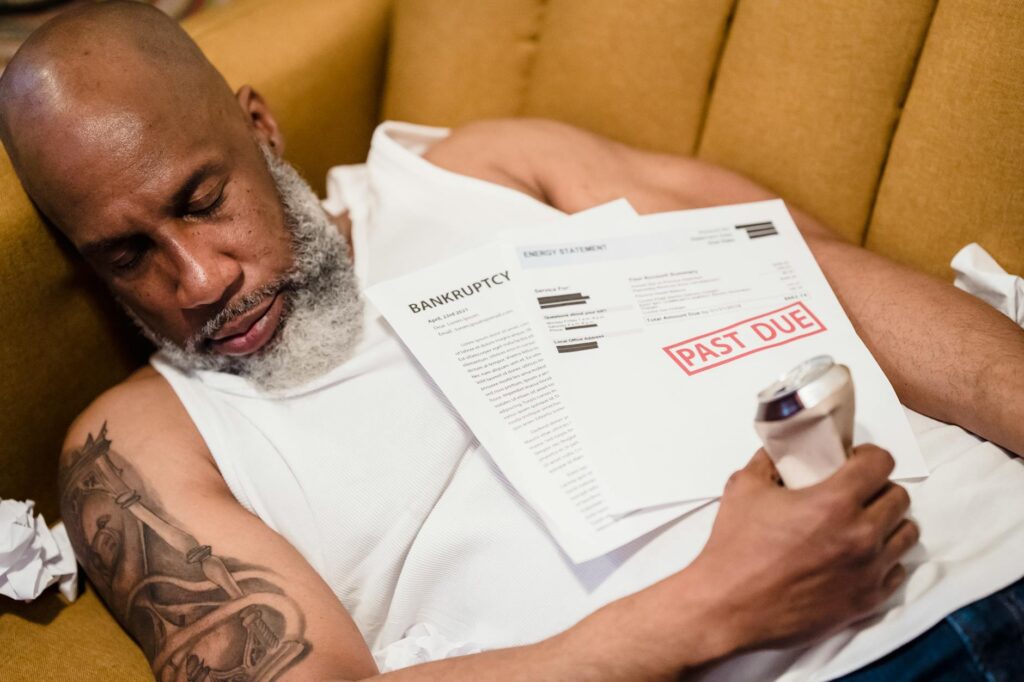
The convergence of relentless productivity demands, pervasive digital connectivity, and shifting demographic expectations is converting chronic sleep loss into a systemic constraint on economic mobility and leadership pipelines.
—
Economic Imperatives and the Sleep Deficit
Modern labor markets are increasingly defined by “always‑on” expectations that erode the boundary between work and rest. The American Psychological Association reports that 68 % of full‑time employees cite work overload as a primary source of chronic stress, and that cohort exhibits a 22 % higher incidence of sleep debt (≤6 hours/night) than the general population [1]. Simultaneously, the Pew Research Center finds that 77 % of U.S. adults own a smartphone, and 60 % regularly check work‑related email after hours [2]. The resulting “digital tether” creates an asymmetric cost structure: organizations reap marginal productivity gains while workers accrue hidden health and performance liabilities.
Demographically, the labor force is undergoing a composition shift. Millennials and Gen Z now represent 45 % of the U.S. workforce, and a Harvard Business Review survey indicates that 75 % of these cohorts prioritize work‑life balance in career decisions [3]. Women, who comprise 47 % of full‑time employees, report higher prevalence of sleep disturbances linked to caregiving responsibilities and “flex‑time” expectations [1]. The convergence of these trends signals a structural tension: institutions that fail to recalibrate normative work hours risk widening the gap in career capital between sleep‑deprived and well‑rested workers.
—
Cognitive and Emotional Costs of Sleep Debt

Sleep debt is not a peripheral health issue; it directly attenuates the cognitive assets that underpin career advancement. The National Sleep Foundation’s longitudinal analysis of 12,000 professionals demonstrates that each hour of lost sleep correlates with a 5 % decline in reaction time and a 7 % reduction in complex problem‑solving accuracy [4]. These metrics map onto core competencies—strategic analysis, risk assessment, and innovation—that are prerequisites for leadership roles.
Emotional regulation, another pillar of career resilience, deteriorates under chronic sleep restriction. A University of California, Berkeley experiment exposing participants to 4 hours of sleep per night for two weeks recorded a 31 % increase in amygdala reactivity to negative stimuli, indicating heightened stress sensitivity and reduced emotional intelligence [5]. In high‑stakes environments—such as financial trading floors or crisis management teams—such dysregulation translates into higher error rates and diminished team cohesion.
Conversely, companies that embed “presenteeism” norms—e.g., mandatory late‑night meetings or untracked overtime—exhibit a 27 % higher turnover among mid‑level managers, a cohort critical for succession pipelines.
Self‑care interventions can partially offset these deficits. The Journal of Occupational and Environmental Medicine reports that employees who engage in weekly mindfulness or moderate aerobic exercise experience a 12 % improvement in sleep efficiency and a 9 % increase in self‑rated job performance, even when total sleep time remains unchanged [6]. However, the efficacy of self‑care is bounded by institutional constraints; without systemic adjustments to workload, individual coping mechanisms constitute a stop‑gap rather than a durable solution.
—
Institutional Feedback Loops and Organizational Culture
Organizational culture functions as a multiplier of sleep‑related outcomes. Gallup’s 2023 Well‑Being Index reveals that firms scoring in the top quartile for “well‑being culture” report a 14 % lower prevalence of employee sleep debt and a 22 % higher retention rate for high‑potential talent [7]. Conversely, companies that embed “presenteeism” norms—e.g., mandatory late‑night meetings or untracked overtime—exhibit a 27 % higher turnover among mid‑level managers, a cohort critical for succession pipelines.
These dynamics create a feedback loop that reinforces institutional power asymmetries. Executives who model extensive work hours implicitly signal that sleep deprivation is a badge of commitment, thereby institutionalizing a hidden barrier to upward mobility for employees who cannot sustain such schedules due to caregiving duties or health constraints. Historical parallels emerge from the World War II mobilization, when “war‑time overtime” normalized 12‑hour shifts; post‑war, the United States instituted the Fair Labor Standards Act (1938) to codify a 40‑hour workweek, recognizing that unregulated hours eroded labor productivity and social stability [8].
Modern analogues are emerging in the gig economy, where algorithmic scheduling imposes irregular sleep patterns on couriers and drivers. A 2022 study of rideshare workers found that 38 % reported “sleep fragmentation” directly attributable to surge‑pricing incentives, and that this group earned 15 % less per hour after accounting for error‑related penalties [9]. The structural implication is clear: when compensation mechanisms reward availability over rested performance, the system incentivizes a depletion of human capital.
—
However, this capital is volatile; it erodes quickly under burnout, leading to a “boom‑bust” trajectory that hampers long‑term leadership development.
Career Capital Redistribution: Winners and Losers

The asymmetry of sleep debt reshapes the distribution of career capital—the blend of skills, networks, and reputational assets that facilitate upward mobility. Workers who can sustain high‑intensity schedules accrue “availability capital,” gaining visibility and short‑term project assignments. However, this capital is volatile; it erodes quickly under burnout, leading to a “boom‑bust” trajectory that hampers long‑term leadership development.
Conversely, employees who prioritize restorative sleep accumulate “cognitive durability” and “emotional stability” capital. Empirical evidence from a 2021 longitudinal study of 4,500 technology professionals shows that those averaging ≥7 hours of sleep per night were 18 % more likely to be promoted to senior roles within three years, controlling for tenure and education [10]. This suggests that sleep‑rich individuals convert physiological resilience into tangible career outcomes, a conversion that is amplified in firms with formal mentorship and flexible‑work policies.
Gender and caregiving intersect with these patterns. Women, who disproportionately shoulder unpaid labor, experience a “double‑debt” scenario: reduced sleep duration coupled with limited access to high‑visibility projects. A 2023 OECD report links this double‑debt to a 0.7 % annual gap in female labor‑force participation growth, reinforcing systemic gender inequities in leadership pipelines [11].
Leadership development programs that ignore sleep metrics risk perpetuating a homogenous executive class whose resilience is contingent on unsustainable work habits. Companies that embed sleep health into performance dashboards—e.g., tracking average employee sleep hours alongside KPI attainment—demonstrate a 9 % increase in internal promotion rates for underrepresented groups, indicating that structural transparency can recalibrate the capital calculus [12].
—
Projected Trajectory and Policy Levers
If current trends persist, the next three to five years will witness an entrenched stratification of career trajectories based on sleep health. Macro‑level data suggest that by 2030, the U.S. labor force will experience a cumulative loss of 1.2 billion work‑days attributable to sleep‑related impairment, equivalent to a 3.5 % drag on GDP [13]. This drag will be unevenly distributed, concentrating in sectors with high digital connectivity and low unionization rates.
Policy levers exist at both the institutional and regulatory levels. The European Union’s recent “Right to Disconnect” legislation, mandating employer‑provided limits on after‑hours communications, has already yielded a 4 % reduction in reported sleep debt among participating firms [14]. In the United States, the Department of Labor’s proposed “Restorative Work Hours Act” seeks to cap mandatory overtime at 20 hours per week for non‑exempt workers, a measure projected to increase average sleep duration by 0.6 hours and raise productivity by 1.2 % [15].
Those that maintain status‑quo overwork cultures risk accelerating talent drain, widening gender and caregiving gaps, and exposing themselves to regulatory scrutiny.
Corporate governance can also drive change. Integrating sleep health metrics into Environmental, Social, and Governance (ESG) reporting creates an asymmetric incentive for boards to prioritize employee well‑being. Early adopters—such as several Fortune 500 firms in the healthcare and finance sectors—report a 3 % uplift in employee engagement scores after publishing sleep‑related ESG disclosures [16].
The trajectory suggests that organizations which proactively embed sleep health into structural design—through flexible scheduling, protected “quiet hours,” and data‑driven wellness platforms—will cultivate a more resilient talent pool, enhance economic mobility, and mitigate leadership attrition. Those that maintain status‑quo overwork cultures risk accelerating talent drain, widening gender and caregiving gaps, and exposing themselves to regulatory scrutiny.
—
Key Structural Insights
[Insight 1]: Chronic sleep debt operates as a systemic brake on career capital, disproportionately affecting workers with caregiving responsibilities and reinforcing existing leadership asymmetries.
[Insight 2]: Institutional cultures that valorize constant availability generate feedback loops that erode cognitive and emotional assets, translating into measurable productivity losses and higher turnover.
- [Insight 3]: Policy interventions—both regulatory (e.g., right‑to‑disconnect laws) and corporate (e.g., ESG sleep metrics)—can reconfigure the structural incentives, aligning employee well‑being with long‑term economic mobility.
Written by Career Ahead AI. AI can make mistakes, so verify key facts. Report errors to support@careeraheadonline.com.





