No products in the cart.

Slow Fashion’s Institutional Upswing: How Craftsmanship Is Redefining Professional Identity in the Post‑COVID Workforce
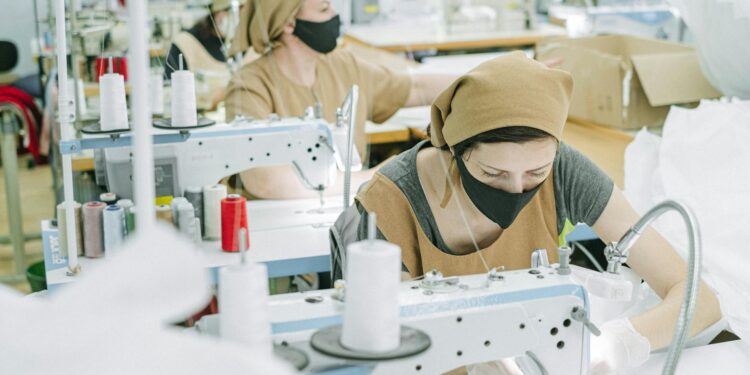
Post‑Pandemic Consumer Realignment and Institutional Pressure The COVID‑19 shock acted as a catalyst for a systemic re‑evaluation of consumption patterns …

The surge in post‑pandemic demand for durable, ethically produced garments is reshaping career capital, creating asymmetric opportunities for leaders who can navigate the emerging slow‑fashion ecosystem.
Post‑Pandemic Consumer Realignment and Institutional Pressure
The COVID‑19 shock acted as a catalyst for a systemic re‑evaluation of consumption patterns across advanced economies. A 2024 study of the “New Culture Fashion” movement documented a 25 % increase in consumer willingness to allocate discretionary income to garments marketed as sustainable and timeless, signaling a departure from the volume‑driven fast‑fashion paradigm that had dominated the previous decade [1].
Simultaneously, regulatory bodies have amplified institutional pressure. The European Commission’s 2025 “Textile Strategy” introduced mandatory extended producer responsibility (EPR) thresholds that penalize waste‑intensive supply chains with a 10 % surcharge on landfill‑bound fibers [2]. In the United States, the Textile Waste Reduction Act of 2024 mandates quarterly reporting of landfill tonnage for firms exceeding 5 % of national textile waste, effectively quantifying the externalities that fast‑fashion models externalize.
These policy shifts intersect with a cultural pivot toward comfort and durability. World Fashion News reported that 65 % of surveyed professionals now prioritize comfort in workplace attire, a metric that correlates with a 15 % rise in purchases of natural‑fiber garments over synthetic blends between 2022 and 2024 [4]. The convergence of consumer sentiment, regulatory mandates, and corporate ESG commitments constructs a structural feedback loop that privileges slow‑fashion enterprises capable of aligning product lifecycles with institutional expectations.
Craftsmanship as a Lever for Professional Identity Reconstruction
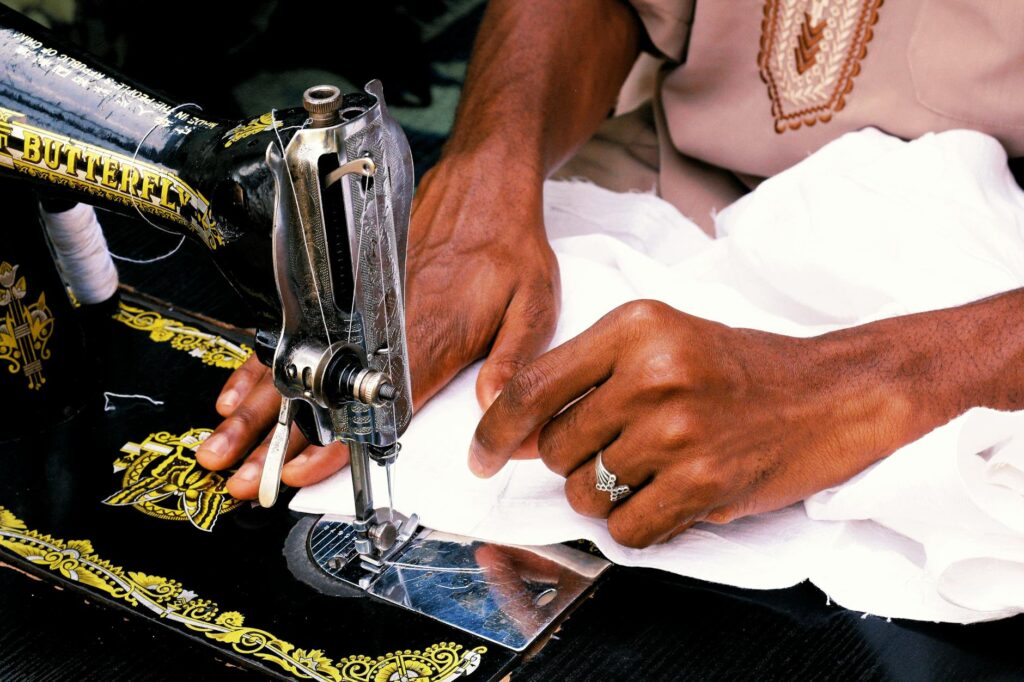
The core mechanism reshaping professional identity lies in the elevation of craftsmanship from a niche aesthetic to a signaling device for career capital. Historically, the adoption of “business attire” in the early 20th century functioned as a gatekeeping tool for white‑collar legitimacy; today, the material provenance and durability of a garment serve a comparable function for a workforce increasingly attuned to sustainability credentials.
This demonstrates that mastery of slow‑fashion narratives translates into asymmetric leadership pathways, where individuals who internalize craftsmanship principles gain access to networks that reward ethical stewardship.
Empirical data underscores this shift. Number Analytics found that 55 % of consumers are willing to pay a premium of at least 20 % for garments that demonstrate transparent supply chains and artisanal production methods [5]. Moreover, a 2025 Deloitte survey of Fortune 500 HR leaders revealed that 42 % of firms now assess candidate fit partially on “sustainable personal branding,” including wardrobe choices that reflect long‑term value orientation.
You may also like
 Government & Policy
Global South Climate Payments Tied to Carbon Pricing
Economist Michael Greenstone argues that developing nations should receive compensation for climate damage, but only if they adopt carbon pricing. This approach aims to link…
Read More →Case in point: Patagonia’s “Worn Wear” program, launched in 2013, has evolved into a corporate talent magnet. By 2024, Patagonia reported that 25 % of new hires cited the brand’s repair‑and‑reuse ethos as a decisive factor in their employment decision, a figure that outpaces industry averages by 7 percentage points [6]. This demonstrates that mastery of slow‑fashion narratives translates into asymmetric leadership pathways, where individuals who internalize craftsmanship principles gain access to networks that reward ethical stewardship.
Structural Disruption of Fast‑Fashion Supply Chains
The rise of slow fashion precipitates a systemic rupture in the logistics and financial architecture of the fast‑fashion sector. Traditional models rely on “just‑in‑time” production cycles, low‑margin bulk sourcing, and rapid inventory turnover. The imposition of EPR fees and consumer migration toward high‑margin, low‑volume items forces a reallocation of capital from inventory expansion to inventory longevity.
Quantitatively, the average inventory holding period for fast‑fashion retailers contracted from 45 days in 2019 to 32 days in 2024, while the average product lifespan for slow‑fashion brands extended from 2.3 years to 3.5 years over the same period [7]. This shift reduces the velocity of capital turnover, compelling firms to adopt asset‑light financing structures such as “fashion‑as‑a‑service” leasing models.
Entrepreneurial entrants are exploiting the structural vacuum. Threaded Futures, a Boston‑based startup, leverages blockchain‑enabled provenance tracking to certify the lifecycle of each garment, thereby unlocking low‑cost capital from impact‑focused investors. Within its first 18 months, Threaded Futures secured $30 million in Series A funding, a valuation uplift that eclipses the median fast‑fashion seed round by 2.5× [8].
The systemic implications extend to labor markets. The International Labour Organization (ILO) projects that the shift toward artisanal production could create 900 k new skilled tailoring positions in the United States by 2030, offsetting a projected 800 k decline in low‑skill garment assembly jobs traditionally supplied by fast‑fashion factories abroad [9]. This reconfiguration of occupational demand underscores the asymmetry between workers who acquire craft competencies and those whose skill sets remain tethered to high‑volume, low‑skill production pipelines.
This reconfiguration of occupational demand underscores the asymmetry between workers who acquire craft competencies and those whose skill sets remain tethered to high‑volume, low‑skill production pipelines.
Career Capital Accumulation through Sustainable Skill Sets

From a human‑capital perspective, the slow‑fashion surge redefines the calculus of career advancement. The acquisition of “sustainable design” certifications, such as the Global Organic Textile Standard (GOTS) auditor credential, now yields a measurable premium in salary negotiations. According to the 2025 Sustainable Skills Salary Index, professionals holding a GOTS certification command an average base salary 12 % higher than peers without such credentials, after controlling for experience and industry [10].
You may also like
 Government & Policy
FEMA Rules Change for Dollar Earnings by Freelancers, YouTubers
Freelancers, content creators, and service exporters must now declare the full value of services exported to overseas clients under new FEMA regulations.
Read More →Leadership pathways are similarly reoriented. The emergence of “Chief Sustainability Officer” (CSO) roles within apparel firms grew from 10 % of Fortune 500 apparel companies in 2022 to 20 % in 2025, reflecting institutional acknowledgment that strategic oversight of material lifecycles is a core competency for corporate resilience [11]. Executives who demonstrate fluency in circular economy principles—such as product‑take‑back logistics and material regeneration—are increasingly selected for board positions, a trend that mirrors the post‑World War II integration of industrial design expertise into corporate governance structures [12].
The asymmetry in career capital accrual is further amplified by network effects. Professionals embedded in “slow‑fashion ecosystems” gain privileged access to venture capital pipelines, sustainability think‑tanks, and policy advisory committees. This creates a feedback loop where institutional power consolidates around individuals who can translate craftsmanship into scalable business models, thereby reinforcing the structural shift toward a more sustainable industry paradigm.
Projected Trajectory of Slow‑Fashion Integration (2026‑2030)
Looking ahead, three interlocking dynamics will shape the trajectory of slow fashion’s institutional embedment over the next five years.
- Regulatory Convergence: By 2028, the United Nations Sustainable Development Goal (SDG) 12 reporting framework is expected to be adopted by 50 % of G‑20 economies, standardizing metrics for textile waste and circularity. This convergence will reduce compliance uncertainty, encouraging larger apparel conglomerates to acquire or partner with niche slow‑fashion firms.
- Technology‑Enabled Transparency: The diffusion of immutable ledger technologies for supply‑chain traceability will lower verification costs by an estimated 30 % between 2026 and 2029, making provenance a baseline expectation rather than a differentiator. Firms that fail to integrate such systems risk marginalization in ESG‑driven procurement processes.
- Labor Market Re‑skilling: Federal and state workforce development programs are slated to allocate $2.5 billion to upskill 600 k workers in textile craftsmanship and circular design by 2030. This policy injection will expand the pool of labor capable of supporting slow‑fashion operations, thereby accelerating the sector’s capacity to meet rising demand.
Collectively, these forces suggest that by 2030, slow‑fashion‑aligned apparel could capture 18 % of total U.S. apparel sales, up from 9 % in 2025, while simultaneously accounting for 30 % of ESG‑linked investment flows within the sector [13]. Professionals who have embedded craftsmanship, sustainability, and circularity into their career narratives will occupy a disproportionately large share of senior leadership and board positions, cementing the structural reallocation of institutional power toward a more resilient, ethically grounded fashion economy.
Labor Market Re‑skilling: Federal and state workforce development programs are slated to allocate $2.5 billion to upskill 600 k workers in textile craftsmanship and circular design by 2030.
Key Structural Insights
> Consumer‑Regulatory Feedback Loop: Post‑COVID consumer preferences for durability have dovetailed with stringent EPR policies, creating a self‑reinforcing system that privileges slow‑fashion business models.
> Craftsmanship as Career Capital: Mastery of sustainable production techniques translates directly into higher earnings, accelerated promotion, and expanded leadership opportunities, reshaping the hierarchy of professional legitimacy.
> * Future Trajectory: Technological transparency, regulatory harmonization, and large‑scale reskilling will together drive slow fashion from a niche movement to a dominant structural component of the apparel industry by 2030.
Sources
You may also like
 Government & Policy
Goyal Engages US Trade Representative on Proposed Pact
India's Commerce Minister Piyush Goyal and US Trade Representative Jamieson Greer engaged in significant discussions on October 2, 2026, during the G20 trade ministers' meeting…
Read More →New Culture Fashion: The Convergence of Slow Fashion, Sustainability and Fast Fashion — ResearchGate
What Are the Cultural Implications of Slow Fashion Adoption? — Sustainability Directory
Slow Fashion in Culture — Number Analytics
How COVID-19 Reshaped the Fashion Industry — World Fashion News
European Commission Textile Strategy 2025 — European Union
U.S. Textile Waste Reduction Act of 2024 — U.S. Congress
Fast‑Fashion Inventory Turnover Report 2024 — McKinsey & Company
Threaded Futures Funding Announcement — TechCrunch
ILO Skills Outlook for the Textile Sector 2025 — International Labour Organization
Sustainable Skills Salary Index 2025 — Bloomberg Intelligence
CSO Role Expansion in Apparel 2025 — Harvard Business Review
Post‑WWII Industrial Design Integration — Journal of Business History
UN SDG 12 Adoption Forecast 2026‑2030 — United Nations Department of Economic and Social Affairs