No products in the cart.

SoftBank Begins Mass Production of AI Robots, Announces New Physical‑AI Platform
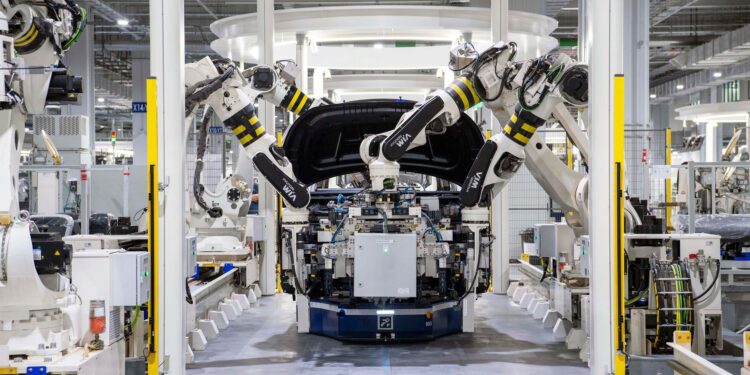
SoftBank announced the start of mass production for its next‑generation AI robots and unveiled Roze, a spin‑out aimed at automating data‑center construction.

SoftBank Group announced the start of mass production for its next‑generation AI robots at its June 24, 2026 shareholders meeting. The rollout is tied to the launch of Roze, a spin‑out focused on autonomous data‑center construction, and is described as the company’s first large‑scale “Physical AI” effort.
SoftBank disclosed the commencement of robot manufacturing at its June 24 shareholders meeting, stating that the production line is now operational at a SoftBank‑controlled facility in Japan. The announcement coincided with details of a planned $100 billion valuation for the new Roze entity, which will employ the robots to build and maintain AI data‑center infrastructure.
Corporate Strategy and the Roze Spin‑out
Masayoshi Son, SoftBank’s chief executive, presented the mass‑production initiative as a core component of the conglomerate’s broader “Physical AI” vision. Roze, the newly created robotics subsidiary, will own the production assets and commercialize the autonomous robots for data‑center projects in the United States and other markets. The spin‑off is structured to attract external investors while retaining strategic control by SoftBank, positioning Roze for a potential initial public offering.
The corporate plan integrates SoftBank’s existing AI investments with hardware partners such as ABB Robotics, which supplies the mechanical platforms for the new units. SoftBank has allocated several hundred million dollars in capital to Roze for research, development, and the establishment of manufacturing capacity, reflecting a multi‑year commitment to scaling physical AI capabilities.
SoftBank has allocated several hundred million dollars in capital to Roze for research, development, and the establishment of manufacturing capacity, reflecting a multi‑year commitment to scaling physical AI capabilities.
The company’s financial disclosures indicate that the mass‑production effort is expected to generate revenue streams from both robot sales and recurring services linked to data‑center automation.
Technology Integration and Production Process
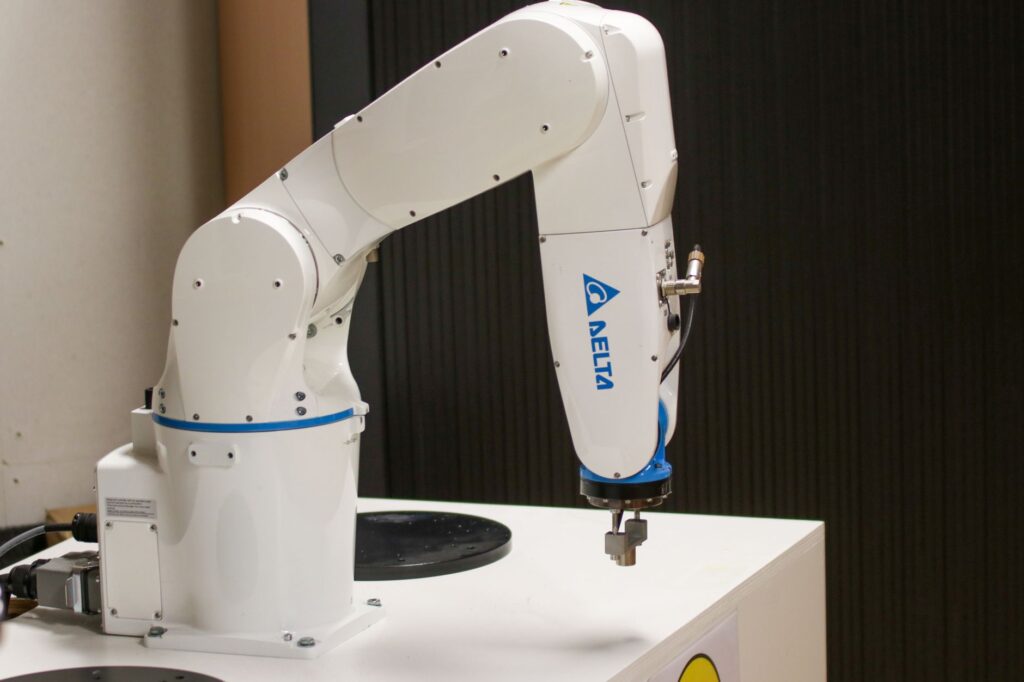
The robots being mass‑produced combine advanced AI chips, vision systems, and modular actuation technology derived from ABB’s industrial robotics portfolio. SoftBank’s engineering teams have integrated proprietary machine‑learning models that enable the units to navigate complex construction sites and perform routine maintenance without human intervention.
You may also like
 News
NewsAnup Bagchi Takes Charge as HDFC Bank MD & CEO
Anup Bagchi, with over three decades in financial services, is set to lead HDFC Bank starting October 27, 2026, following the retirement of Sashidhar Jagdishan.
Read More →Production lines employ automated testing rigs that validate each robot’s perception and manipulation capabilities before shipment. SoftBank’s manufacturing facility, located in the Kanto region, has been retrofitted to accommodate high‑throughput assembly of the robot chassis, electronics, and software integration steps.
The facility leverages a just‑in‑time supply chain for components sourced from Japanese and overseas suppliers, reducing inventory costs and accelerating the launch schedule. According to the company, the first batch of robots is slated for delivery to pilot data‑center sites by Q4 2026.
Implications for Industry and Workforce
The deployment of autonomous construction robots is projected to reduce the time required to build new data‑center capacity. By automating repetitive and physically demanding tasks, the technology could lower operational expenditures for cloud providers and accelerate the rollout of AI compute resources.
Industry analysts note that the scale of SoftBank’s investment may prompt competitors to accelerate their own physical‑AI initiatives. SoftBank also highlighted potential job creation in robotics engineering, software development, and system integration roles tied to the Roze platform.
Implications for Industry and Workforce The deployment of autonomous construction robots is projected to reduce the time required to build new data‑center capacity.
Impact on Students, Educators, and Institutions
For students pursuing engineering and computer‑science degrees, the launch of SoftBank’s mass‑production line introduces new career pathways in physical AI, a field that blends hardware design with advanced machine learning. Educators may incorporate case studies of Roze’s robot architecture into coursework on robotics systems, supply‑chain automation, and AI ethics, reflecting real‑world applications of classroom concepts.
Institutions that secure partnerships with SoftBank could gain access to prototype hardware for laboratory experiments, potentially enhancing research output and graduate employability. Current educators are advised to monitor SoftBank’s public documentation and technical briefs to align curricula with emerging industry standards for autonomous robotics.
You may also like
 News
NewsFood Prices Surge Amid Heatwaves and El Niño Impact
World food prices surged in September 2026, reaching their highest level in nearly four years due to extreme weather conditions and rising agricultural input costs.…
Read More →Sources
- SoftBank starts mass production of AI robots – Tech in Asia
- SoftBank’s $100B Roze IPO: Robots Build AI Data Centers – Tech Insider
- SoftBank’s $100B Robotics Spinoff: Why Masayoshi Son Is Rebuilding the … – RobotToday
- SoftBank’s $100B Robotics Bet: Why Roze AI Wants to Build the Data … – Bricks & Bytes