Thousands of foreign nationals have left South Africa ahead of a scheduled anti‑immigration protest on June 30, prompting police to increase security in hotspot areas.
Thousands of foreign nationals have left South Africa in the days preceding a scheduled anti‑immigration demonstration on June 30.The South African Police Service has announced a heightened security presence in identified hotspot areas to prevent violence.
The core event is the planned anti‑immigration protest slated for June 30, 2026, across multiple South African cities. In the weeks leading up to that date, an estimated several thousand foreign nationals departed the country, citing concerns over potential unrest [1]. The movement of people and the scheduled demonstration are occurring nationwide, with police monitoring key locations identified as potential flashpoints [1].
Key participants include the South African Police Service (SAPS), which has confirmed deployment of officers to “hotspot” districts and pledged to intervene against any violent incidents [1]. The departing individuals comprise undocumented and documented foreign nationals residing in South Africa, many of whom have been living in urban centers such as Johannesburg, Cape Town, and Durban [2]. The SAPS’s operational plan involves visible patrols, roadblocks, and coordination with municipal authorities to maintain public order [1]. No official government directive imposing a “deadline” on undocumented migrants was issued; AFP Fact Check verified that the government did not release an ultimatum for foreign nationals to leave by June 30 [3].
Protests and Immigration Exodus
The anti‑immigration rally was announced by civil‑society groups and political parties on social media and in public statements, with the date of June 30 set as a focal point for nationwide demonstrations [1]. Organizers have called for stricter immigration enforcement and have framed the protest as a response to perceived economic pressures linked to foreign labor [1]. Media monitoring indicated that the announcement spurred heightened anxiety among immigrant communities, prompting many to arrange travel out of the country [2].
Reports from independent news aggregators confirm that the exodus began several weeks before the protest date, with travel agencies noting an uptick in bookings for flights and overland routes to neighboring countries [2]. The movement includes families, students, and workers who cited safety concerns as the primary motivator for departure [2]. While exact numbers vary, the term “thousands” has been consistently used across multiple sources to describe the scale of the migration [1][2].
The movement includes families, students, and workers who cited safety concerns as the primary motivator for departure [2].
Government and Police Response
South African Anti‑Immigration Protests Prompt Mass Departure of Foreign Nationals Ahead of June 30
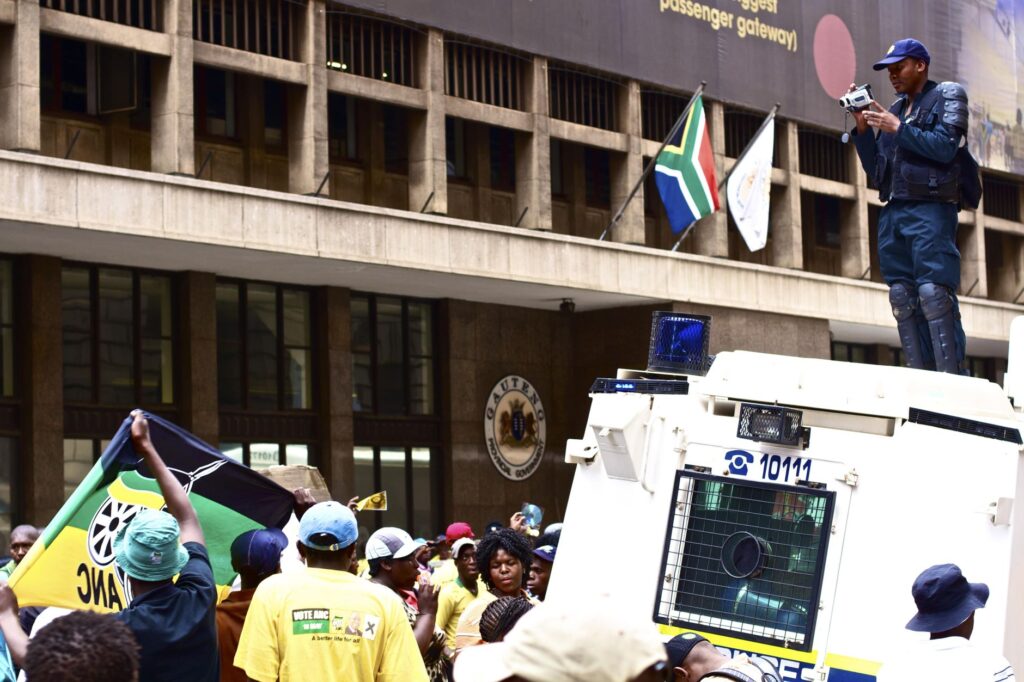
The South African Police Service issued a public statement affirming that it would maintain a “zero‑tolerance” stance toward violence during the June 30 demonstrations [1]. SAPS officials outlined a deployment strategy that includes additional officers in areas identified through intelligence gathering as likely protest sites [1]. The police have also coordinated with local municipalities to secure public venues, restrict unauthorized gatherings, and provide rapid response units in case of clashes [1].
An AFP Fact Check clarified that the South African government did not issue any formal ultimatum demanding undocumented foreigners vacate the country by June 30 [3]. The clarification was issued in response to circulating social‑media posts that misattributed the migration wave to a government decree [3]. Government spokespersons reiterated that immigration policy remains unchanged and that the police actions are focused solely on preserving public order during lawful assemblies [3].
Impact on Education Stakeholders
The convergence of protests and the departure of foreign nationals is affecting educational institutions in several ways. Schools and universities located in identified hotspot districts have reported heightened security measures, including the presence of police officers on campus and temporary adjustments to class schedules [1]. International students, many of whom are among the departing foreign nationals, face uncertainty regarding visa status, housing, and continuity of study [2].
Educators have noted that the atmosphere of tension may disrupt classroom activities and extracurricular programs, particularly in areas where protests are expected to draw large crowds [1]. Administrative bodies are reviewing contingency plans to ensure that examinations and assessments can proceed without interruption, while also providing support services for students who may feel unsafe [2]. The broader educational community is monitoring the situation closely to mitigate potential impacts on enrollment, staff retention, and the overall learning environment [2].
Key Facts
What: Anti‑immigration protests scheduled for June 30 have led to the departure of thousands of foreign nationals from South Africa.
The broader educational community is monitoring the situation closely to mitigate potential impacts on enrollment, staff retention, and the overall learning environment [2].
When: The protests are set for June 30, 2026; the exodus occurred in the weeks preceding that date.
Impact: Students, educators, and institutions face security measures, potential class disruptions, and uncertainty for international learners.
Secretary Linda McMahon required every U.S. college and university to publish a public statement on academic excellence, research, and national service by the end of 2026.



 News
NewsNews