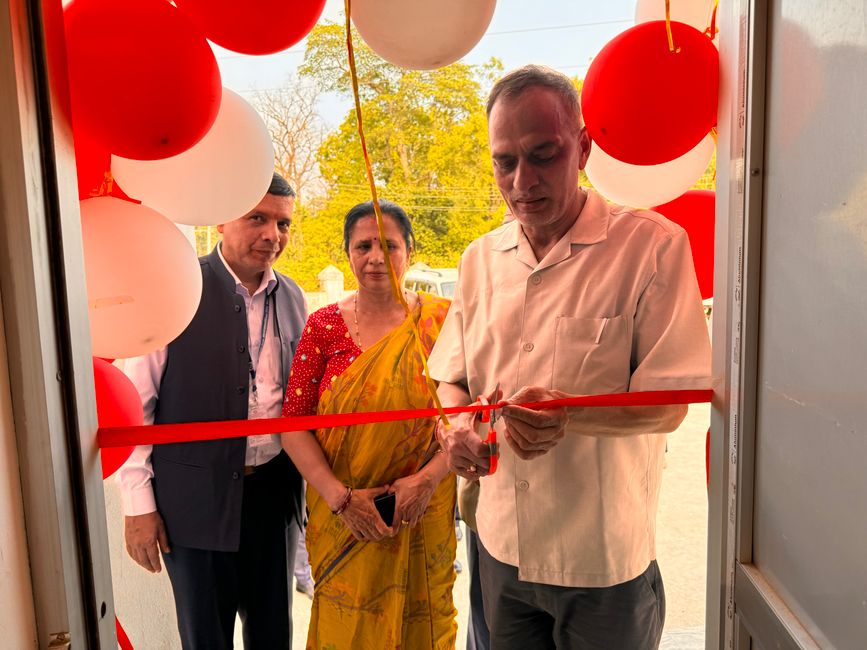
Kenneth C. Griffin, a hedge fund titan, gave Carnegie Mellon University $3 billion in September, the largest single contribution to an American university.
Large gifts cross institutional lines
Kenneth C. Griffin, a hedge fund titan, gave Carnegie Mellon University $3 billion in September, the largest single contribution to an American university. The record-setting gift puts a concrete figure on the sums institutions can receive from individual donors. It also sits alongside a pattern in which some donors give beyond a single university: Stephen M. Ross, the real estate magnate who owns the Miami Dolphins, has directed support both to the University of Michigan and to Vanderbilt University.¹
Ross is the largest individual donor to his alma mater, the University of Michigan, where he has given at least $478 million. He also pledged $50 million for a Vanderbilt University outpost in West Palm Beach, Florida. Those commitments put one donor’s giving to two universities in sharp contrast: a long-running connection to his alma mater and a pledge for another institution’s location. The figures show how a university’s potential donor pool can extend beyond people whose strongest institutional link is to that university.¹
Fund-raising for universities is also a professional field.
Fund-raising for universities is also a professional field. James M. Langley is a consultant who led fund-raising for several top universities. That experience places him among the people with direct knowledge of institutional fundraising, a field where large individual gifts can shape the sums universities receive. His role helps frame the wider change: gifts from people with no clear prior connection to a recipient institution can become a substantial part of its income, as Vanderbilt’s figures demonstrate.¹
 Education & University Insights
Supreme Court Hears Colorado Catholic Schools’ Aid Challenge
Colorado funds at least fifteen preschool hours weekly, but providers must meet an equal-opportunity enrollment rule to participate.
Read More →Unaffiliated giving has grown at Vanderbilt
Vanderbilt’s year-over-year unaffiliated giving rose from $19 million to $276 million. The comparison shows a steep change in the amount raised from this category of donors, rather than a small supplement to gifts from people already connected to the university. In the 2026 fiscal year, unaffiliated gifts made up more than one-third of Vanderbilt’s fund-raising. Together, the figures show both the scale of the money and its share of the institution’s total fundraising.¹
Donna E. Shalala, a former University of Miami president, recalled a $20 million donation from a woman whose lawyer had gone to junior high school with Shalala. The example shows how a gift can arise from a personal connection that is indirect: the donor’s link to the university ran through her lawyer’s school-days relationship with its former president. Shalala guessed that perhaps 10 percent of the billions she had raised came from unaffiliated donors, a measure of how unusual such gifts once seemed to her.¹
Vanderbilt pairs donor support with new projects
Bill Ackman, a hedge fund executive and Harvard alumnus, recently pledged $25 million to Vanderbilt. His Harvard connection makes the gift another example of a donor supporting a university beyond his alma mater. Jessie Hock, an associate professor of English at Vanderbilt, also leads Tennessee’s conference of the American Association of University Professors. The gifts and the people connected to the university show that Vanderbilt’s fund-raising reaches beyond its own alumni, while its unaffiliated gifts now form a substantial share of the total.¹
A $75 million matching gift from Nvidia founder Jensen Huang and his wife supports Vanderbilt’s new art, architecture and design college in San Francisco. Vanderbilt’s takeover of the California College of the Arts campus is part of the same project. The matching structure ties the contribution to a defined institutional plan: the gift supports a new college, while the campus provides its location. That is a different route to attracting outside money than an unrestricted contribution, because the support is attached to a specific academic and physical project.¹
Donor ties matter more than alumni status
 Education & University Insights
New College Seeks $7.5 Million from Unnamed Investor
The plan pairs BankUnited financing with an unnamed investor’s loan and requires refinancing in 2032.
Read More →When you evaluate a university or a role in fundraising, look beyond alumni networks. Vanderbilt's unaffiliated giving jumped from $19 million to $276 million in a year, and those gifts now exceed one-third of its total fundraising. That shift means development offices increasingly court donors with indirect connections, like a lawyer's school-day link to a former president. If you work in advancement, your skill in identifying and cultivating such ties becomes more valuable than a traditional alumni roster.¹
Shalala, a former University of Miami president, recalled a $20 million donation from a woman whose lawyer had gone to junior high school with Shalala.
For a donor or a fundraiser, a gift tied to a specific project can be more attractive than an unrestricted one. Jensen Huang's $75 million matching gift supports Vanderbilt's new art, architecture and design college in San Francisco, where the university will take over the California College of the Arts campus. That structure gives the donor a defined outcome and the institution a concrete plan. When negotiating a large contribution, consider proposing a matching or project-specific arrangement to increase the chance of acceptance and impact.¹
Sources
Written by Career Ahead AI. AI can make mistakes, so verify key facts. Report errors to support@careeraheadonline.com