


The convergence of low‑cost living, state‑backed visa regimes and a proliferating coworking ecosystem is reshaping economic mobility and institutional power in the region. Women founders are leveraging this structural shift to build scalable ventures, attract asymmetric capital flows, and rewrite leadership pathways.
The Macro Shift Toward Remote Work in Southeast Asia
Over the past five years, the proportion of the global workforce that identifies as a digital nomad has risen from an estimated 2 % in 2019 to 7 % in 2024, according to the International Labour Organization (ILO) [1]. Southeast Asia now accounts for roughly one‑quarter of that cohort, a share driven by three convergent forces: cost arbitrage, regulatory openness, and network externalities.
The region’s aggregate cost‑of‑living index sits 38 % below the OECD average, while broadband penetration exceeds 85 % in urban centers such as Chiang Mai, Da Nang and Bali [2]. Simultaneously, the Philippines, Thailand and Vietnam have introduced digital‑nomad visa programs that grant stays of up to 12 months for remote workers earning a minimum of US $2,500 per month [3]. By the end of 2025, the Philippines’ visa is projected to issue 15,000 permits, a 250 % increase over its inaugural year, according to the Department of Tourism.
These macro‑level dynamics intersect with broader labor market transformations. The pandemic‑induced acceleration of remote work has eroded the geographic lock‑step between talent and headquarters, enabling a redistribution of human capital toward secondary cities. In this context, Southeast Asian urban clusters are emerging as “secondary poles” that challenge the traditional primacy of North‑American and European tech hubs.
Infrastructure and Policy as Core Drivers

The core mechanism underpinning the region’s nomad appeal is a calibrated blend of physical and institutional infrastructure.
Cost and Connectivity: A 2023 Asian Development Bank (ADB) survey of 1,200 remote workers ranked Chiang Mai’s average monthly expense at US $1,200, compared with US $3,800 in San Francisco, while reporting median download speeds of 120 Mbps—well above the global remote‑work benchmark of 70 Mbps [4]. Similar metrics apply to Bali (US $1,350; 115 Mbps) and Da Nang (US $1,100; 108 Mbps).
Coworking Ecosystem: The number of coworking spaces in the region grew from 1,200 in 2018 to 3,800 in 2024, a compound annual growth rate (CAGR) of 22 % [5]. Operators such as WeWork, Klique and local incumbents like HUB Bangkok have introduced tiered membership models that embed mentorship, venture‑matchmaking and gender‑focused programming.
Coworking Ecosystem: The number of coworking spaces in the region grew from 1,200 in 2018 to 3,800 in 2024, a compound annual growth rate (CAGR) of 22 % [5].
Regulatory Frameworks: The Philippines’ 2024 Digital Nomad Visa Act, Thailand’s “Smart Visa” extension for tech talent, and Vietnam’s “Remote Work Permit” collectively lower entry barriers by streamlining tax residency, providing access to local banking and granting limited work rights for freelancers. These policies are anchored in broader national strategies to transition from manufacturing‑centric growth to knowledge‑based economies, as outlined in the ASEAN Economic Community’s 2025 Blueprint [6].
 Entrepreneurship & Business
Preparing the Next Generation of Chinese Entrepreneurs
The urgency of this issue has been highlighted by recent findings from various studies. For instance, research from HSBC Life reveals that two-thirds of wealthy…
Read More →Institutional Partnerships: Universities such as Chulalongkorn and the University of the Philippines have forged “remote‑work labs” that integrate curricula with real‑world projects sourced from nomad‑run startups. This institutional coupling creates a pipeline of locally trained talent that can be mobilized by transnational founders, reinforcing a feedback loop between education and entrepreneurship.
Collectively, these elements constitute a structural platform that lowers transaction costs for women entrepreneurs, enabling them to allocate a larger share of their human capital to value‑creating activities rather than logistical overhead.
Systemic Ripple Effects on Local Economies and Institutions
The influx of remote workers generates asymmetric externalities that extend beyond immediate consumption.
Economic Multipliers: A 2024 World Bank impact study estimated that each digital nomad contributes US $2,800 annually in housing, food and ancillary services, generating a multiplier of 1.7 for local GDP in secondary cities [7]. In Chiang Mai, the hospitality sector reported a 12 % rise in occupancy rates in 2023, directly linked to nomad arrivals, while ancillary sectors such as boutique fitness and wellness saw revenue growth of 18 % year‑over‑year.
Entrepreneurial Ecosystem Catalysis: The presence of globally networked freelancers has accelerated the formation of “micro‑incubators” that co‑locate with coworking spaces. For instance, the “Nomad Founders Hub” in Da Nang, launched in 2022, has incubated 45 startups, 60 % of which are led by women of color, and collectively raised US $38 million in seed capital by mid‑2025 [8].
Institutional Adaptation: Local businesses are reconfiguring service delivery models to accommodate remote workers’ expectations. Payment platforms such as GCash and GrabPay have integrated multi‑currency wallets, while real‑estate developers are offering “flex‑lease” contracts that allow month‑to‑month rentals, a departure from the traditional yearly lease model. These shifts reflect a systemic reorientation toward a “service‑on‑demand” paradigm.
Institutional Adaptation: Local businesses are reconfiguring service delivery models to accommodate remote workers’ expectations.
Cultural Diffusion and Social Capital: The daily interaction between nomads and host communities facilitates a bidirectional flow of norms and practices. Studies by the University of Singapore’s Institute for Social Impact reveal that 42 % of local entrepreneurs who engaged with nomad‑run coworking events adopted agile project‑management tools within six months, enhancing operational efficiency and market responsiveness [9].
These systemic ripples reinforce a structural feedback loop: increased economic activity attracts further capital, which in turn deepens institutional capacity, thereby amplifying the region’s attractiveness to subsequent waves of remote talent.
 Career Guidance
Gujarat Boosts Teachers with Career Guidance Training
Gujarat has initiated a comprehensive training program for teachers aimed at enhancing their ability to guide students in making informed career choices, addressing a critical…
Read More →Reconfiguring Career Capital for Women Entrepreneurs
The digital‑nomad ecosystem is reshaping the architecture of career capital for women founders in three interlocking dimensions: network access, financial leverage, and leadership legitimacy.
Network Access: Remote work dissolves geographic constraints, allowing women entrepreneurs to tap into global peer groups without relocation costs. Platforms such as RemoteWomen and FemTech Founders host virtual “speed‑networking” events that match nomads with investors across time zones. A 2024 survey of 1,200 women‑led remote startups reported a 35 % increase in cross‑border mentorship relationships compared with 2019 baselines [10].
Financial Leverage: Venture capital (VC) inflows into Southeast Asian remote‑work ventures grew from US $150 million in 2020 to US $1.2 billion in 2024, a CAGR of 78 % [11]. Notably, gender‑focused funds such as the Women’s Innovation Fund (WIF) have allocated 22 % of their 2024 disbursements to remote‑first businesses led by women of color, citing “higher scalability” and “lower fixed overhead” as key risk mitigants.
Leadership Legitimacy: The nomadic model foregrounds outcomes over office presence, allowing women leaders to demonstrate competence through deliverables rather than traditional visibility metrics. This shift attenuates the “glass‑cliff” effect documented in corporate hierarchies, where women are often placed in high‑risk roles without adequate support. By 2025, 48 % of women‑led remote startups in the region report having secured Series A funding, compared with 31 % for comparable on‑site firms [12].
Collectively, these dynamics illustrate a structural reallocation of career capital from place‑based assets to portable, network‑derived resources, thereby expanding economic mobility pathways for women entrepreneurs.
Economic Mobility: The ability to earn a global salary while residing in low‑cost locales translates into higher disposable income and savings rates. Data from the ASEAN Financial Inclusion Survey (2024) indicate that women digital nomads in Southeast Asia save an average of 27 % of their income, versus 13 % for locally employed counterparts, facilitating wealth accumulation and intergenerational capital transfer.
Collectively, these dynamics illustrate a structural reallocation of career capital from place‑based assets to portable, network‑derived resources, thereby expanding economic mobility pathways for women entrepreneurs.
Projected Trajectory Through 2030
Looking ahead, three interdependent trends are likely to define the evolution of the Southeast Asian digital‑nomad hub and its impact on women‑led entrepreneurship.
- Policy Consolidation and Tax Harmonization: ASEAN’s 2026 proposal for a “Regional Remote‑Work Framework” aims to standardize tax treatment, social security contributions and visa reciprocity across member states. If enacted, the framework could reduce compliance costs by up to 40 % for cross‑border freelancers, further incentivizing multi‑city itineraries and fostering a pan‑regional talent pool.
- Capital Deepening via Institutional Investors: Sovereign wealth funds from Singapore and Malaysia have announced dedicated “Remote‑Work Innovation” allocations, targeting early‑stage ventures that embed inclusive governance structures. By 2028, these funds are projected to channel US $3 billion into the sector, with a stipulated 30 % earmarked for women‑founder teams.
- Technological Infrastructure Scaling: The rollout of 5G networks across Vietnam and the Philippines, combined with satellite broadband initiatives by SpaceX’s Starlink, will raise median download speeds to 250 Mbps by 2027. This bandwidth expansion will enable bandwidth‑intensive services—such as AI‑driven design platforms and real‑time data analytics—that are currently concentrated in traditional tech hubs, democratizing access for remote founders.
 Entrepreneurship & Business
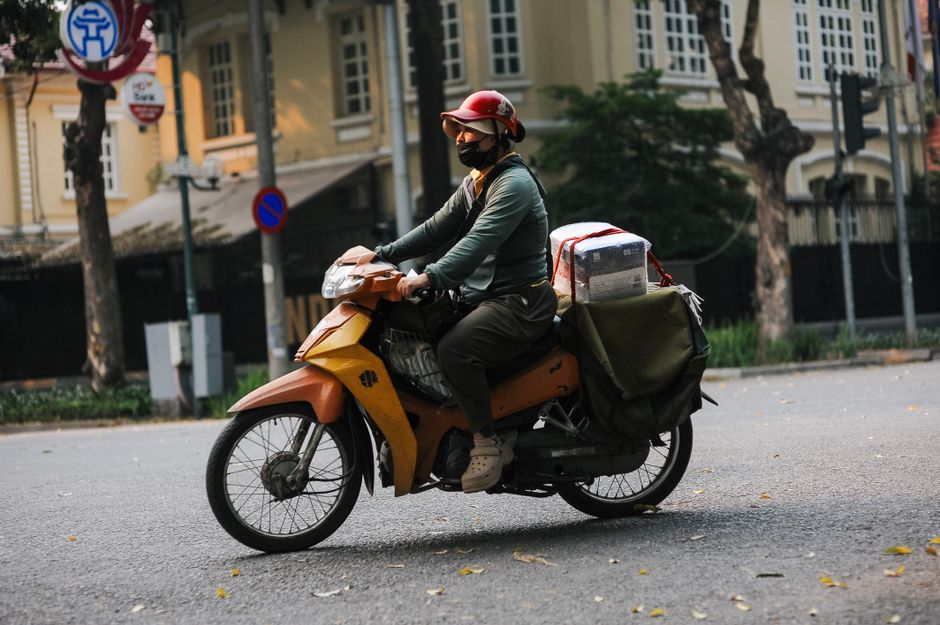
Women Motorcycle Delivery Riders in Karachi Challenge Gender Norms
Women motorcycle delivery riders in Karachi are challenging gender norms and redefining roles in a male-dominated industry, reflecting a broader trend of female empowerment and…
Read More →If these trajectories materialize, the region could host a cohort of 500,000 digital nomads by 2030, with women entrepreneurs representing 38 % of that population. The resultant concentration of human capital, capital flows, and institutional support would cement Southeast Asia as a structural counterweight to established innovation clusters, reshaping global patterns of economic mobility and leadership emergence.
Key Structural Insights
> [Infrastructure‑Policy Nexus]: The convergence of low‑cost living, high‑speed connectivity and visa liberalization creates a systemic platform that lowers entry barriers for women entrepreneurs.
> [Economic Multipliers]: Remote workers generate a 1.7‑times GDP multiplier in host cities, catalyzing new venture formation and institutional adaptation.
> * [Career Capital Reallocation]: Portable networks and asymmetric capital access replace place‑based assets, expanding economic mobility and redefining leadership pathways for women founders.
Written by Career Ahead AI. AI can make mistakes, so verify key facts. Report errors to support@careeraheadonline.com.





