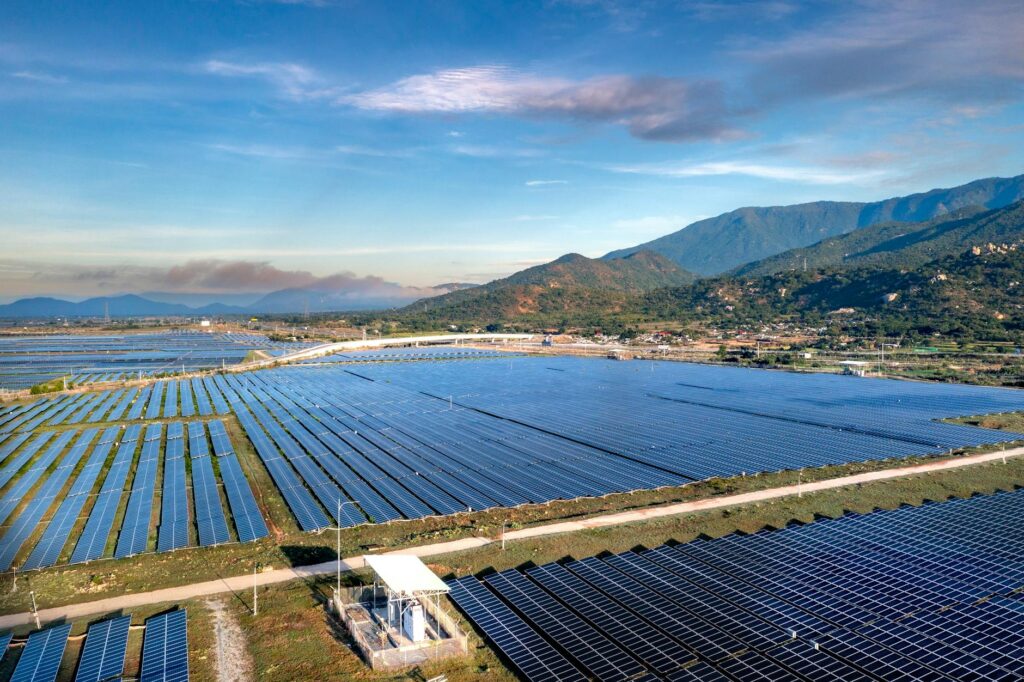
The surge in green‑financed projects across Asia, Africa and Latin America is rewiring the talent pipeline, elevating ESG expertise from niche to core.
Professionals who can navigate the intersection of finance, technology and policy will command the asymmetric advantage that new institutional frameworks create.
Macro Shift Toward Sustainable Infrastructure
Global capital allocation is undergoing a structural reorientation. Between 2018 and 2023, green bond issuance grew from $200 billion to over $1 trillion annually, and the International Energy Agency now projects that 65 % of new infrastructure spending in emerging economies will be classified as “sustainable” by 2028 [2]. The drivers are not merely reputational; tightening emissions standards in the EU and China, coupled with climate‑linked sovereign debt clauses, have turned sustainability into a de‑facto credit rating factor.
Emerging markets sit at the nexus of two macro forces: rapid urbanization and the imperative to leapfrog carbon‑intensive development pathways. The World Economic Forum notes that 70 % of GDP growth in the Global South between 2024‑2029 will be tied to infrastructure projects that embed ESG metrics from design through operation [3]. This alignment of growth and climate ambition creates a new institutional substrate in which career trajectories are increasingly measured by the ability to generate “green” value.
Funding Architecture: Green Finance as the Core Engine

The financing layer is the most quantifiable mechanism reshaping the sector. Green bonds, climate‑linked loans, and blended‑finance vehicles now account for roughly 30 % of total infrastructure debt in the BRICS bloc, up from 12 % a decade ago [1]. In India, the Sustainable Infrastructure Fund, a $5 billion vehicle co‑managed by the International Finance Corporation and domestic banks, has already financed 14 renewable‑energy parks and two smart‑city pilots.
Impact investors are extending the capital stack beyond debt. A 2025 survey of institutional investors found that 48 % of pension funds in emerging markets have allocated at least 10 % of their infrastructure mandate to projects with verifiable ESG outcomes [2]. The institutional shift is reinforced by policy: the European Union’s Sustainable Finance Disclosure Regulation (SFDR) now requires cross‑border funds to report on the “green proportion” of their holdings, compelling multinational banks to embed ESG due‑diligence into every emerging‑market pipeline.
For career capital, this financing surge translates into demand for three distinct professional archetypes:
- ESG Structuring Specialists who design green‑bond frameworks that satisfy both local tax incentives and international verification standards.
- Impact‑Measurement Analysts equipped with data‑science tools to quantify carbon‑avoidance metrics against investor‑defined thresholds.
- Capital‑Market Liaison Officers who bridge sovereign finance ministries and private‑sector investors, navigating regulatory nuances across jurisdictions.
The supply‑side bottleneck is evident: a 2024 talent audit by the World Bank identified a 42 % shortfall in qualified ESG finance professionals across the Asia‑Pacific region alone. This gap is a structural lever for upward mobility, as firms compete for scarce expertise to secure financing under increasingly stringent green‑label criteria.
ESG Structuring Specialists who design green‑bond frameworks that satisfy both local tax incentives and international verification standards.
Technological and Policy Foundations Driving Systemic Change
Technology and policy co‑evolve, forming a feedback loop that accelerates sustainable infrastructure adoption. The levelized cost of electricity (LCOE) for utility‑scale solar fell to $0.038 kWh in 2025, undercutting new coal plants in most emerging markets [4]. Simultaneously, smart‑grid deployments—exemplified by Brazil’s “Energia Inteligente” platform—enable real‑time demand response, reducing peak‑load strain and extending asset lifespans.
 Career Guidance
How to Switch Industries Mid-Career Without Starting Over
Bridge roles can reduce risk, while targeted skills and industry-specific applications help you make the case for a new field.
Read More →Policy scaffolding has matured from ad‑hoc incentives to integrated national strategies. China’s 14th Five‑Year Plan earmarks 40 % of all new transport projects for low‑carbon modes, coupling subsidies with a carbon‑pricing pilot that levies $45 per tonne of CO₂ on construction‑phase emissions. India’s “National Green Hydrogen Mission” offers a 10 % capital subsidy and preferential tariff for electrolyzer projects, catalyzing a pipeline of over 30 GW of green‑hydrogen capacity slated for 2027‑2032.
These systemic levers generate a cascade of institutional power shifts. State‑owned enterprises (SOEs) that previously dominated heavy‑industry construction are now required to partner with technology firms holding patents on energy‑storage solutions. This partnership model redistributes decision‑making authority, creating leadership pathways for technologists who can translate R&D breakthroughs into scalable project modules.
Systemic Ripple Effects Across Urbanization, Climate Resilience, and Global Value Chains
Urbanization is the demographic engine that amplifies infrastructure demand. United Nations projections place the urban share of the global population at 68 % by 2050, with 85 % of that growth occurring in the Global South [3]. Sustainable urban infrastructure—mass transit, water‑recycling, and green‑roof networks—becomes a prerequisite for maintaining livable cities.
Climate‑risk modeling now informs every stage of project design. The Caribbean Development Bank’s “Resilient Ports Initiative” in Jamaica, for instance, integrates flood‑elevation standards derived from 30‑year climate projections, reducing projected damage costs by $120 million over the asset’s life. Such resilience criteria are increasingly embedded in loan covenants, making climate‑adaptation expertise a non‑negotiable skill for project managers.
Global value chains are also reconfiguring. Multinational construction firms are establishing “green hubs” in Nairobi and São Paulo to source low‑carbon materials locally, leveraging regional trade agreements that reward carbon‑footprint transparency. This decentralization dilutes the historical concentration of procurement power in Western headquarters, granting regional managers greater autonomy and a direct line to capital allocation decisions.
Human Capital Reconfiguration: Who Gains and Who Loses
The structural shift creates a bifurcated talent landscape.
Winners: Professionals who blend quantitative ESG analytics with cross‑cultural project leadership are positioned to ascend rapidly within both multinational firms and rising domestic champions.
Winners: Professionals who blend quantitative ESG analytics with cross‑cultural project leadership are positioned to ascend rapidly within both multinational firms and rising domestic champions. The median salary premium for ESG‑certified engineers in Brazil rose 27 % between 2022‑2025, outpacing the overall engineering wage growth of 12 % [1].
Losers: Traditional civil‑engineering pathways that focus solely on structural design without sustainability integration face declining relevance. In South Africa, a survey of 200 construction firms showed that 38 % plan to downsize “conventional” design teams by 2027, reallocating budgets to multidisciplinary “sustainable solutions” units.
 Government & Policy
Supreme Court Reviews Aviation Accessibility Gaps | Career Outlook
The petition, filed by Turab Chimthanawala, who has a visual impairment, argues that the aviation industry has not implemented adequate measures to ensure accessibility at…
Read More →Institutional power is consolidating around entities that can marshal cross‑sector data—finance, climate science, and urban planning—into coherent investment theses. This consolidation accelerates the emergence of new leadership cadres: ESG‑Chief Officers (ESG‑COOs) in state ministries, sustainability directors in sovereign wealth funds, and chief resilience architects in municipal governments.
Economic mobility is tied to the ability to acquire these hybrid competencies. Scholarship programs funded by the Green Climate Fund now target mid‑career engineers in Kenya and Vietnam, offering certification pathways that combine project management (PMI‑ACP) with climate‑risk modeling (ISO 14090). Graduates of these programs report a 3‑year reduction in time‑to‑promotion, underscoring the career‑capital premium of sustainability fluency.
Three‑ to Five‑Year Trajectory and Career Roadmap
Looking ahead to 2029, three systemic trends will dominate the career landscape:
- Capital‑Market Integration of Climate Metrics – By 2027, at least 60 % of sovereign‑linked infrastructure bonds in emerging markets will require third‑party verification of climate‑risk mitigation, creating a sustained pipeline for ESG auditors and verification specialists.
- Regulatory Convergence on Net‑Zero Standards – The International Organization for Standardization (ISO) is finalizing a “Net‑Zero Infrastructure” framework expected to be adopted by 15 emerging economies by 2028. Mastery of this framework will become a prerequisite for senior project leadership roles.
- Digital‑Infrastructure Confluence – Smart‑city platforms will embed blockchain‑based carbon‑credit tracking, demanding expertise at the intersection of fintech, IoT, and environmental law. Professionals who can architect these ecosystems will command the highest leadership ladders in both public‑private partnerships and sovereign‑funded projects.
For individuals mapping a career trajectory, the roadmap crystallizes into three actionable stages:
Skill Accretion (2024‑2025): Secure certifications in green finance (e.g., Climate Bonds Initiative), data analytics (Python, R), and sector‑specific policy (ISO 14001).
Skill Accretion (2024‑2025): Secure certifications in green finance (e.g., Climate Bonds Initiative), data analytics (Python, R), and sector‑specific policy (ISO 14001).
Strategic Positioning (2025‑2027): Target roles in blended‑finance vehicles, climate‑risk consultancies, or multinational EPC firms launching “green‑transition” units. Leverage rotational programs that rotate between finance, engineering, and regulatory affairs to build institutional credibility.
Leadership Consolidation (2027‑2029): Pursue ESG‑COO or chief resilience architect positions, preferably within organizations that have secured multi‑billion‑dollar green‑bond pipelines. Demonstrate impact through quantifiable carbon‑avoidance metrics and cost‑avoidance analyses that align with investor return expectations.
 Entrepreneurship & Business
India’s Fast-Track GST Registration: Who Qualifies and What to Check
The simplified route targets businesses below a stated monthly output tax limit. A separate proposal outlines four tiers for GST registration.
Read More →By aligning personal development with these structural currents, professionals can transform the macro‑trend of sustainable infrastructure into a durable source of career capital and economic mobility.
Key Structural Insights
Financing Realignment: Green‑bond and impact‑investment growth is reallocating capital‑allocation authority from traditional banks to ESG‑specialized intermediaries, reshaping institutional power hierarchies.
Skill‑Premium Asymmetry: Hybrid expertise that merges finance, climate science, and digital technology yields a measurable salary premium and accelerates promotion timelines.
Policy‑Technology Feedback Loop: Integrated national sustainability policies and declining renewable‑technology costs create a self‑reinforcing system that expands the talent pipeline and institutionalizes ESG leadership roles.
Written by Career Ahead AI. AI can make mistakes, so verify key facts. Report errors to support@careeraheadonline.com.