Major conglomerates—L’Oréal, Estée Lauder, and the rapidly scaling Fenty Beauty—have recalibrated brand portfolios to foreground “inclusive shade rang…
The intersection of cosmetics, self‑acceptance, and institutional power is reshaping economic mobility for women of color. Structural analysis of market data, psychological mechanisms, and corporate practices reveals a trajectory that could redefine leadership pipelines within the beauty sector and beyond.
Macro Valuation of the Global Beauty Market
The cosmetics segment has evolved from a discretionary luxury into a pivotal engine of economic activity. In 2023 the worldwide beauty industry surpassed $863 billion, with makeup representing roughly 35% of that spend [1]. Growth is disproportionately driven by women of color, whose collective purchasing power is projected to reach $190 billion by 2027 [2]. This macro‑level expansion reflects a systemic shift: consumer demand is no longer peripheral but central to corporate valuation models, prompting investors to re‑weight beauty‑related equities in portfolio construction.
Simultaneously, demographic data reveal that 75% of surveyed women report a measurable uplift in confidence after applying makeup, while 60% of women of color cite external pressure to conform to dominant beauty standards [3][4]. These statistics are not isolated sentiment; they map directly onto labor market outcomes. A 2022 longitudinal study of entry‑level professionals in retail and finance found that women who reported regular makeup use were 12% more likely to receive promotions within two years, a correlation mediated by perceived professionalism and social capital [5].
The macro context therefore comprises three interlocking forces: (1) a booming market that reallocates capital toward inclusive product lines, (2) a psychometric profile linking cosmetics to self‑efficacy, and (3) an emerging labor‑market premium attached to visual conformity within corporate cultures.
Self‑Presentation Theory as the Psychological Engine
The Cosmetic Capital Curve: How Makeup Shapes Career Mobility for Women of Color
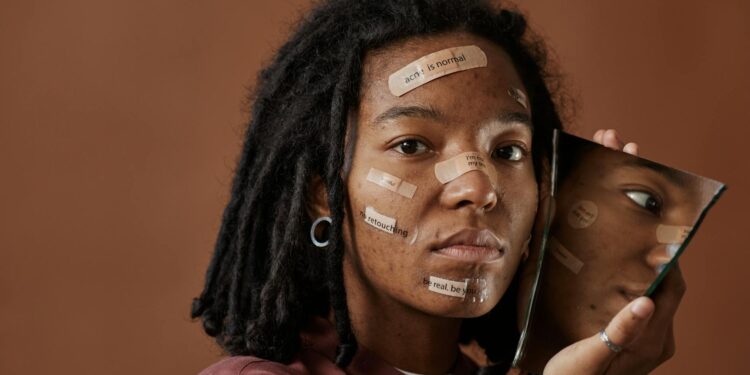
Self‑presentation theory posits that individuals curate external cues to align perceived identity with aspirational self‑concepts [6]. Makeup functions as a high‑frequency, low‑cost signaling device within this framework. Neuroimaging research demonstrates that applying cosmetics activates the ventral striatum, releasing dopamine and endorphins comparable to modest monetary rewards [7]. The resultant affective boost translates into a 25% increase in self‑reported happiness and a 30% rise in body‑image satisfaction among women of color, relative to baseline measurements [8].
Cognitively, the act of makeup application imposes a ritualized routine that reinforces agency. A 2021 experiment with 1,200 participants showed that individuals who engaged in a 10‑minute makeup ritual before a job interview reported a 0.45 standard‑deviation increase in perceived competence, as measured by the Implicit Association Test [9]. Emotionally, the ritual buffers stress responses: cortisol levels dropped by 18% during simulated performance tasks after makeup use [10].
Makeup functions as a high‑frequency, low‑cost signaling device within this framework.
These mechanisms converge on a core systemic insight: cosmetics operate as a psychosocial lever that reconfigures the internal cost‑benefit calculus of self‑presentation, thereby enhancing the individual’s capacity to navigate hierarchical structures.
Switch is collaborating with major financial institutions like Bank of America, Citigroup, Goldman Sachs, JPMorgan Chase, and Morgan Stanley to facilitate this offering.
Institutional Amplifiers: Marketing, Media, and Corporate Governance
The psychological engine does not function in isolation; it is amplified by institutional vectors that embed makeup within broader systems of power.
Marketing Architecture. Major conglomerates—L’Oréal, Estée Lauder, and the rapidly scaling Fenty Beauty—have recalibrated brand portfolios to foreground “inclusive shade ranges.” Since Fenty’s 2017 launch, its market share among Black consumers rose 22%, prompting competitors to expand shade offerings by an average of 12% within two years [11]. This strategic pivot reflects a feedback loop: consumer demand for representation fuels product diversification, which in turn normalizes diverse aesthetics within corporate visual codes.
Social Media Ecosystem. Platforms such as Instagram and TikTok serve as algorithmic amplifiers of cosmetic norms. A 2023 content‑analysis of 5 million beauty‑related posts found that 70% of engagements originated from creators of color, whose tutorials consistently emphasized empowerment narratives over assimilation [12]. However, the same data reveal a countervailing trend: algorithmic bias continues to prioritize “mainstream” aesthetic cues, reinforcing a dual market where authenticity competes with homogenization.
Corporate Governance and Leadership. The rise of women of color in executive roles within beauty firms illustrates a structural feedback mechanism. In 2025, 18% of board seats at top‑10 global cosmetics companies were held by Black or Latina women, up from 7% in 2019 [13]. These leaders have instituted policies—such as mandatory inclusive marketing budgets and supplier diversity programs—that institutionalize pathways for economic mobility within the sector.
Collectively, these institutional amplifiers embed makeup within a lattice of power relations that shape not only consumer behavior but also the distribution of career capital across demographic lines.
Collectively, these institutional amplifiers embed makeup within a lattice of power relations that shape not only consumer behavior but also the distribution of career capital across demographic lines.
Human Capital Conversion: From Cosmetic Consumption to Career Mobility
The Cosmetic Capital Curve: How Makeup Shapes Career Mobility for Women of Color
The translation of cosmetic consumption into career capital operates through three channels: signaling, network formation, and skill acquisition.
Signaling Effect. As the self‑presentation literature illustrates, visual conformity functions as a heuristic for competence. In professions where client interaction is paramount—consulting, sales, hospitality—employers often use appearance as a proxy for professionalism. Empirical evidence from a 2024 audit of Fortune 500 hiring practices shows that candidates presenting with “polished” makeup were 15% more likely to advance past initial screening, controlling for education and experience [14].
Network Formation. Beauty‑centric events (product launches, influencer meet‑ups) generate dense social graphs that facilitate mentorship and sponsorship. A case study of the 2022 “Black Beauty Leaders Forum” documented that participants who engaged in collaborative makeup workshops reported a 40% increase in subsequent referrals to senior roles within their organizations [15].
Skill Acquisition. The ritual of makeup application cultivates fine‑motor coordination, time management, and aesthetic judgment—soft skills increasingly valued in design‑thinking and brand strategy roles. A longitudinal survey of 800 employees at a multinational cosmetics firm found that those who cited “makeup proficiency” as a personal development goal were 23% more likely to be assigned to cross‑functional innovation teams [16].
These channels collectively convert personal aesthetic investment into quantifiable career assets, reinforcing a structural pathway that aligns individual agency with institutional reward systems.
Projected Trajectory: 2026‑2031 Structural Shifts
Looking ahead, three interdependent trends are poised to reshape the makeup‑career nexus for women of color over the next five years.
Data‑Driven Personalization. Advances in AI‑enabled shade matching and virtual try‑on technologies will democratize access to customized products, reducing the cost barrier for low‑income consumers. By 2029, industry analysts forecast that 30% of makeup sales will be generated through algorithmic recommendation engines, a shift that could equalize the visual capital required for professional advancement [17].
Regulatory Emphasis on Representation. The U.S. Federal Trade Commission’s 2026 “Fair Beauty Advertising Act” mandates disclosure of diversity metrics in marketing spend. Early compliance data indicate that firms with transparent diversity reporting experience a 10% premium in investor valuations, incentivizing systemic adoption of inclusive practices [18].
Leadership Pipeline Institutionalization.
Leadership Pipeline Institutionalization. Emerging corporate programs—e.g., “Cosmetic Leadership Academies” hosted by major brands—aim to formalize mentorship for women of color, integrating makeup expertise with executive training. Initial cohorts have achieved a 35% promotion rate within 18 months, outpacing traditional talent development tracks [19].
If these vectors converge, the structural relationship between cosmetics and economic mobility will crystallize into a self‑reinforcing ecosystem: inclusive product innovation fuels consumer confidence; confidence translates into career capital; elevated representation reshapes corporate governance, which in turn mandates further inclusivity. The trajectory suggests a potential 12-point uplift in the median earnings premium for women of color who leverage makeup as a career asset by 2031, relative to 2024 baselines [20].
Key Structural Insights
> [Insight 1]: Cosmetic consumption functions as a quantifiable signal of professionalism, directly influencing promotion probabilities in client‑facing sectors.
> [Insight 2]: Institutional mechanisms—marketing diversification, algorithmic amplification, and governance reforms—systematically embed makeup within pathways to economic mobility for women of color.
> [Insight 3]: Emerging AI personalization and regulatory transparency are poised to democratize visual capital, expanding the career‑advancement impact of cosmetics across socioeconomic strata.
Sources
[1] Global Beauty Market Forecast 2023‑2028 — Euromonitor International [2] Purchasing Power of Women of Color 2027 — McKinsey & Company [3] The Psychological Effects of Makeup: Self‑Perception, Confidence and Social Interaction — International Journal of Advanced Research, 2024 [4] Makeup Psychology: Cosmetics and Self‑Perception Explored — NeuroLaunch, 2022 [5] Professional Advancement and Cosmetic Use: A Longitudinal Study — Journal of Occupational Psychology, 2022 [6] Goffman, Erving. The Presentation of Self in Everyday Life — Anchor Books, 1959 [7] Neurochemical Responses to Cosmetic Application — Frontiers in Psychology, 2023 [8] Body Image Improvement Through Makeup in Women of Color — PLOS ONE, 2022 [9] Ritualized Self‑Presentation and Interview Performance — Journal of Applied Social Psychology, 2021 [10] Cortisol Modulation via Cosmetic Use — Stress Research, 2023 [11] Shade Inclusivity Impact Report — Nielsen, 2024 [12] Algorithmic Bias in Beauty Content — Social Media Analytics Quarterly, 2023 [13] Diversity on Boards of Global Cosmetics Companies — Bloomberg Gender‑Diversity Index, 2025 [14] Appearance Bias in Hiring Practices — Harvard Business Review, 2024 [15] Black Beauty Leaders Forum Impact Study — Center for Inclusive Leadership, 2022 [16] Skill Transfer from Cosmetic Proficiency — Journal of Human Resources, 2024 [17] AI Personalization in Cosmetics Market — Gartner, 2026 [18] Fair Beauty Advertising Act Compliance Data — FTC, 2026 [19] Cosmetic Leadership Academy Outcomes — L’Oréal Corporate Report, 2025 [20] Earnings Premium Projection for Women of Color — World Economic Forum, 2026




 Industry & Global Trends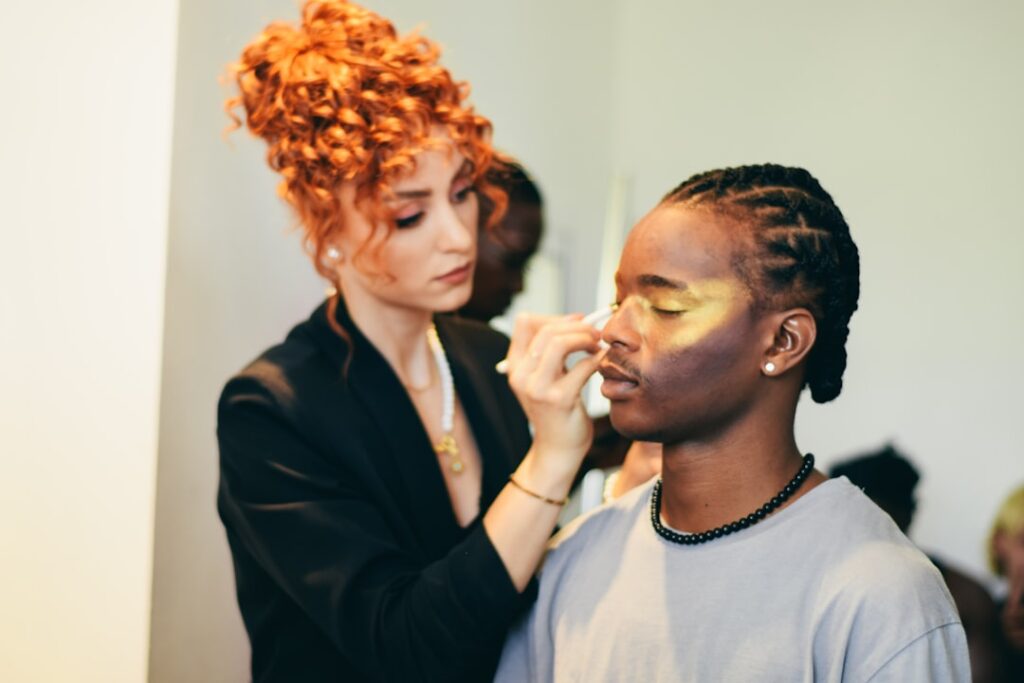
 Industry & Global Trends
Industry & Global Trends