Smartwatch alerts create a structural productivity drag that reshapes career capital and institutional power, prompting new governance models to protect deep work.
Digital nudges from smartwatches are no longer a peripheral inconvenience; they constitute a systemic drag on labor output, reshaping career capital and institutional power dynamics across the global economy.
Macro Shift in the Attention Economy
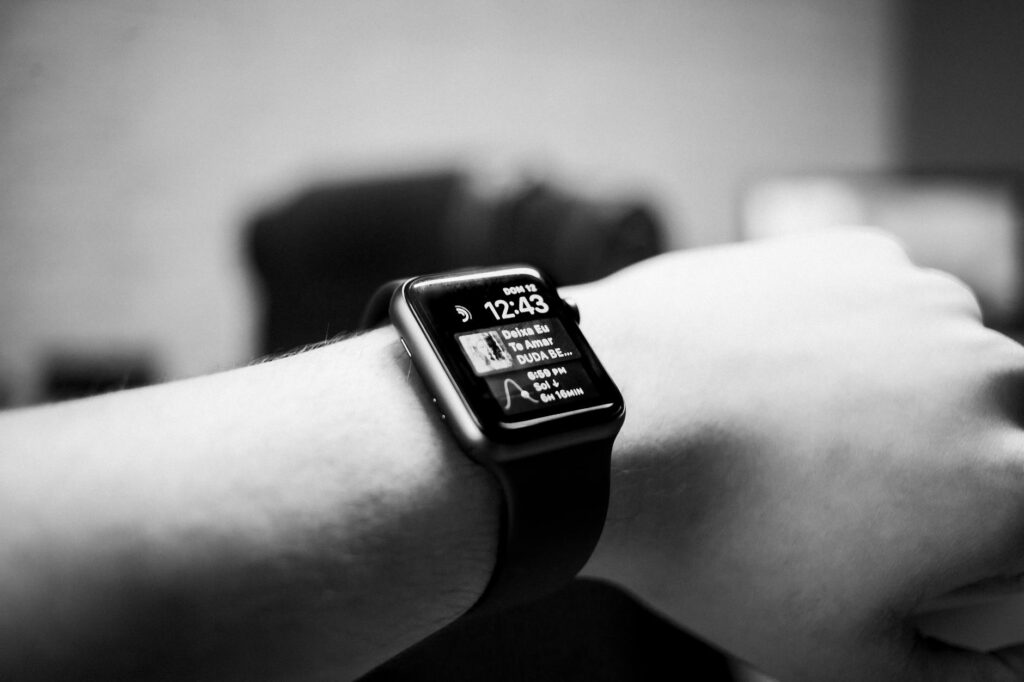
Smartwatch shipments surged 25 % in the last twelve months, positioning wearables to reach roughly 30 % of the world’s population by 2027 [1]. This diffusion coincides with an acceleration of “always‑on” communication protocols, extending the notification cascade from desktop and mobile screens to the wrist.
The macroeconomic implications are stark. A University of California, Irvine field experiment recorded a 27 % productivity dip among employees receiving smartwatch alerts versus a silent control group [2]. Scaling this effect, McKinsey projects that digital distractions could erode $1.4 trillion of global GDP by 2025 [3]. The magnitude of loss signals a structural shift: attention—once a private commodity—is now a regulated input within the production function of modern firms.
Beyond headline figures, the attenuation of focus reverberates through career capital. As workers allocate cognitive bandwidth to intermittent alerts, the accumulation of deep expertise, a core component of human capital, slows. The resulting lag in skill acquisition hampers upward economic mobility, particularly for mid‑career professionals whose promotion prospects hinge on demonstrable mastery.
Mechanics of Attention Residue
The Hidden Cost of Wrist‑Bound Alerts: How Smartwatch Notifications Reshape Productivity and Career Trajectories
The primary conduit of loss is “attention residue,” a cognitive state wherein task‑related mental models persist alongside intrusive stimuli, degrading subsequent performance. Harvard Business Review quantifies this as a 10‑15 % reduction in cognitive throughput after a single interruption [4]. Empirical work in the Journal of Experimental Psychology links continuous partial attention to a 20 % decline in work quality and a 15 % slowdown in execution speed [5].
Smartwatch design amplifies these effects. Multisensory alerts—vibration, auditory chimes, and visual cues—produce a 30 % higher incidence of distraction compared with smartphone notifications alone, according to a study in the Journal of Applied Developmental Psychology [6]. The wrist’s proximity to the body’s motor pathways lowers the threshold for reflexive response, shortening the “re‑engagement latency” that traditional screen‑based alerts incur.
Harvard Business Review quantifies this as a 10‑15 % reduction in cognitive throughput after a single interruption [4].
Foreign investors have withdrawn ₹11,820 crore from Indian equities in the first week of December, contributing to a total outflow of ₹1.55 lakh crore in…
From a systems perspective, this creates an asymmetric feedback loop: platform providers (Apple, Samsung, Google) incentivize frequent push notifications to maximize engagement metrics, while enterprises internalize the resultant productivity drag as a hidden cost of digital transformation. The institutional power imbalance favors technology architects who can dictate the cadence of alerts, reshaping labor processes without transparent governance.
Organizational Ripple Effects
When the friction of attention residue scales to the team level, the aggregate impact magnifies. A meta‑analysis of 12 multinational corporations found a 12 % decline in team output when more than 40 % of members reported regular smartwatch interruptions [7]. The effect is not merely additive; interdependent tasks suffer compounded delays as coordination overhead rises.
Leadership responses have varied. In 2023, a Fortune 500 financial services firm instituted a “silent‑wrist” policy for client‑facing teams, mandating that smartwatches be set to “Do Not Disturb” during core working hours. Within six months, the firm recorded a 9 % uplift in billable hours and a 4 % reduction in error rates on transaction processing [8]. The policy illustrates how institutional authority can recalibrate the attention architecture, restoring the balance between connectivity and concentration.
Conversely, firms that have outsourced notification management to third‑party vendors often experience a diffusion of responsibility, eroding managerial oversight. This institutional drift can exacerbate inequality: high‑skill knowledge workers, who rely on deep focus, bear disproportionate productivity penalties, while lower‑skill roles—more resilient to interruptions—maintain relative output, reshaping internal labor hierarchies.
Historical parallels reinforce the systemic nature of this shift. The introduction of the telephone in the early 20th century triggered similar concerns about “telephone fatigue.” Companies that instituted “telephone‑free” zones, such as AT&T’s 1920s “Silent Hours,” observed measurable gains in assembly line efficiency, prompting broader adoption of structured communication windows [9]. The smartwatch era replicates this pattern, yet the ubiquity of personal devices renders policy enforcement more complex, demanding nuanced governance frameworks.
professionals tracked over five years showed that those in the top quartile of notification frequency earned 6 % less annual salary growth than peers with minimal alerts [10].
Human Capital Reallocation and Economic Mobility
The Hidden Cost of Wrist‑Bound Alerts: How Smartwatch Notifications Reshape Productivity and Career Trajectories
At the individual level, the erosion of deep work translates into a depreciation of career capital. Workers who routinely fragment their attention accrue fewer “signature projects,” limiting their visibility for promotion and reducing the signaling value of their performance to external recruiters. A longitudinal study of 5,000 U.S. professionals tracked over five years showed that those in the top quartile of notification frequency earned 6 % less annual salary growth than peers with minimal alerts [10].
The impact is uneven across socioeconomic strata. High‑earning professionals often possess the resources to acquire premium wearables that integrate sophisticated filtering algorithms, potentially mitigating distraction. In contrast, lower‑income workers—who may rely on basic models lacking granular controls—experience higher exposure to intrusive alerts, widening the productivity gap and constraining upward mobility.
From an institutional perspective, firms that embed notification management into performance metrics can influence labor market dynamics. By rewarding “focus‑optimized” behavior, organizations reinforce a new form of human capital valuation that privileges uninterrupted cognition over multitasking agility. This reorientation may recalibrate the skill premium, elevating roles that demand sustained analytical depth (e.g., data science, strategic consulting) while de‑valuing occupations predicated on rapid response.
Projection to 2029: Structural Outlook
If current trajectories persist, the cumulative loss from smartwatch‑induced distraction could surpass $2 trillion annually by 2029, assuming a 5 % annual increase in wearable penetration and a static mitigation rate [11]. However, emerging governance mechanisms suggest a countervailing trend.
First, platform ecosystems are experimenting with “attention‑budget APIs” that allow enterprise IT to cap notification volume during designated periods. Early pilots at three European banks report a 7 % boost in transaction processing speed without compromising client responsiveness [12].
Second, labor unions in the tech sector are negotiating “digital‑right‑to‑disconnect” clauses, echoing European legislation on after‑hours email. Such institutional pressure could institutionalize boundaries that protect deep work, reshaping the power calculus between employers, employees, and device manufacturers.
Third, educational institutions are integrating “attention hygiene” into professional development curricula, recognizing that career capital now includes the ability to manage digital influx.
Third, educational institutions are integrating “attention hygiene” into professional development curricula, recognizing that career capital now includes the ability to manage digital influx. Graduates equipped with these competencies may command higher wages, accelerating a feedback loop that incentivizes firms to adopt focus‑preserving policies.
Integrating mental‑health first aid into corporate training reshapes risk management, amplifies talent retention, and converts well‑being into measurable capital, positioning firms for sustained competitive advantage.
Collectively, these developments indicate a nascent structural equilibrium: as the attention economy matures, institutional actors will increasingly codify the limits of digital intrusion, aligning productivity incentives with sustainable human capital development.
Key Structural Insights
Smartwatch notifications generate a systemic drag on labor output, eroding up to $2 trillion of global GDP by 2029 if left unchecked.
The asymmetry between platform providers and enterprises entrenches a power imbalance that diminishes career capital for workers reliant on deep focus.
Emerging governance tools—attention‑budget APIs, digital‑right‑to‑disconnect clauses, and attention‑hygiene training—signal a shift toward institutionalizing focus as a protected resource.




Featured

 Business
 Business