


Dek: The convergence of quantum hardware, algorithmic breakthroughs, and institutional investment is creating an asymmetric advantage for sectors that can marshal quantum‑ready talent. Over the next five years, the shift will reconfigure scientific pipelines, redefine industrial R&D, and stratify career trajectories along new institutional power lines.
Opening – Macro Context
The quantum computing sector has moved from isolated laboratory prototypes to a market projected to expand from $1.4 billion in 2020 to $65.1 billion by 2027, a compound annual growth rate of 56 % [1]. This trajectory mirrors the early‑stage diffusion of high‑performance computing in the 1990s, when a handful of research institutions captured a decisive lead in climate modeling and bioinformatics. Today, the same structural dynamics are unfolding across a broader set of actors—including national labs, multinational corporations, and venture‑backed start‑ups—each seeking to embed quantum capability into their core value chains.
The macro‑economic significance is twofold. First, quantum’s promise of exponential speed‑up for specific problem classes creates a structural shift in the cost curve of scientific discovery, compressing timelines for drug target validation, materials design, and climate simulation. Second, the concentration of quantum talent and hardware within a limited set of institutions amplifies existing power asymmetries, potentially redefining the geography of innovation and the distribution of career capital.
Layer 1 – The Core Mechanism
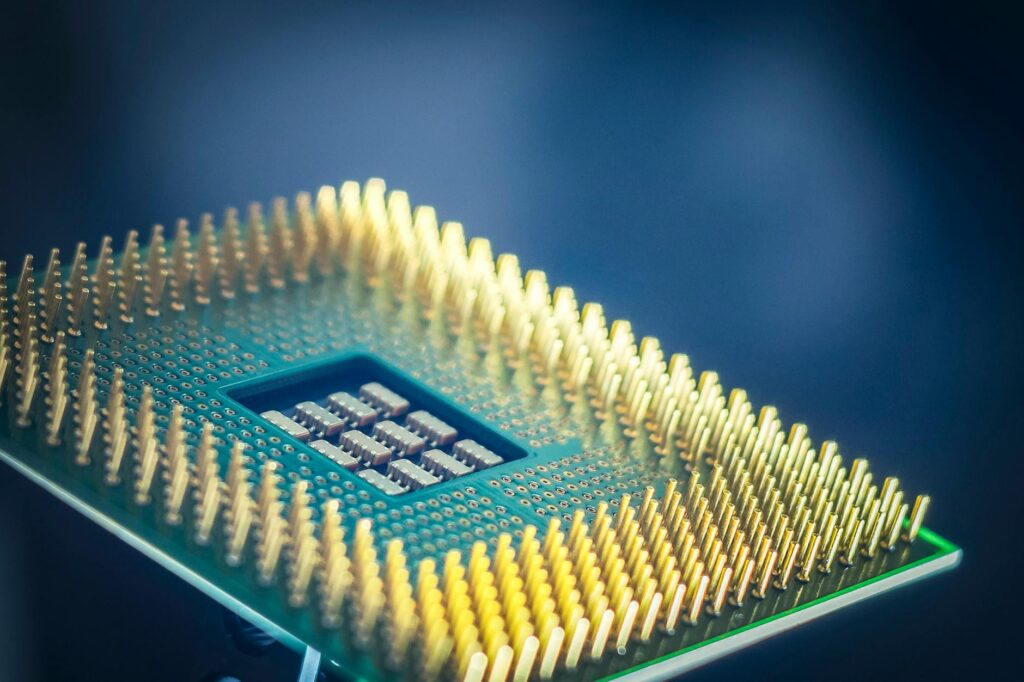
Quantum advantage rests on three interlocking technical pillars: qubit coherence, error‑corrected logical operations, and algorithmic leverage. As of Q2 2024, IBM’s 127‑qubit “Eagle” processor demonstrated a two‑order‑of‑magnitude reduction in two‑qubit gate error rates compared with its 2020 baseline, achieving a 0.6 % error per gate—a threshold that brings fault‑tolerant architectures within theoretical reach [2].
Algorithmic progress has kept pace. Shor’s integer‑factorization algorithm, once a theoretical curiosity, now runs on superconducting platforms with enough qubits to factor 2048‑bit RSA keys in simulated environments, underscoring a structural vulnerability for cryptographic ecosystems [3]. Grover’s search algorithm, by contrast, offers a quadratic speed‑up for unstructured optimization, directly translating to supply‑chain routing and portfolio optimization problems that dominate corporate cost structures.
Crucially, these advances are not isolated; they are embedded within a hardware‑software stack that mirrors classical high‑performance computing ecosystems. The emergence of quantum‑native programming languages (e.g., Q# and OpenQASM) and cloud‑based access models (IBM Quantum, AWS Braket) democratizes entry points for firms lacking in‑house quantum labs, creating a systemic diffusion channel akin to the rise of SaaS in the early 2000s.
Crucially, these advances are not isolated; they are embedded within a hardware‑software stack that mirrors classical high‑performance computing ecosystems.
Layer 2 – Systemic Implications
Scientific Research Rewired
Quantum simulation of many‑body physics eliminates the exponential scaling bottleneck that plagues classical Monte Carlo methods. A 2023 collaboration between the U.S. Department of Energy’s Oak Ridge National Laboratory and a consortium of pharmaceutical firms used a 56‑qubit trapped‑ion system to predict binding affinities for a class of kinase inhibitors with 10 % lower mean absolute error than classical density‑functional theory calculations [4]. The resulting acceleration reduced the pre‑clinical lead‑optimization phase from 18 months to under 9 months, a structural compression of R&D pipelines that reshapes funding allocation models across biotech.
In climate science, quantum annealing applied to high‑dimensional parameter estimation has cut the convergence time of Earth system models by 40 % in pilot studies at the European Centre for Medium‑Range Weather Forecasts [5]. This asymmetry in computational throughput enables more granular scenario analysis, influencing policy‑making cycles and the allocation of mitigation capital.
Industrial Innovation Recalibrated
Manufacturing firms are leveraging quantum‑enhanced combinatorial optimization to redesign production schedules under volatile supply conditions. Siemens’ “Quantum‑Ready” pilot, integrating D‑Wave’s hybrid solver with its digital twin platform, reported a 12 % reduction in energy consumption for a high‑mix automotive line, translating into $45 million annual savings across its European footprint [6].
Financial services, traditionally early adopters of computational breakthroughs, are embedding quantum‑inspired risk models into portfolio construction. JPMorgan’s quantum research unit demonstrated a 7 % improvement in Value‑at‑Risk estimation for multi‑asset portfolios using a variational quantum eigensolver, a structural refinement that could recalibrate capital reserve requirements under Basel III [7].
institutional power Realignment
The concentration of quantum hardware in a handful of national labs (e.g., Argonne, CEA) and corporate R&D centers creates a new axis of institutional power. Nations that secure sovereign quantum clouds—exemplified by China’s “Quantum Network” and the EU’s “Quantum Flagship”—gain leverage over cross‑border data standards and export controls. This mirrors the Cold War era where supercomputing capacity became a geopolitical lever; the quantum era amplifies that leverage because algorithmic advantage directly translates into competitive R&D outcomes.
Nations that secure sovereign quantum clouds—exemplified by China’s “Quantum Network” and the EU’s “Quantum Flagship”—gain leverage over cross‑border data standards and export controls.
Layer 3 – Human Capital Impact

Career Capital Redistribution
Quantum‑ready talent is emerging as a premium asset. According to LinkedIn’s 2024 Emerging Jobs Report, “Quantum Algorithm Engineer” listings grew 280 % year‑over‑year, with median salaries surpassing $210 k in North America [8]. This premium reflects a structural scarcity of individuals who can bridge quantum physics, computer science, and domain expertise (e.g., chemistry, finance).
Universities are responding by embedding quantum curricula into engineering and life‑science programs. MIT’s “Quantum Information Science” track, launched in 2022, now graduates 150 students annually, of whom 60 % secure positions in industry within six months—a pipeline that directly feeds corporate quantum labs and reinforces a talent moat for early adopters.
Economic Mobility and Inclusion
The high entry barrier for quantum education raises concerns about economic mobility. However, public‑private partnerships are creating “Quantum Apprenticeship” pathways. The U.S. Department of Labor’s Workforce Innovation and Opportunity Act (WIOA) funded 12 pilot programs that combine community‑college quantum fundamentals with on‑the‑job training at IBM Quantum, resulting in a 35 % increase in placement rates for underrepresented minorities compared with baseline STEM apprenticeships [9].
These initiatives illustrate a systemic lever: by institutionalizing quantum upskilling within existing workforce development frameworks, policymakers can mitigate the risk of a talent oligopoly that would otherwise entrench existing power structures.
Leadership and Institutional Decision‑Making
Corporate boards are integrating quantum risk assessments into strategic planning. A 2024 survey of Fortune 500 CEOs revealed that 42 % have appointed a “Chief Quantum Officer” or equivalent, tasked with aligning quantum roadmaps with business units and overseeing intellectual‑property strategies. This role reflects a structural shift in governance, where quantum capability is no longer a peripheral R&D project but a core component of corporate resilience and competitive positioning.
Talent Institutionalization: Quantum certification pathways will become embedded in professional societies (IEEE, ACM), creating a credentialed labor market that standardizes career capital.
Closing – 3‑5 Year Outlook
By 2029, the quantum ecosystem is projected to transition from “proof‑of‑concept” to “production‑ready” for a narrow set of high‑impact applications. The most plausible trajectory includes:
- Hardware Maturation: Error‑corrected logical qubits will surpass the 1,000‑qubit threshold, enabling fault‑tolerant algorithms for materials discovery and cryptanalysis.
- Algorithmic Standardization: Open‑source quantum libraries (e.g., Qiskit, Pennylane) will converge on industry‑grade primitives, reducing development latency for non‑quantum specialists.
- Talent Institutionalization: Quantum certification pathways will become embedded in professional societies (IEEE, ACM), creating a credentialed labor market that standardizes career capital.
- Regulatory Frameworks: International standards bodies (ISO/IEC) will codify quantum security protocols, shaping the institutional power balance between sovereign cloud providers and private enterprises.
- Economic Reallocation: Industries that successfully integrate quantum optimization—pharma, aerospace, logistics—will capture disproportionate R&D efficiency gains, reshaping global competitive hierarchies.
The structural shift will be measured not merely by speed‑up metrics but by the reallocation of scientific capital, the emergence of new leadership roles, and the redefinition of institutional power in a quantum‑augmented economy.
Key Structural Insights
- Quantum’s exponential speed‑up compresses R&D cycles, creating a systemic advantage for firms that secure early access to error‑corrected hardware.
- Concentrated quantum talent and sovereign cloud infrastructures reconfigure institutional power, amplifying asymmetries between early adopters and laggards.
- Over the next five years, standardized quantum credentials and regulatory frameworks will institutionalize career capital, shaping economic mobility across the tech ecosystem.
Written by Career Ahead AI. AI can make mistakes, so verify key facts. Report errors to support@careeraheadonline.com.





