The UK car industry is preparing to push for a two-year delay to Brexit tariffs on electric cars traded with the EU. Tariffs are due to kick in on 1 January for the majority of electric cars traded between the EU and UK unless an agreement is reached. The Brexit deal was rushed through on Christmas Eve in 2020.
Industry Demands Two-Year Delay
The UK car industry is preparing to push for a two-year delay to Brexit tariffs on electric cars traded with the EU. Tariffs are due to kick in on 1 January for the majority of electric cars traded between the EU and UK unless an agreement is reached. The Brexit deal was rushed through on Christmas Eve in 2020.¹²
One executive in the UK said the industry will be really clear – two years minimum or we have the same discussion next year. The European Commission has shared proposals with the automotive industry to delay the start of the tariffs by a year, although they have not yet been shared formally with the UK government.¹²
One executive in the UK said the industry will be really clear – two years minimum or we have the same discussion next year.
Rules of Origin and Battery Requirements
British and European electric cars would have to use batteries made in either the UK or the EU with local materials, or face 10% tariffs. The rules of origin were initially due to come into force on 1 January 2024. The EU and UK agreed to extend the deadline in December 2023.¹²
According to the 2020 Brexit deal, 55% of a car’s value had to be made in Europe by 1 January 2027 to avoid tariffs. 70% of the battery pack and 65% of the battery cell also had to be made in Europe. It was originally believed that 30% of battery packs and battery cells would be made in the EU or the UK within years of the deal.¹²
 Government & Policy
IndiGo Seeks Lower Mumbai Airport Charges After Terminal 1 Work
Airport charges flow into ticket prices, while Walsh says greater capacity should bring down the per-passenger bill.
Read More →The European Commission agreed to suspend the rules for three years until the end of 2026. That suspension runs until the end of 2026. It is estimated that under 20% of batteries will be made in the EU by 1 January 2027, according to Jonathan O’Riordan.¹²³
Costs and Supply Chain Gaps
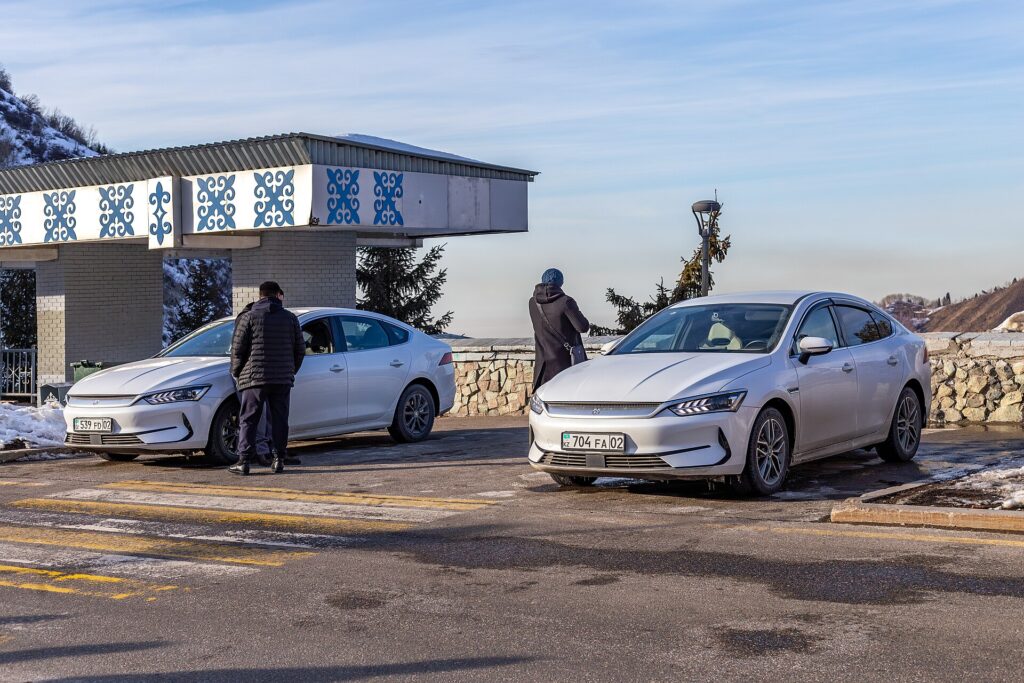
The European Automobile Manufacturers Association estimated that 82% of EU electric car and van exports to the UK would face the 10% customs duty in 2027. The association also estimated the tariffs would add costs of €1.47bn (£1.23bn) next year alone.¹
Mike Hawes, chief executive of the Society of Motor Manufacturers and Traders, said battery supply chains are still not ready to meet these stringent requirements. Jonathan O’Riordan said the cost of battery manufacturing is very high, still 30% higher than in China.²³
European Leaders to Meet
European leaders will meet on Thursday 18 June to discuss the next steps. The industry’s push for a two-year delay comes as the current suspension of stricter rules runs until the end of 2026.¹²³
Photo: Nikolai Bulykin / CC BY-SA 4.0 Costs and Supply Chain Gaps The European Automobile Manufacturers Association estimated that 82% of EU electric car and van exports to the UK would face the 10% customs duty in 2027.
Battery Skills Gain Value as Tariff Risk Looms
The tariff uncertainty makes battery supply chain expertise a stronger career bet. With under 20% of batteries made in the EU by 2027 and manufacturing costs 30% higher than China, companies face pressure to localise production. Roles in battery engineering, supply chain management, and cost optimisation become more critical as firms seek to avoid the 10% tariff on most EU-UK electric car exports.¹²³
For negotiators and policy professionals, the dispute highlights the value of understanding trade rules. The 55% local content requirement and the battery pack and cell thresholds shape investment decisions. Those who can navigate rules of origin, customs duty impacts, and delay proposals offer concrete value to automakers facing €1.47bn in added costs next year alone.¹²³
Sources
- theguardian.com — https://www.theguardian.com/business/2026/nov/12/uk-car-industry-rules-of-origin-brexit-ev-tariffs-eu
- ciltuk.org.uk — https://ciltuk.org.uk/news/uk-car-industry-calls-for-delay-of-brexit-ev-tariffs/
- businessquarter.co.uk — https://businessquarter.co.uk/carmakers-seek-fresh-delay-to-ev-tariffs/
 Government & Policy
UK Weighs £450m a Year for EU Student Fee Deal
The proposed fee deal is tied to British access to the EU industrial programme, with negotiators preparing for a Brussels summit on 20 November.
Read More →Written by Career Ahead AI. AI can make mistakes, so verify key facts. Report errors to support@careeraheadonline.com