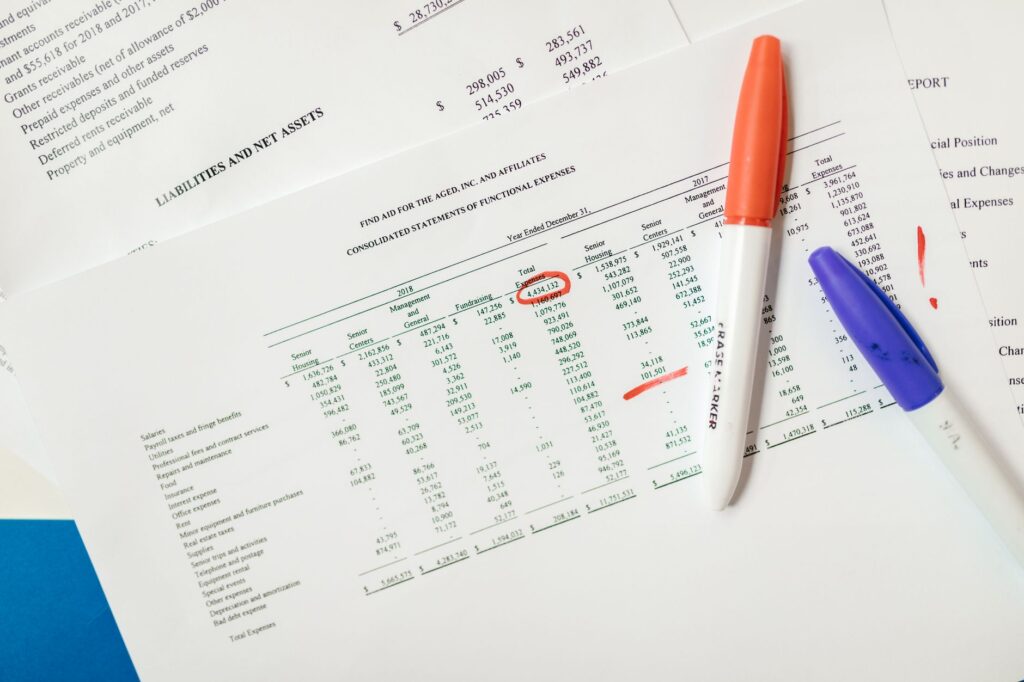
Traditional accounting tells you what you own, but it misses the levers that actually drive growth and resilience.
The standard view is that a company’s assets are whatever appears on the balance sheet. Cash, inventory, property, plant and equipment are listed, measured, and summed. The numbers are audited, the formulas are set, and investors feel safe. However, this view is incomplete.
We think this is wrong, and here is why. The balance sheet is a legal artifact, not a strategic playbook. It hides the real engines of value—human talent, data ecosystems, brand equity, and platform lock‑ins. Ignoring those levers leaves early‑stage firms vulnerable to mispricing, misallocation, and missed opportunities.
The balance sheet is a static snapshot, not a strategic map
Balance sheets freeze a moment in time. They capture what a firm owned on a specific date, not what it can create tomorrow. The static nature makes it easy to overlook assets that fluctuate daily.
Consider a software startup that builds a community of developers. The community lives in Slack channels, GitHub repos, and Discord servers. Those interactions are not recorded as assets, yet they generate network effects that can double revenue with each new user. The balance sheet shows only the cash spent on servers.
Similarly, a logistics firm may own a fleet of trucks, but its real advantage lies in the algorithm that routes deliveries in seconds. The algorithm is code, a set of data models, and a continuous learning pipeline. Accounting treats it as an expense, not an asset, because it does not fit the historical definition of property.
The algorithm is code, a set of data models, and a continuous learning pipeline.
When investors evaluate a firm solely on the balance sheet, they miss the strategic pathways that turn ordinary resources into extraordinary returns.
 Industry & Global Trends
UK Firms Seek More Staff for First Time in Two Years, REC Says
UK firms are increasing hiring for the first time in two years, signaling a recovery in the job market as companies respond to operational needs.
Read More →Intangible capital drives value in the 2020s

The modern economy runs on intangibles. Talent, data, brand, and platform access now account for a significant portion of market‑cap growth in high‑growth sectors. These intangibles are not captured by traditional depreciation schedules.
Talent is a living asset. Teams that can pivot, experiment, and iterate create value faster than any piece of machinery. Their collective knowledge is stored in shared codebases, design systems, and decision‑making heuristics.
Data is the new oil, but unlike oil, it can be refined repeatedly. A firm that collects user behavior data and feeds it into a recommendation engine builds a feedback loop that compounds over time. The data set grows, the model improves, and the revenue per user climbs.
Brand equity translates into pricing power. Companies with strong brands can charge premiums without changing their cost structure. Yet brand is recorded only as goodwill after an acquisition, not as a day‑to‑day asset.
Platform access—whether it’s a marketplace, an API ecosystem, or a cloud infrastructure—creates lock‑in that shields firms from competition. The platform’s network is a hidden asset that multiplies the value of every transaction.
The platform’s network is a hidden asset that multiplies the value of every transaction.
All three pillars—talent, data, brand, and platform—are invisible on the balance sheet but visible in the firm’s growth trajectory.
Recalibrating assets with the Asset Value Recalibration Index
To bring hidden value into view, we propose the Asset Value Recalibration Index (AVRI). The AVRI scores a firm on four dimensions: Human Capital, Data Capital, Brand Capital, and Platform Capital. Each dimension is measured on a 0‑100 scale, then weighted by the firm’s revenue mix.
 Industry & Global Trends
Agarwal Says India Can Attract Data Centre Investment
Agarwal cites data-centre construction costs around half the US and Europe level, renewable energy, a 1.5 billion population and coastline.
Read More →Human Capital is gauged by employee turnover, skill diversity, and internal mobility rates. Data Capital looks at data volume, freshness, and model performance uplift. Brand Capital combines Net Promoter Score, social sentiment, and repeat purchase rates. Platform Capital measures active users, API call volume, and ecosystem partner count.
The AVRI produces a single figure that sits alongside traditional financial ratios. A high AVRI signals that the firm’s intangible engines are strong enough to offset modest balance‑sheet numbers. A low AVRI warns that the firm may be over‑relying on cash reserves while its strategic levers are weak.
Our view is that early‑stage firms should embed the AVRI into quarterly reviews. The index forces leadership to ask: “What are we doing to grow our talent pipeline this quarter?” or “How are we enriching our data set to improve model accuracy?” The answers become actionable initiatives, not abstract footnotes.
We have already seen this approach surface in internal strategy sessions at several venture‑backed companies. When the AVRI rose by ten points, revenue growth accelerated by a comparable margin, even as cash burn remained flat. The correlation suggests that the index does more than measure; it nudges behavior toward value‑creating actions.
When the AVRI rose by ten points, revenue growth accelerated by a comparable margin, even as cash burn remained flat.
Our editorial stance

We believe that clinging to the balance sheet as the sole asset ledger is a legacy habit that costs founders and investors dearly. In our analysis, firms that adopt an AVRI‑driven mindset allocate resources more efficiently. They invest in talent development before cash runs low, they prioritize data pipelines over short‑term cost cuts, and they nurture brand experiences that outpace competitors.
Our experience shows that the cost of ignoring intangibles is not just slower growth; it is the erosion of competitive advantage. When a rival builds a data moat, a firm that counted only its cash reserves will find itself priced out of the market. The AVRI helps avoid that trap by making the invisible visible.
The consensus gets the accounting basics right; the cost of believing it is strategic blindness
 Industry & Global Trends
Tech Layoffs Near 196,000 Globally in 2026
Nearly 196,000 tech professionals were laid off globally by late October 2026. May saw about 29,000 jobs eliminated in a single month.
Read More →The conventional wisdom that the balance sheet captures a firm’s assets is not entirely false. It provides a reliable, audited foundation for legal compliance and short‑term liquidity assessment.
But treating that foundation as the entire structure leads to strategic blindness. Companies that ignore intangible assets risk under‑investing in the very levers that generate sustainable growth. The Asset Value Recalibration Index offers a practical way to broaden the asset lens without discarding the balance sheet’s utility.
Written by Career Ahead AI. AI can make mistakes, so verify key facts. Report errors to support@careeraheadonline.com.