No products in the cart.

University Budget Cuts Prompt Students to Convert Office Areas into Study Spaces
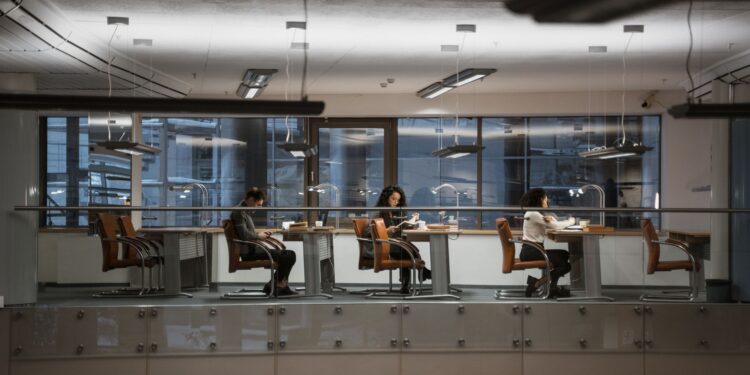
campuses are turning vacant administrative offices into classrooms and study rooms as institutions trim staff and programs to address deepening budget shortfalls. In 2025, U.S.

Students at multiple U.S. campuses are turning vacant administrative offices into classrooms and study rooms as institutions trim staff and programs to address deepening budget shortfalls.
In 2025, U.S. universities announced over 9,000 staff reductions, adding to the sector’s overall layoffs [1]. The cuts have led to the closure of several administrative offices, prompting student groups at dozens of campuses to repurpose the empty spaces for academic use [3].
The budget reductions affect public and private colleges nationwide. University presidents, state legislators, and federal agencies are cited as key decision-makers influencing the funding landscape [2][4]. The financial strain originates from a combination of reduced federal appropriations, declining state support, lower enrollment-driven tuition revenue, and cuts to research grants [2][4].
Scope of the Budget Crisis
The higher-education finance shortfall accelerated in 2025 when a national survey documented over 9,000 faculty, staff, and support-position eliminations [1]. Monthly announcements continued into 2026, culminating in an April wave that removed nearly 1,000 additional roles [1]. The cuts span a range of functions, including admissions, student-services, and research administration [2].
State appropriations, which historically covered 20-30% of public-university operating costs, fell by an average of 7% in fiscal year 2025, according to data compiled by the National Association of State Budget Officers [2]. Simultaneously, the federal government reduced discretionary research funding by roughly 5% in the same period, tightening grant availability for science and engineering programs [4].
Enrollment declines compounded the fiscal pressure. The Integrated Postsecondary Education Data System reported a 2.4% drop in undergraduate enrollment nationwide between fall 2024 and fall 2025, decreasing tuition-derived income for both public and private institutions [2]. The combined effect of lower tuition, diminished state aid, and shrinking research budgets forced university leadership to implement hiring freezes, program consolidations, and office-space consolidations [4].
The Integrated Postsecondary Education Data System reported a 2.4% drop in undergraduate enrollment nationwide between fall 2024 and fall 2025, decreasing tuition-derived income for both public and private institutions [2].
Student-Led Repurposing of Office Space
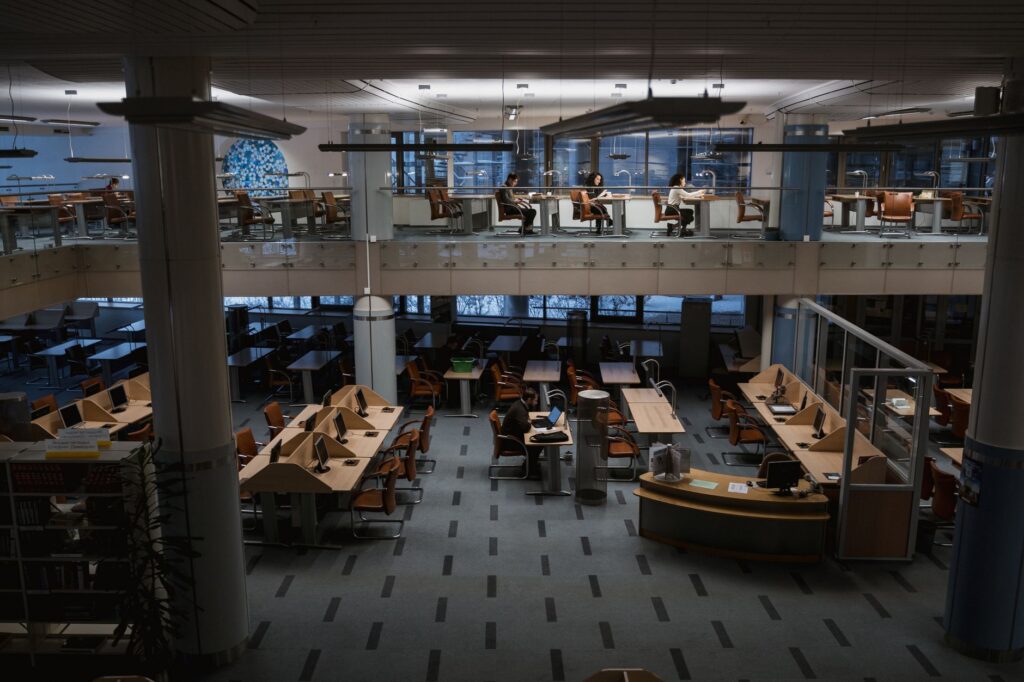
As administrative units vacated their premises, student organizations at universities such as the University of Michigan, Arizona State University, and the University of North Carolina reported converting the unused offices into study lounges, collaborative classrooms, and exam-proctoring sites [3]. These initiatives were coordinated through student-government bodies and campus facilities offices, which issued temporary occupancy permits to ensure compliance with safety codes [3].
You may also like
 News
NewsNEET‑PG 2026 Exam Reforms Introduce Single‑Shift Format, Fewer Questions and Localized Test Centres
The Ministry of Health and Family Welfare announced on August 1, 2026 that NEET‑PG 2026 will be a single‑shift exam with 180 questions in 210 minutes and…
Read More →The repurposed spaces often include former departmental conference rooms, records storage areas, and faculty-office clusters that were shuttered after staff layoffs [3]. Student groups equipped the rooms with portable whiteboards, Wi-Fi routers, and modular furniture sourced from campus surplus inventories [3]. In several cases, the makeshift classrooms have been integrated into official course schedules, allowing faculty to hold small-section lectures without incurring additional facility-rental costs [3].
University administrators have publicly acknowledged the student-driven adaptations. Statements from provosts at three major campuses indicated that the temporary use of office space aligns with broader cost-containment strategies while preserving instructional capacity [2]. However, officials also noted that the arrangements are provisional and subject to review as institutions finalize long-term space-utilization plans [2].
Institutional Response and Process
University leadership initiated the budget reductions through a series of internal reviews conducted by finance committees and external auditors [4]. The reviews identified cost-saving opportunities in personnel, facilities, and non-essential programs. Recommendations were presented to boards of trustees in late 2025, leading to formal approval of staff-cut packages in early 2026 [1].
Implementation involved issuing layoff notices, offering voluntary early-retirement incentives, and consolidating administrative functions into fewer physical locations [1]. Facilities management teams conducted space-utilization audits, marking vacant offices for potential alternative use [2]. Student-government representatives were invited to the audits, resulting in the identification of over 150,000 sq ft of unused office space across the surveyed campuses [3].
The repurposing process required coordination with campus security, custodial services, and the Office of Accessibility Services to ensure that the newly created study areas met fire-safety standards and were accessible to students with disabilities [3]. Funding for minor renovations was allocated from contingency reserves, minimizing additional budgetary impact [2].
Facilities management teams conducted space-utilization audits, marking vacant offices for potential alternative use [2].
Impact on Students, Faculty, and Institutions

Students now have access to additional study environments, which mitigates the loss of traditional library seating caused by reduced operating hours [3]. The improvised classrooms have enabled the continuation of small-section courses that might otherwise have been canceled due to space constraints [3]. However, the temporary nature of the arrangements introduces uncertainty regarding long-term availability of these resources [2].
Faculty members benefit from the preservation of teaching space but face increased workloads as staffing reductions eliminate support personnel such as teaching assistants and lab technicians [4]. The loss of research-administration staff has also delayed grant-submission timelines, affecting faculty research productivity [4].
You may also like
 News
NewsMironid Secures €39.9 Million Series B to Advance ADPKD Therapy
Mironid closed a €39.9 million Series B round on 5 August 2026 to fund clinical trials for its ADPKD therapy.
Read More →For the institutions, the conversion of office space to instructional use represents a short-term cost-avoidance measure that reduces the need for external facility rentals [2]. Nonetheless, the broader budget cuts have resulted in program eliminations, reduced course offerings, and heightened competition for remaining faculty positions [1]. The ongoing financial strain is expected to influence enrollment decisions, tuition pricing, and the overall competitiveness of U.S. higher education [4].
Outlook for Higher-Education Stakeholders
The immediate effect of the budget cuts is a reshaping of campus space utilization, with students actively filling gaps left by administrative downsizing [3]. Universities are monitoring the effectiveness of these adaptations while continuing to seek additional revenue streams, including partnerships with private industry and expanded online program offerings [4]. Stakeholders are advised to track institutional communications for updates on space-allocation policies and potential further program adjustments [2].
Key Facts
What: Budget cuts across U.S. universities have led students to convert vacant office spaces into study and classroom areas.
Outlook for Higher-Education Stakeholders The immediate effect of the budget cuts is a reshaping of campus space utilization, with students actively filling gaps left by administrative downsizing [3].
When: Cuts totaled over 9,000 positions in 2025 and nearly 1,000 more in April 2026; student repurposing began in early 2026.
Impact: Students gain additional study spaces; faculty face higher workloads; institutions reduce external facility costs while navigating ongoing financial constraints.
You may also like
 News
NewsDelhi Cabinet Approves Draft Private Universities Bill, Sets Framework for New Institutions
Delhi’s cabinet approved a draft bill that creates a statutory framework for private universities, including a 25% seat reservation for local students and fee‑transparency mandates.
Read More →Sources
- US University Budget Crisis: Layoffs & Cuts Surge 2026 – https://www.academicjobs.com/us/higher-education-news/us-university-budget-crisis-layoffs-cuts-surge-2026-academicjobs-19100
- US University Budget Crisis: Layoffs & Cuts Surge 2026 – https://www.academicjobs.com/higher-education-news/us-university-budget-crisis-layoffs-cuts-surge-2026-academicjobs-19100
- Navigating the Impact of Budget Cuts at Universities in 2026 – https://higherednewshub.com/budget-cuts-at-universities/
- Navigating the Impact of Budget Cuts on Universities in 2026 – https://higherednewshub.com/budget-cuts-universities/