No products in the cart.

Unlocking Research Collaboration: Blockchain’s Role in Academic Integrity
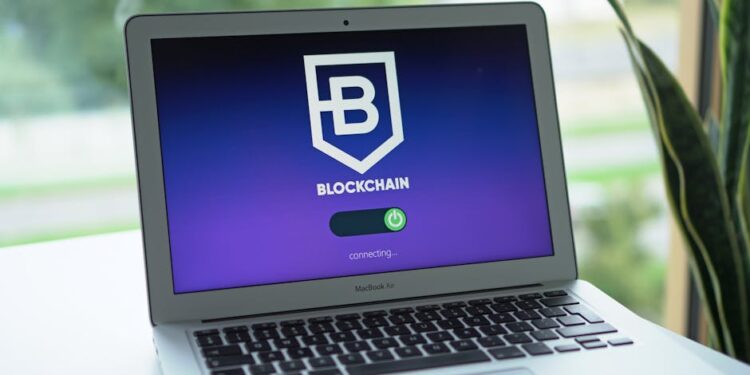
Explore how blockchain transforms research collaboration, enhancing academic integrity and data sharing through transparency, security, and decentralized systems.

“`html
Blockchain’s Promise: A New Era for Research Collaboration
Just as the internet transformed the world into a single laboratory, blockchain is set to change scholarly cooperation. A blockchain is a distributed ledger where every transaction—like data uploads, peer-review comments, or grant decisions—is time-stamped, permanent, and visible to those with the right cryptographic keys. This security and transparency is a game-changer for researchers who currently deal with institutional barriers and scattered communication.
Three key benefits arise from using a blockchain-based platform in research. First, data integrity is built in: any change to a dataset triggers a cryptographic alert, preserving the original record. Second, transparency becomes a standard feature; stakeholders can trace results back to raw data, analytical code, and modification timestamps. Third, the decentralized nature of the ledger prevents single points of failure, ensuring that no one server can disrupt a multi-institutional project.
Early examples show the concept in action. A group of neuroscientists in Japan used a private blockchain to catalog brain signal recordings, linking each waveform to its hardware setup and processing details. Meanwhile, AI researchers at a U.S. university implemented an Ethereum-based system to manage contributions to a shared model repository, automatically rewarding contributors whose code met performance benchmarks.
Building Trust: How Blockchain Enhances Academic Integrity
Academic integrity has traditionally relied on peer review and institutional oversight, which often react to misconduct after it occurs. Blockchain changes this by making integrity proactive and verifiable.
When researchers submit manuscripts, they can create a unique digital fingerprint (hash) stored on the blockchain. Each new version generates a new hash, creating a chronological record of changes. This audit trail makes it nearly impossible to alter data without leaving a trace. Journals and funding agencies can verify that the submitted version matches the one on the blockchain, preventing tactics that rely on undocumented edits.
Building Trust: How Blockchain Enhances Academic Integrity Academic integrity has traditionally relied on peer review and institutional oversight, which often react to misconduct after it occurs.
Blockchain can also authenticate raw research data. In a pilot by a European university consortium, datasets uploaded to a shared repository included smart contracts that recorded the originating lab and instrument settings. Only researchers with verified ethical clearance could access the data, with all access events logged on the blockchain. Auditors later confirmed that the dataset remained untampered, a feat much harder to achieve with traditional logs.
You may also like
 AI & Technology
AI Interviewing Transforms Future Hiring Landscape
HackerRank's AI interviewer, Chakra, is transforming recruitment by streamlining the hiring process and emphasizing critical thinking and problem-solving skills in candidates.
Read More →
These methods not only prevent fraud but also build trust among collaborators. For instance, a postdoctoral fellow in Australia can confidently link her contributions to a climate-modeling project to her ORCID identifier on a public ledger, helping her negotiate authorship and credit with clear evidence.
Data Sharing Revolution: Overcoming Barriers in Research
Data silos are a major barrier to scientific progress. Legal restrictions, proprietary issues, and outdated systems keep valuable datasets locked away. Blockchain offers solutions to these challenges.
Secure, permissioned access. A permissioned blockchain allows trusted institutions to share a common ledger while controlling who can read or write data. Cryptographic keys replace passwords, and smart contracts automate compliance checks—like verifying data requests against GDPR or HIPAA regulations—before granting access. This reduces the administrative burden of data-use agreements.
Transparent provenance. When researchers find unexpected patterns in public health data, being able to trace that data back to its source—down to the sampling protocol—can be crucial. Blockchain’s immutable records make this easy, encouraging researchers to reuse data instead of duplicating costly experiments.
Blockchain can embed token-based incentives into data-sharing workflows.
You may also like
 Education & University Insights
NYC Leaders Push for School Integration Amid Segregation
New York City's school system remains one of the most segregated in the U.S. City leaders are now pushing for integration, but advocates emphasize the…
Read More →Incentivized contribution. Blockchain can embed token-based incentives into data-sharing workflows. In a recent initiative by biotech firms, contributors who uploaded high-quality genomic sequences received utility tokens. These tokens could be exchanged for access to premium analytical tools or converted into cash. While the token system is still developing, the pilot showed that a transparent reward system can significantly encourage data sharing.
These features are changing the culture of data exchange. Researchers who once guarded their datasets are now exploring “data-as-a-service” models, where the ledger itself becomes a marketplace for reproducible, well-documented evidence.
Strategic Perspective: The Future of Research Collaboration
The combination of blockchain with other technologies—like artificial intelligence and federated learning—suggests a future where collaboration is seamless and intelligently managed. Imagine a global network of labs that automatically federates AI models trained on local, privacy-protecting datasets, with the blockchain recording each model’s history and performance. This could lead to rapid breakthroughs in areas like drug discovery and climate forecasting.
For institutions, the message is clear: invest in interoperable, standards-based blockchain systems now, rather than waiting for a fragmented future. Early adopters can influence governance models—deciding who validates transactions and how disputes are resolved—ensuring that technology supports scholarly goals over commercial interests.
Skills in decentralized ledger design, smart-contract programming, and cryptographic data management are becoming valuable in tenure evaluations at progressive universities.
Researchers will also find new career opportunities. Skills in decentralized ledger design, smart-contract programming, and cryptographic data management are becoming valuable in tenure evaluations at progressive universities. As funding agencies require verifiable data-management plans, scholars who can demonstrate blockchain compliance will have an advantage.
You may also like
 AI & Technology
Higher education reallocates capital to digital platforms
The analysis that follows dissects the mechanisms, systemic implications, and stakeholder outcomes.
Read More →Ultimately, blockchain does not replace peer review or the scientific method; it strengthens the systems that support them. By ensuring data is immutable, traceable, and shared under clear rules, blockchain restores trust in collaborative research. The next decade will be defined not just by discoveries, but by the integrity of the digital ecosystems that enable them.
“`