Virtual Exchange Becomes the New Engine of Global Talent Pipelines
Virtual exchange is transforming higher education from a campus‑centric model into a globally networked system that creates portable career capital, reduces socioeconomic barriers, and reconfigures institutional power through digital revenue streams.
The pandemic‑driven surge in online cross‑border collaborations is reshaping university curricula, redefining institutional revenue models, and creating a systemic source of career capital for a generation of digitally fluent, culturally competent workers.
Opening: From Emergency Pivot to Structural Shift
When campuses worldwide shuttered in early 2020, the international education sector faced an existential shock. Traditional semester‑long study‑abroad programs, which accounted for roughly 5 % of all undergraduate mobility before the pandemic, collapsed overnight. Within months, a coalition of universities launched “virtual exchange” pilots that paired students across continents in synchronous coursework, joint projects, and moderated dialogues. By the end of 2022, enrollment in such programs had risen to 1.2 million participants, a 250 % increase from pre‑COVID levels [1].
The acceleration was not merely a stopgap. Institutional leaders recognized three structural incentives: (1) cost elasticity—virtual exchanges eliminate airfare, housing, and visa expenses, reducing per‑student outlays by up to 70 % [2]; (2) scalable access—digital platforms can accommodate hundreds of learners per cohort, expanding participation beyond elite, wealth‑constrained cohorts; and (3) data‑driven learning—online environments generate granular engagement metrics that feed into institutional quality dashboards.
Concurrently, the global online education market is projected to reach $325 billion by 2025, driven in part by demand for flexible, internationally oriented credentials [3]. This macroeconomic trajectory positions virtual exchange as a permanent fixture in the higher‑education ecosystem, rather than a temporary contingency. The implications extend to career capital formation, economic mobility, and the distribution of institutional power across the higher‑education landscape.
Layer 1: The Core Mechanism of Institutionalized Virtual Exchange
Virtual Exchange Becomes the New Engine of Global Talent Pipelines
Virtual exchange programs operationalize cross‑cultural learning through a triad of digital components: a learning management system (LMS) that hosts shared curricula, a synchronous communication suite (e.g., Zoom, Teams) that enables real‑time dialogue, and a collaborative workspace (e.g., Miro, Slack) that supports joint project artifacts.
Standardized Credit Architecture
Most programs adopt a “dual‑credit” model, where participating institutions map course outcomes to a common competency framework—often the International Association for the Exchange of Students for Technical Experience (IAESTE) Global Competence Standards. This alignment allows a student at the University of Michigan to earn credit recognized by the University of Hong Kong, creating a portable credential that signals intercultural agility to employers.
This alignment allows a student at the University of Michigan to earn credit recognized by the University of Hong Kong, creating a portable credential that signals intercultural agility to employers.
Pedagogical Design: High‑Impact Practices at Scale
Research shows that virtual exchange outcomes improve when they embed high‑impact practices (HIPs) such as collaborative assignments, reflective journals, and faculty‑guided debriefs [2]. A 2024 multi‑institutional study of 45,000 participants found a 12 % increase in self‑reported cultural empathy scores for courses that incorporated structured peer feedback loops versus those that relied solely on lecture‑style delivery [2].
LBS National Sanskrit University is set to become a global leader in Sanskrit studies, emphasizing AI integration and international collaborations to enhance research and preserve…
Institutional Investment in Digital Infrastructure
Effective delivery demands robust bandwidth, secure authentication, and analytics dashboards. The National Center for Education Statistics reported that U.S. research universities increased their ed‑tech budgets by an average of 18 % annually from 2021‑2024, with 42 % of that growth earmarked for virtual exchange platforms [1]. Institutions that lag in this investment risk marginalization as prospective students prioritize programs offering verified global competencies.
Layer 2: Systemic Ripples Across Higher Education and Beyond
Curriculum Realignment and Assessment Reform
Virtual exchange forces a re‑examination of disciplinary silos. Humanities departments, traditionally the custodians of study‑abroad, now partner with engineering faculties to co‑design “global design labs” that tackle climate‑adaptation challenges in Southeast Asia. This interdisciplinary thrust reshapes assessment, shifting from discipline‑specific exams to portfolio‑based evaluations that capture collaborative problem‑solving and cross‑cultural communication.
New Revenue Streams and Institutional Power Shifts
The dual‑credit model enables joint degree pathways that monetize cross‑border expertise. For instance, the University of Edinburgh and Tsinghua University launched a joint MSc in Sustainable Finance delivered entirely online, attracting 1,800 applicants in its inaugural year and generating $12 million in tuition revenue—funds that are reinvested into digital scholarship centers [1]. Such collaborations redistribute institutional power from legacy, campus‑centric universities to digitally adept consortia that can scale globally without physical expansion.
Labor Market Integration and Economic Mobility
Employers increasingly codify global competence in job descriptions. A 2023 LinkedIn analysis of 2.3 million postings revealed a 27 % year‑over‑year rise in keywords such as “cross‑cultural communication,” “global collaboration,” and “remote teamwork.” Graduates of virtual exchange programs report a 15 % higher starting salary than peers without such experience, after controlling for major and GPA [3]. Moreover, because virtual exchange eliminates travel costs, students from lower‑income backgrounds can accrue the same career capital as their wealthier counterparts, narrowing the economic mobility gap traditionally associated with study‑abroad participation.
Policy and Accreditation Landscape
National accreditation bodies are adapting standards to recognize virtual exchange as a legitimate form of international education.
Policy and Accreditation Landscape
National accreditation bodies are adapting standards to recognize virtual exchange as a legitimate form of international education. The European Association for Quality Assurance in Higher Education (ENQA) issued guidelines in 2022 that require evidence of cultural immersion metrics—including time‑zone diversity, language usage, and reflective assessment—to qualify programs for accreditation. This regulatory shift embeds virtual exchange within the formal quality assurance system, reinforcing its systemic legitimacy.
Layer 3: Human Capital Impact – Winners, Losers, and Emerging Leaders
Virtual Exchange Becomes the New Engine of Global Talent Pipelines
Winners: Digitally Native Students and Agile Institutions
Students who entered university after 2015—already accustomed to collaborative tools like Google Workspace—convert virtual exchange participation into career capital that aligns with the “asymmetric skill premium” observed in the digital economy. These learners emerge as boundary‑spanning leaders, capable of managing distributed teams and navigating cultural nuance in real time.
Institutions that have institutionalized virtual exchange offices—such as Arizona State University’s Global Learning Hub—report a 22 % increase in international enrollment, even as physical mobility remains constrained. Their ability to market portable global credentials strengthens brand equity and attracts corporate sponsorships for joint research initiatives.
Losers: Legacy Programs and Resource‑Constrained Colleges
Traditional semester‑abroad providers that rely on physical host families and on‑site logistics face declining enrollment, with some programs reporting a 40 % drop in revenue between 2020‑2023. Colleges lacking robust IT infrastructure—particularly community colleges and regional public universities—risk being excluded from the emerging global talent pipeline, reinforcing existing inequities in career capital accumulation.
Emerging Leaders: Corporate‑University Consortia
Multinational firms are forming strategic consortia with universities to co‑design virtual exchange curricula that align with industry competency frameworks. For example, a partnership between IBM, the University of São Paulo, and the University of Nairobi created a “Digital Ethics Lab” that brings together 200 students per semester to develop AI governance policies for emerging markets. Participants receive a micro‑credential endorsed by IBM, directly translating into pipeline opportunities for high‑growth tech roles.
Emerging Leaders: Corporate‑University Consortia
Multinational firms are forming strategic consortia with universities to co‑design virtual exchange curricula that align with industry competency frameworks.
Closing: Outlook for the Next Three to Five Years
The trajectory of virtual exchange suggests three converging trends that will define the next half‑decade:
Institutional Consolidation Around Digital Hubs – Universities will increasingly centralize virtual exchange functions within dedicated digital learning centers, leveraging economies of scale to negotiate platform licensing and data‑analytics services.
Credential Interoperability and Blockchain Verification – To assure employers of the authenticity of cross‑border competencies, institutions will adopt blockchain‑based credentialing that records each collaborative milestone, enabling seamless verification across corporate HR systems.
Policy‑Driven Funding for Inclusive Access – Federal and state education agencies are expected to allocate targeted grants—estimated at $4 billion annually by 2028—to expand broadband access and subsidize virtual exchange participation for underrepresented students, further democratizing career capital.
If these dynamics persist, virtual exchange will evolve from a pandemic‑era adaptation into a structural pillar of higher education, redefining the geography of talent development and embedding global competence as a baseline requirement for the modern workforce.
Key Structural Insights [Insight 1]: Virtual exchange converts digital collaboration tools into a scalable mechanism for institutional revenue diversification and global talent formation. [Insight 2]: By eliminating physical mobility costs, virtual exchange narrows the economic mobility gap, allowing lower‑income students to acquire comparable career capital to wealthier peers.
[Insight 3]: The integration of blockchain‑verified micro‑credentials will institutionalize cross‑border competencies, aligning academic outcomes with employer demand and reshaping labor market signaling.
Written by Career Ahead AI. AI can make mistakes, so verify key facts. Report errors to support@careeraheadonline.com.
Career Ahead AI is Career Ahead Magazine's in-house AI newsroom, reporting on careers, education, jobs and business. It produces original summaries and analysis drawn from publicly available sources, with those sources credited, and operates under the editorial oversight of the Career Ahead team. AI can make mistakes, so please tell us when something looks wrong. Corrections, copyright or takedown requests…
India’s teenagers are beginning UPSC prep years before they’re eligible. Experts and toppers say the trick is balance—board grades, degree depth, answer-writing…




 Education & University Insights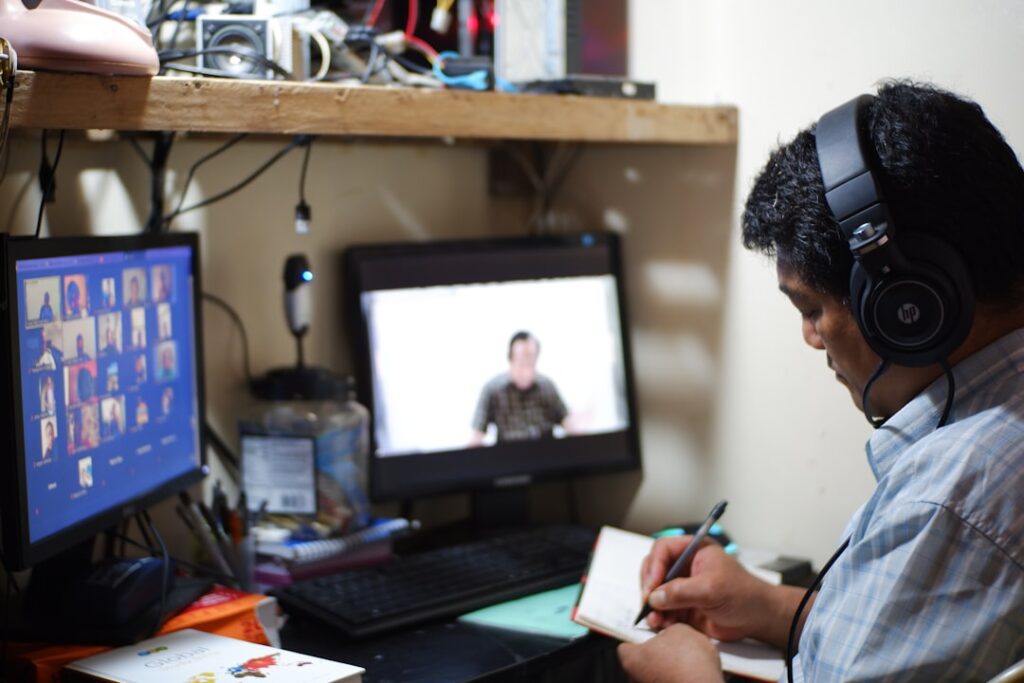
 Education & University Insights
Education & University Insights