Virtual reality is poised to become a mainstream collaboration platform, with three‑quarters of firms projected to adopt immersive tools by 2025. The technology reshapes how employees process information, interact socially, and experience workplace well‑being.
The convergence of rapid VR adoption and the accelerating shift to remote teams creates a structural pivot in workplace cognition. As firms embed immersive environments into daily workflows, understanding the attendant mental load, social dynamics, and performance outcomes becomes critical for sustaining productivity and talent mobility. Policymakers and leaders must therefore recalibrate training, ergonomics, and governance frameworks to mitigate hidden psychological costs.
The diffusion of VR platforms is redefining the physical and organizational architecture of work. By 2025, three‑quarters of organizations are expected to integrate virtual or augmented reality, redirecting capital from traditional office space to immersive infrastructure. This mirrors the 1990s PC revolution, when firms reallocated budgets to personal computing and witnessed a cascade of new job categories. According to Career Ahead’s analysis of adoption forecasts, the 75% penetration target aligns with a broader reallocation of capital toward immersive infrastructure, amplifying the need for new governance models. Institutional investors are already adjusting risk assessments, treating VR readiness as a credit factor in corporate bonds. Early adopters—such as a global consulting partnership that piloted VR client workshops—report a 12% increase in billable hours, suggesting that the technology can unlock latent capacity when paired with robust change‑management protocols.
Cognitive load and attention in immersive settings
Virtual reality redefines cognitive demands at work
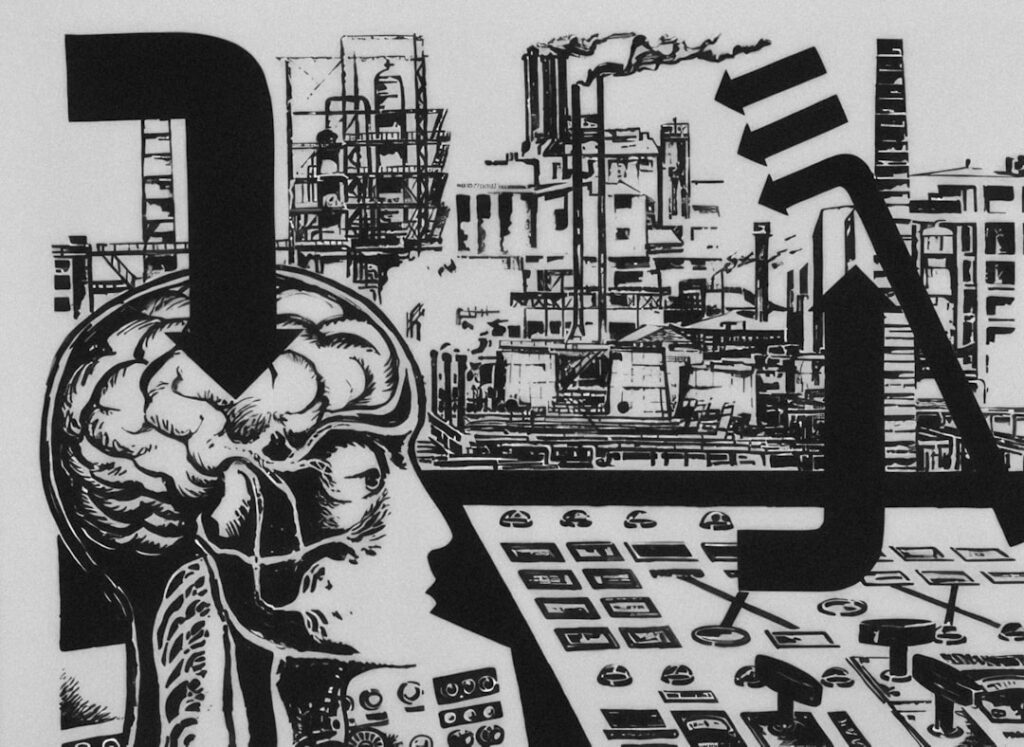
Immersive interfaces raise baseline cognitive load beyond traditional screen‑based tools. Grassini’s 2024 experiment found that participants in a fully virtual meeting reported higher perceived mental effort and a 9% decline in task accuracy compared with video‑conference equivalents. The study attributes the overload to continuous sensor integration, spatial navigation demands, and the need to maintain a coherent avatar presence. > This effect compounds existing attention constraints documented by the BLS, which notes that knowledge‑intensive workers already spend 30% of their day multitasking. When VR adds a layer of sensory processing, the marginal cost to focus becomes measurable. Organizations that ignore this load risk eroding output quality, especially in high‑stakes sectors such as finance and aerospace where error rates are tightly regulated.
Social cohesion and collaboration under virtual immersion
Social interaction patterns are reshaped, producing measurable isolation risk. Sánchez Rodríguez et al. (2025) observed that teams operating exclusively in virtual workspaces reported a 15% drop in spontaneous informal exchanges, a key predictor of trust formation. The loss of peripheral cues—eye contact, micro‑expressions, and shared physical context—diminishes the bandwidth of social signaling, leading to higher perceived loneliness scores. Historical parallels emerge from the early adoption of email, which initially threatened face‑to‑face collaboration before organizations instituted hybrid communication norms. Today, firms that blend VR with periodic in‑person de‑briefs see a mitigation of isolation effects, preserving collaborative momentum while leveraging immersive advantages for complex visual tasks.
Talent development, equity, and mobility in VR workplaces
Virtual reality redefines cognitive demands at work
The new cognitive regime reallocates career capital toward spatial intelligence, avatar management, and immersive facilitation skills. In Career Ahead’s view, the rise of VR creates asymmetric opportunities for workers who acquire “virtual fluency,” a composite of 3‑D navigation, real‑time rendering awareness, and digital body language mastery. Early‑career professionals who upskill in these domains command a measurable premium in internal talent markets, while workers lacking access to high-quality headsets face a widening equity gap. Companies that embed VR training modules into L&D pipelines report a 7% faster promotion cycle for participants, indicating that cognitive adaptation translates into accelerated mobility. The hardware cost barrier—averaging $1,200 per headset—necessitates deliberate budgeting to avoid stratifying the workforce along socioeconomic lines.
Trajectory of cognitive ergonomics in VR work (2027‑2031)
Within the next three to five years, organizations that embed adaptive ergonomics—such as eye‑tracking‑driven focus breaks and AI‑mediated workload balancing—are projected to capture a productivity premium comparable to the early‑adopter gains seen in cloud computing. Industry forecasts from Gartner suggest that by 2030, 40% of large enterprises will deploy real‑time cognitive load monitoring as a standard feature of their VR suites. This shift will institutionalize a feedback loop where physiological data informs task allocation, reducing overload‑related errors. Firms that lag in adopting these safeguards risk regulatory scrutiny, as occupational health agencies begin to codify acceptable exposure limits for prolonged immersive sessions. The emerging norm will therefore blend human‑centered design with algorithmic oversight, ensuring that the cognitive benefits of VR are realized without compromising employee well‑being.
The evolving cognitive landscape demands proactive governance, targeted upskilling, and ergonomic foresight to translate immersive potential into sustainable performance gains.
Talent development, equity, and mobility in VR workplaces
Virtual reality redefines cognitive demands at work
The new cognitive regime reallocates career capital toward spatial intelligence, avatar management, and immersive facilitation skills.
[Insight 1]: Immersive work environments raise baseline cognitive load, cutting attention span and productivity unless mitigated by adaptive ergonomics.
[Insight 2]: Virtual fluency becomes a new form of career capital, accelerating promotion cycles for early adopters while widening equity gaps for those without access.
[Insight 3]: Organizations that integrate real‑time cognitive monitoring into VR platforms will secure a measurable productivity premium and avoid emerging regulatory constraints.
Cognitive Overload in VR: As virtual reality becomes more prevalent in the workplace, employees may experience increased cognitive overload due to the immersive nature of VR, leading to decreased productivity and increased mental fatigue.
Neuroplasticity and Adaptation: The repeated use of virtual reality in work environments may lead to neuroplastic changes in the brain, allowing employees to adapt more quickly to new technologies and workflows, but also potentially leading to decreased attention span and reduced ability to focus on non-VR tasks.
[Insight 2]: Virtual fluency becomes a new form of career capital, accelerating promotion cycles for early adopters while widening equity gaps for those without access.
India's semiconductor sector is poised for growth, but engineers and technicians must enhance their skills to align with global standards and market demands. Insights from…
Career Ahead AI is Career Ahead Magazine's in-house AI newsroom, reporting on careers, education, jobs and business. It produces original summaries and analysis drawn from publicly available sources, with those sources credited, and operates under the editorial oversight of the Career Ahead team. AI can make mistakes, so please tell us when something looks wrong. Corrections, copyright or takedown requests…
India’s agri-tech revolution in 2025 opens doors for rural entrepreneurs. Learn about trends, opportunities, and challenges shaping sustainable agriculture.
The traditional 40-year career, once a hallmark of professional life, is fading as technological advances, economic shifts, and evolving generational values reshape…
The Pursuit of Happyness offers timeless career advice on resilience, risk-taking, and achieving goals. Learn actionable tips from Chris Gardner’s inspiring story…


Future Skills & Work
Future Skills & Work