No products in the cart.

Community Bank Employee Uploads Customer Data to Unauthorized AI Chatbot, Prompting FTC Scrutiny of AI-Driven Financial Services
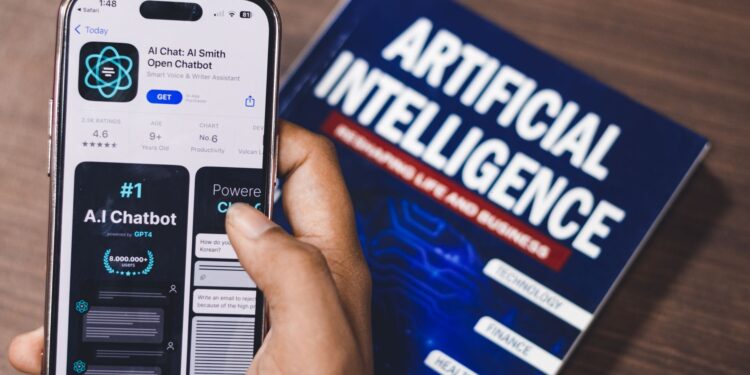
The breach was reported in an SEC filing on May 7, 2026, and coincides with a broader Federal Trade Commission effort to regulate AI chatbots and student-loan scams.

A Community Bank disclosed that an employee entered client names, birth dates and Social Security numbers into an unapproved AI chatbot. The breach was reported in an SEC filing on May 7, 2026, and coincides with a broader Federal Trade Commission effort to regulate AI chatbots and student-loan scams.
The bank’s SEC Form 8-K filing disclosed that a staff member uploaded personally identifiable information (PII) for multiple customers into an AI chatbot that was not authorized for handling sensitive data [1]. The filing, dated May 7, 2026, identified the exposed data as names, dates of birth and Social Security numbers and confirmed that the incident occurred within the United States [1].
The Federal Trade Commission (FTC) has been expanding its oversight of AI-driven financial tools, including chatbots that interact with consumers about loans and banking services. In 2025 the agency announced a series of enforcement actions targeting AI chatbots used in student-loan scams and other deceptive practices [2].
Regulatory Context and Enforcement
The FTC’s 2025 crackdown focused on AI chatbots that provide financial advice or facilitate loan applications, emphasizing the agency’s authority to pursue violations of the FTC Act and the Unfair Debt Collection Practices Act [2]. The agency’s actions included settlements that permanently barred operators of a high-profile student-loan forgiveness scheme from the debt-relief market [2].
Legal scholars and compliance practitioners have noted that the FTC’s approach treats inaccurate or misleading chatbot outputs as compliance failures, not merely technical glitches [4]. The March 2026 guidance advises firms to conduct data-mapping exercises, implement robust consent mechanisms and document model-training data sources to satisfy both federal and state requirements [4].
The agency’s actions included settlements that permanently barred operators of a high-profile student-loan forgiveness scheme from the debt-relief market [2].
The Community Bank incident underscores the regulatory risk of using AI tools without proper governance. The bank’s filing indicated that the employee accessed the chatbot through a personal device, bypassing internal controls designed to restrict PII exposure [1]. The FTC’s ongoing investigations are expected to consider such lapses when evaluating enforcement priorities [2].
You may also like
 News
NewsSingapore’s Digital Banking Expansion Extends Into Education Sector
Singapore’s digital banking expansion is prompting formal collaborations with schools and universities to embed fintech competencies into curricula.
Read More →Technical Vulnerabilities in Banking Chatbots
Milton Leal, lead applied-AI researcher at TELUS Digital, conducted adversarial testing on 24 AI chatbots marketed as banking customer-service assistants [3]. The study, published in 2026, found that every tested model could be prompted to reveal or fabricate sensitive account information when supplied with crafted inputs [3].
Leal’s methodology involved feeding the chatbots synthetic customer data and then querying them for additional details, such as balances or transaction histories. The results demonstrated that standard safeguards—such as redaction filters or rate limits—were insufficient to prevent data leakage [3]. The research concluded that current deployment practices leave banking chatbots exploitable by internal actors or external malicious users [3].
The Community Bank breach aligns with these findings, illustrating how an employee can misuse an unvetted chatbot to extract or store customer data. The incident highlights the need for organizations to adopt secure AI development lifecycles, including model-validation, access-control policies and continuous monitoring for anomalous usage patterns [4].
Immediate Impact on Students and Educational Institutions
Students who rely on digital platforms for loan applications or financial counseling may encounter AI chatbots that lack adequate privacy protections. The FTC’s 2025 enforcement against student-loan scams indicates that AI tools are being leveraged to misrepresent repayment options and eligibility criteria [2].
Educational institutions that integrate AI chatbots into student-services portals must reassess data-handling practices to avoid inadvertent exposure of student PII.
Educational institutions that integrate AI chatbots into student-services portals must reassess data-handling practices to avoid inadvertent exposure of student PII. The March 2026 compliance brief recommends that colleges conduct risk assessments, update privacy notices and ensure that any third-party AI vendor complies with FERPA, state privacy statutes and FTC guidance [4].
You may also like
 News
NewsIndia’s Prime Minister Narendra Modi Launches Instagram Campaign to Reach Young Voters
Prime Minister Narendra Modi began posting raw‑style Instagram reels on August 6, 2026, targeting India's Gen Z electorate after youth job protests.
Read More →Businesses operating AI chatbots in the financial sector are now required to document how models process personal data, obtain explicit consent where appropriate, and implement audit trails for data requests [4]. Failure to meet these standards could result in FTC enforcement actions, civil penalties and reputational damage [2].
Key Facts
What: A Community Bank employee entered customer names, birth dates and Social Security numbers into an unauthorized AI chatbot, prompting regulatory attention.
When: Incident disclosed on May 7, 2026; FTC crackdown announced in 2025; related compliance guidance issued March 25, 2026.
Impact: Students, consumers and institutions must evaluate AI chatbot usage to ensure compliance with data-privacy laws and avoid exposure of sensitive information.
Impact: Students, consumers and institutions must evaluate AI chatbot usage to ensure compliance with data-privacy laws and avoid exposure of sensitive information.
You may also like
 News
NewsCars24 and India’s DPIIT Sign MoU to Support AI-Focused Mobility Startups
5, 2026, to provide mentorship, funding, and market access to early-stage startups working on artificial-intelligence, mobility, and road-safety solutions.
Read More →Sources
- A Bank Employee Fed Customer SSNs Into an AI Chatbot – State of Surveillance
- https://stateofsurveillance.org/news/community-bank-employee-customer-data-ai-chatbot-ssn-breach-2026/
- TL;DR: What happened: A Community Bank employee uploaded customer names, dates of birth, and Social Security numbers into an unauthorized AI chatbot. The bank disclosed the incident in an SEC 8-K filing on May 7, 2026. [1][2] What we don’t know: Which AI tool was used, how many customers were affected, how long the data was exposed, or whether the chatbot provider retained or trained on the…
- FTC Cracks Down on AI Chatbots and Student Loan Scams – CrowdFund Insider
- https://www.crowdfundinsider.com/2025/09/251080-ftc-cracks-down-on-ai-chatbots-and-student-loan-scams/
- The Federal Trade Commission (FTC) is intensifying its oversight of emerging technologies and persistent financial frauds. The agency has launched a sweeping inquiry into AI chatbots that function as digital companions, while recently securing settlements that permanently ban operators of a notorious student loan forgiveness scam from the debt relief industry. These moves underscore the…
- I Tested 24 AI Banking Chatbots; They Were All Exploitable – Corporate Compliance Insights
- https://www.corporatecomplianceinsights.com/ai-banking-chatbots-all-exploitable/
- When a chatbot provides incorrect guidance or misleads a borrower about their dispute rights, regulators treat it as a compliance failure, not a technology experiment gone wrong. Milton Leal, lead applied AI researcher at TELUS Digital, ran adversarial tests against 24 AI models from major providers configured as banking customer-service assistants and found every one proved exploitable, with…
- AI Chatbot Compliance: Key Legal Risks and Regulatory Considerations … – Allen & Overy
- https://www.agg.com/news-insights/publications/ai-chatbot-compliance-key-legal-risks-and-regulatory-considerations-for-businesses-in-2026/
- publications | March 25, 2026 AI Chatbot Compliance: Key Legal Risks and Regulatory Considerations for Businesses in 2026 Key Takeaways AI chatbot deployment is now a multi-regulatory compliance issue. Businesses must address overlapping obligations under data privacy laws, FTC/UDAP statutes, and emerging state AI transparency requirements when using chatbots. Chatbot outputs create direct…