No products in the cart.

War Revives Stagflation Dangers for Global Economy
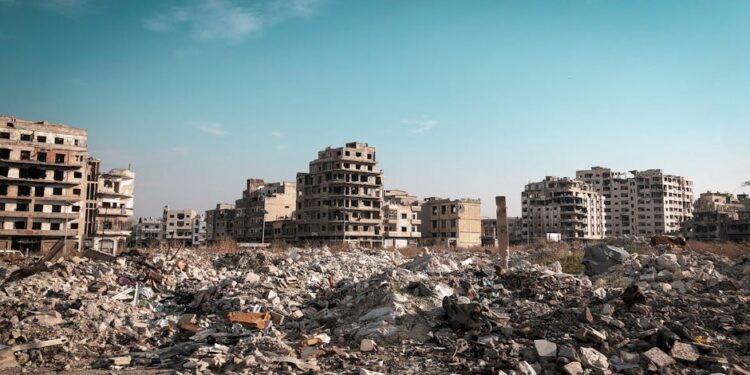
Recent reports indicate that the war has already begun to impact oil prices significantly. As oil prices rise, so do concerns about inflation. The surge in oil prices due to the Iran conflict has immediate and far-reaching economic implications.


The ongoing conflict in the Middle East is raising alarms about stagflation, a troubling economic condition characterized by stagnant growth and high inflation. As the war continues, its effects ripple through global markets, prompting fears of rising oil prices and economic instability. The situation is evolving rapidly, and its implications are significant for economies worldwide.
Recent reports indicate that the war has already begun to impact oil prices significantly. According to The Guardian, Asian markets experienced sharp declines as oil prices surged, rattling investor confidence. This volatility in oil prices is a direct consequence of the conflict, which has disrupted supply chains and created uncertainty in the energy sector.
As oil prices rise, so do concerns about inflation. The International Monetary Fund (IMF) has warned that the ongoing conflict could lead to a decrease in global growth projections. The IMF recently trimmed its growth forecast for 2026, citing the oil-price shock stemming from the war as a primary factor. This situation poses a significant risk to economies that are already grappling with inflationary pressures.
Economic Implications of Rising Oil Prices
This inflationary pressure can erode purchasing power, leading to decreased consumer spending and slower economic growth.
The surge in oil prices due to the Iran conflict has immediate and far-reaching economic implications. Higher oil prices lead to increased transportation and production costs, which can ultimately be passed on to consumers. This inflationary pressure can erode purchasing power, leading to decreased consumer spending and slower economic growth.
According to Business Insider, KPMG’s chief economist has stated that if stagflation takes hold, the only clear way out for many countries may be a deep recession. This scenario raises concerns about job losses and increased unemployment, particularly in sectors heavily reliant on oil and energy.
You may also like
 Government & Policy
Transfer EPS Service Records to Close Pension Gaps
When an employee withdraws their EPF balance, they often overlook the importance of transferring their EPS service records. This article explains why this transfer is…
Read More →Moreover, the rising costs of goods and services can lead to social unrest. As consumers face higher prices, frustration may grow, leading to protests or political instability in various regions. This potential unrest could further complicate recovery efforts and exacerbate the economic downturn. The BBC reported that the conflict has already caused holidaymakers to stay closer to home, indicating a shift in consumer behavior due to rising costs.
In the short term, businesses may struggle to adapt to these changing economic conditions. Companies that rely on stable energy prices will need to reassess their strategies and possibly pass costs onto consumers, which could lead to decreased sales and profitability. The Bloomberg highlighted that the war’s impact is particularly severe in regions like Pakistan, where energy shortages are plunging the country into darkness, further straining economic activities.
Global Responses and Future Outlook
In the short term, businesses may struggle to adapt to these changing economic conditions.
Governments and central banks worldwide are closely monitoring the situation. Many are considering measures to mitigate the economic fallout from rising oil prices and the potential for stagflation. Some central banks may be forced to adjust monetary policies to combat inflation while trying to support economic growth. The IMF has already indicated that the global growth projections have been trimmed due to the oil-price shock, emphasizing the urgency of the situation.
As the conflict continues, the global community is also exploring diplomatic solutions to restore stability in the region. Peace talks and negotiations may play a crucial role in easing tensions and stabilizing oil markets. However, the success of these efforts remains uncertain, and the potential for further escalation exists. The European Central Bank has indicated a cautious approach, moving away from interest rate hikes as they assess the evolving geopolitical landscape.
You may also like
 Government & Policy
Cornell faces a Greek life reckoning
Cornell University reevaluates its Greek life organizations following serious misconduct allegations, igniting a national conversation about accountability and reform.
Read More →Looking ahead, the trajectory of the global economy will depend heavily on developments in the Middle East. If the conflict persists, the risks of stagflation could become more pronounced, leading to a prolonged period of economic uncertainty. Investors and policymakers alike must remain vigilant as they navigate this complex landscape. The Bloomberg also noted that the chaos in the Persian Gulf is not just an isolated incident but part of a larger pattern affecting global trade routes and energy supplies.
Ultimately, the question remains: how will the global economy adapt to these challenges? The interplay between geopolitical tensions and economic stability will be critical in shaping the future of markets and industries worldwide. As the situation develops, stakeholders must prepare for a range of potential outcomes, from economic recovery to deeper crises.